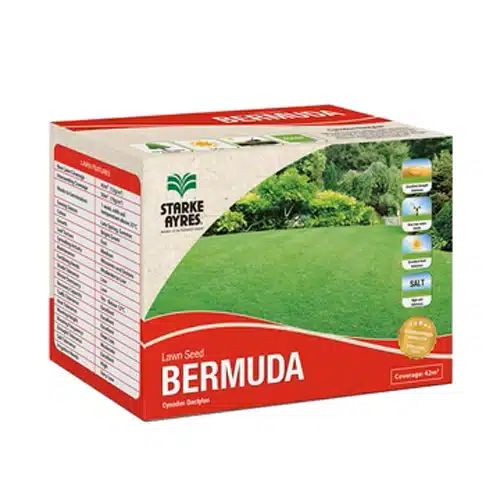
What Is Bermuda Lawn Grass?
Bermuda grass is a fine to medium-textured perennial warm-season grass belonging to the species Cynodon dactylon. It spreads through both underground stems known as rhizomes and above-ground runners known as stolons.
This spreading growth habit allows Bermuda grass to form a thick lawn and enables established grass to gradually cover small bare areas when growing conditions are favourable.
Bermuda grass performs best where it receives plenty of sunlight, adequate nutrients and appropriate watering.
Why Choose Bermuda Lawn Grass in Kenya?
There are several reasons why Bermuda grass is popular for lawns and landscaped areas.
- Excellent tolerance to sunlight: Bermuda grass thrives in open, sunny areas.
- Forms a dense lawn: Its spreading growth habit creates an attractive carpet when properly managed.
- Good traffic tolerance: Established Bermuda grass can withstand moderate to relatively heavy foot traffic.
- Good recovery ability: Stolons and rhizomes help the lawn recover from minor damage.
- Responds well to mowing: Regular mowing encourages a neat and dense lawn.
- Suitable for warm Kenyan conditions: Bermuda grass grows vigorously when temperatures are favourable.
- Useful for erosion control: Its spreading root and runner system can help stabilize exposed soil.
- Versatile: It can be used in residential, institutional and commercial landscapes.
Where Can Bermuda Grass Be Used?
Bermuda grass can be planted in many locations including:
- Residential compounds
- Apartment gardens
- Office compounds
- Hotel lawns
- School compounds
- Church compounds
- Hospital grounds
- Recreational areas
- Public parks
- Roadside landscapes
- Commercial developments
- Sports and high-traffic recreational areas, depending on the Bermuda variety and management system
Is Bermuda Grass Suitable for Nairobi?
Yes. Bermuda lawn grass can grow successfully in Nairobi, especially where the lawn receives adequate sunlight.
Nairobi’s relatively mild temperatures can sometimes result in slower growth during cooler periods compared with very warm regions of Kenya. However, with good soil preparation, adequate nutrition, sufficient sunlight and proper irrigation, Bermuda grass can produce an attractive lawn.
Customers searching for the best lawn grass for Nairobi should particularly consider the amount of sunlight reaching the intended lawn.
If the area is heavily shaded by buildings or large trees, Bermuda grass may become thin and weak. A lawn seed mixture designed for partially shaded conditions may be more appropriate for such locations.
How Much Sunlight Does Bermuda Grass Need?
Bermuda is primarily a sun-loving lawn grass.
For the best density, colour and growth, select an open area receiving several hours of direct sunlight every day. Full sun is preferable.
Poor light penetration can lead to:
- Thin grass
- Weak growth
- Long, stretched leaves
- Increased bare patches
- Greater weed invasion
Best Soil for Bermuda Lawn Grass
Bermuda grass is adaptable to several soil types, but a fertile, well-drained soil produces better lawn establishment and long-term performance.
Good lawn soil should:
- Drain excess water effectively
- Retain sufficient moisture for root development
- Contain adequate organic matter
- Have sufficient nutrients
- Not be severely compacted
A soil pH of approximately 5.8 to 7.0 generally provides suitable conditions for Bermuda grass, although local soil conditions should ideally be confirmed through soil testing.
How to Plant Bermuda Grass Seed in Kenya
Successful lawn establishment starts long before the grass seed is sown. Correct land preparation improves germination, rooting, lawn uniformity and long-term performance.
Step 1: Clear the Site
Remove existing weeds, stones, construction debris, unwanted vegetation, roots and other materials.
Persistent perennial weeds should be properly controlled before planting because removing them after the lawn has established can become more difficult.
Step 2: Cultivate the Soil
Loosen compacted soil to create a favourable rooting zone.
Avoid leaving large soil clods. The final seedbed should be relatively fine but firm enough that the seed will not become buried deeply after watering.
Step 3: Improve Poor Soil
Where necessary, incorporate suitable well-decomposed organic matter or recommended soil amendments.
A soil test is particularly useful when developing valuable residential or commercial landscapes because it helps determine soil pH and nutrient requirements.
Step 4: Level the Lawn
Rake the soil until the surface is reasonably smooth.
Correct major depressions because they can collect water after irrigation or rainfall.
The surface should drain away from buildings and structures where appropriate.
Step 5: Apply the Recommended Starter Fertilizer
New grass requires adequate phosphorus and other essential nutrients for root establishment. The appropriate fertilizer should be selected according to the soil analysis and lawn requirements.
Step 6: Sow Bermuda Grass Seed Evenly
Divide the required seed into two approximately equal portions.
Broadcast one portion while moving in one direction and broadcast the second portion at approximately right angles to the first.
This cross-sowing technique improves seed distribution and reduces visible gaps.
Bermuda Grass Seed Rate
The required quantity of Bermuda lawn seed depends on the specific variety, whether the seed is coated or uncoated, germination percentage and the manufacturer’s recommendations.
Commercial Bermuda products may have considerably different recommended sowing rates. For this reason, always follow the planting rate printed on the seed package rather than assuming that every Bermuda seed product requires the same quantity.
Before ordering your Bermuda grass seed, calculate the lawn area:
Lawn area = Length × Width
For example:
20 metres × 15 metres = 300 square metres.
You can then multiply the area by the recommended seed rate on your Bermuda seed package.
Need Help Calculating Your Bermuda Seed Requirement?
Send Dawn Farmers Ltd the length and width of your lawn in metres. We can help you calculate the approximate area before you purchase your lawn inputs.
How Deep Should Bermuda Grass Seed Be Planted?
Bermuda seeds are small and should not be buried deeply.
After broadcasting, lightly rake the surface so that the seed makes good contact with the soil. A light rolling can also improve seed-to-soil contact where appropriate.
Deep planting can reduce emergence because small grass seeds have limited stored energy.
Watering Bermuda Grass After Planting
Water management during germination is critical.
Immediately after sowing, irrigate gently using a fine spray. Avoid a powerful stream that can move the seed and create patches.
During establishment:
- Keep the upper soil surface consistently moist.
- Do not allow newly germinating seed to completely dry out.
- Avoid prolonged waterlogging.
- Use light, frequent irrigation when necessary during early germination.
Once the grass develops a stronger root system, gradually reduce watering frequency while increasing the depth of watering.
When Will Bermuda Grass Germinate?
Germination depends on soil temperature, moisture, seed quality, planting depth and seed type.
Under favourable warm and moist conditions, Bermuda seed can begin germinating relatively quickly, but complete lawn establishment takes considerably longer than the first emergence of seedlings.
Continue careful watering and avoid unnecessary traffic during the establishment phase.
When Should You First Mow Bermuda Grass?
Do not rush to mow newly established grass.
Wait until the seedlings are sufficiently rooted and have reached an appropriate mowing height.
Use a sharp mower blade and avoid removing too much leaf material in a single mowing.
A useful general lawn principle is the one-third rule: avoid removing more than approximately one-third of the grass blade in one mowing operation.
Recommended Mowing Height for Bermuda Lawn
Bermuda grass is capable of tolerating relatively low mowing when properly managed. The exact mowing height depends on the variety, intended use and mowing equipment.
For general home lawns, Bermuda is often maintained at approximately 20–40 mm, while specialised turf systems may be managed differently.
Frequent mowing encourages lateral growth and helps develop a thicker, more attractive lawn.
Bermuda Lawn Fertilizer Programme
Bermuda is a vigorous grass and responds strongly to good nutrition, particularly nitrogen during active growth.
| Stage | Objective | Management |
|---|---|---|
| Before planting | Correct soil limitations | Conduct soil testing where possible and correct major nutrient or pH problems. |
| At establishment | Support rooting | Use an appropriate starter fertilizer according to soil-test recommendations and product label. |
| Active vegetative growth | Maintain colour and density | Apply suitable lawn fertilizer according to the product analysis, soil fertility and lawn condition. |
| Maintenance | Maintain balanced nutrition | Monitor colour and growth and avoid excessive nitrogen application. |
Important: Do Not Over-Fertilize Your Lawn
More fertilizer does not automatically mean a better lawn.
Excessive nitrogen can encourage excessively soft growth, increase mowing frequency and contribute to thatch or certain disease problems.
Always follow the fertilizer manufacturer’s rate and water granular fertilizer appropriately after application when required.
Bermuda Grass Irrigation Programme
| Lawn Stage | Watering Approach |
|---|---|
| Immediately after sowing | Water gently without washing away the seed. |
| Germination period | Maintain consistent surface moisture using light irrigation when required. |
| Young lawn | Gradually reduce irrigation frequency as roots develop. |
| Established lawn | Use deeper, less frequent watering according to weather, soil and signs of moisture stress. |
Best Time to Water Bermuda Lawn
Early morning is generally the best time to irrigate an established lawn.
Morning watering reduces excessive evaporation while allowing the grass canopy to dry as the day progresses.
Avoid continually keeping an established lawn wet because excessive moisture can encourage disease and shallow rooting.
How to Control Weeds in Bermuda Lawn
Good lawn establishment is one of the most effective forms of long-term weed suppression.
Maintain:
- Correct mowing height
- Balanced fertilization
- Appropriate irrigation
- Healthy soil
- A dense grass canopy
A thick Bermuda lawn shades the soil surface and leaves less space for weeds to establish.
Can Herbicides Be Used in Bermuda Grass?
Yes, certain selective herbicides may be suitable for controlling particular weeds in established Bermuda lawns. However, herbicide selection depends on:
- Weed species
- Grass maturity
- Bermuda variety
- Herbicide active ingredient
- Application rate
- Environmental conditions
Never assume that an agricultural herbicide is safe for lawn grass.
Always confirm that Bermuda turf is specifically permitted on the product label before spraying.
Common Bermuda Lawn Problems
1. Bare Patches
Possible causes include:
- Poor seed distribution
- Insufficient watering during germination
- Seed being washed away
- Compacted soil
- Heavy traffic before establishment
- Excessive shade
- Pest or disease damage
2. Yellow Bermuda Grass
Yellowing can result from several factors including:
- Nitrogen deficiency
- Waterlogging
- Drought stress
- Compacted soil
- Nutrient imbalance
- Root damage
- Seasonal temperature changes
- Certain lawn diseases
Correct diagnosis should come before fertilizer or pesticide application.
3. Thin Bermuda Lawn
A thin lawn can result from inadequate sunlight, poor nutrition, excessive mowing, soil compaction, insufficient irrigation or heavy competition from weeds.
4. Excessive Thatch
Because Bermuda produces stolons and rhizomes, poorly managed lawns can gradually accumulate thatch.
Excessive fertilizer and poor mowing practices can contribute to the problem.
Where thatch becomes excessive, suitable scarification or dethatching may be necessary.
Aerating Bermuda Lawn
Lawns exposed to regular traffic may gradually become compacted.
Compacted soil reduces movement of air, water and nutrients into the root zone.
Core aeration during active growth can help alleviate serious compaction and promote healthier rooting.
Bermuda Grass vs Other Lawn Grass
| Feature | Bermuda Grass | What It Means for the Buyer |
|---|---|---|
| Sun tolerance | Excellent | Ideal for exposed sunny compounds. |
| Shade tolerance | Relatively poor | Consider another lawn option for deeply shaded areas. |
| Traffic tolerance | Good when established | Useful for active compounds and recreational landscapes. |
| Recovery | Good | Spreading stolons and rhizomes help repair small damaged areas. |
| Mowing requirement | Regular | Frequent mowing produces a neat appearance. |
| Warm-weather growth | Strong | Performs strongly under favourable warm Kenyan conditions. |
Bermuda Grass for High-Traffic Areas
One of Bermuda grass’s important characteristics is its ability to recover from wear through lateral growth.
This makes properly managed Bermuda suitable for areas such as:
- Family compounds
- Schools
- Commercial landscapes
- Hotel gardens
- Recreational lawns
- Selected sporting areas
However, even Bermuda grass should be protected from heavy traffic while newly germinated seedlings are establishing.
Can Bermuda Grass Survive Dry Conditions?
Established Bermuda grass has relatively good drought tolerance compared with many lawn grasses because of its vigorous rooting and growth characteristics.
However, drought tolerance does not mean that the grass requires no water.
Prolonged moisture stress can cause loss of colour, slower growth and temporary dormancy. Irrigation is especially important when a high-quality green lawn is required throughout dry periods.
Can Bermuda Grass Stay Green Throughout the Year?
Colour depends on temperature, water availability, fertility and overall management.
Bermuda is a warm-season grass and may grow more slowly or lose some colour during particularly cool or dry periods.
Good fertilization and irrigation help maintain lawn quality during active growth, but fertilizer should not be used simply to force growth when environmental conditions are unsuitable.
How to Repair Bare Spots in a Bermuda Lawn
For small damaged areas:
- Identify and correct the reason the grass disappeared.
- Remove weeds and dead material.
- Lightly loosen the soil surface.
- Apply the recommended grass seed.
- Ensure good seed-to-soil contact.
- Water gently and consistently.
- Protect the area from unnecessary traffic until established.
12 Common Mistakes When Planting Bermuda Grass
- Planting Bermuda in a heavily shaded area.
- Failing to control existing weeds before planting.
- Sowing seed too deeply.
- Using too little or unevenly distributed seed.
- Allowing the soil surface to dry during germination.
- Flooding the area and washing seed away.
- Walking on new seedlings excessively.
- Mowing before the lawn is properly rooted.
- Cutting the lawn excessively short.
- Applying too much fertilizer.
- Using herbicides without confirming lawn-grass safety.
- Ignoring underlying drainage or compaction problems.
Bermuda Lawn Maintenance Calendar for Kenya
| Activity | Recommended Practice |
|---|---|
| Mowing | Mow regularly during active growth and avoid removing more than about one-third of the leaf at once. |
| Watering | Irrigate according to rainfall, soil type and grass condition rather than using a fixed calendar alone. |
| Fertilizer | Apply according to soil fertility, grass growth and product recommendations. |
| Weed inspection | Inspect regularly and address weeds before they seed and spread. |
| Aeration | Aerate compacted high-traffic lawns when necessary during active growth. |
| Dethatching | Carry out only when thatch accumulation becomes excessive. |
| Pest and disease inspection | Check unusual discoloration or patches before applying pesticides. |
Products You May Need When Establishing a Bermuda Lawn
A complete lawn project may require more than grass seed. Depending on the site, useful products may include:
- Bermuda lawn grass seed
- Suitable starter fertilizer
- Lawn maintenance fertilizer
- Organic soil amendments
- Watering cans
- Garden hoses and irrigation accessories
- Sprayers
- Approved selective lawn herbicides where required
- Appropriate fungicides or insecticides where a pest or disease has been correctly identified
- Alternative lawn mixtures for partially shaded sites
Why Buy Lawn Grass Seed from Dawn Farmers Ltd?
Buying the right grass seed is only one part of successful lawn establishment. Correct site assessment, seed quantity, planting technique, fertilization and watering are equally important.
At Dawn Farmers Ltd, we serve farmers, homeowners, landscapers, institutions and commercial customers looking for agricultural and landscaping inputs in Nairobi and throughout Kenya.
Our aim is to help customers select suitable products for their intended application rather than simply purchasing an input without understanding how it should be used.
Visit DawnFarmers.com to explore our available products.
Buy Bermuda Lawn Grass Seed in Nairobi, Kenya
If you are searching online for:
- Bermuda grass seed Nairobi
- Bermuda lawn grass Kenya
- grass seeds for sale in Nairobi
- lawn grass seeds Kenya
- best grass seed for a sunny lawn
- Bermuda lawn seed price in Kenya
- where to buy lawn grass in Nairobi
Dawn Farmers Ltd can assist you with lawn-establishment inputs and product selection.
For a more accurate Bermuda grass seed recommendation, have the following information ready when making your enquiry:
- Total lawn dimensions or area in square metres
- Location of the property
- Whether the area receives full sun or shade
- Whether you are establishing a new lawn or repairing an old lawn
- Type of soil, if known
- Availability of irrigation water
Frequently Asked Questions About Bermuda Lawn Grass in Kenya
Is Bermuda grass good for lawns in Kenya?
Yes. Bermuda grass is particularly suitable for sunny locations in many parts of Kenya. It produces a dense lawn, tolerates mowing and has good recovery ability when properly managed.
Does Bermuda grass grow well in Nairobi?
Yes. Bermuda grass can grow well in Nairobi, particularly in open sunny compounds with good soil preparation, irrigation and nutrition. Growth may slow during cooler periods.
Does Bermuda grass grow in shade?
Bermuda grass has relatively poor shade tolerance. A different lawn species or appropriate lawn mixture should be considered where the area receives limited direct sunlight.
How long does Bermuda grass take to germinate?
Germination time depends on seed type, soil temperature, moisture, planting depth and seed quality. Warm soil and consistent moisture encourage faster and more uniform establishment.
How much Bermuda seed do I need?
Measure the lawn in square metres and multiply it by the planting rate given by the specific seed manufacturer. Seed coating and variety can cause recommended sowing rates to differ significantly between products.
How often should Bermuda lawn grass be watered?
Newly planted seed requires frequent light watering to keep the seedbed moist. Once established, irrigation should become deeper and less frequent and should be adjusted for rainfall, soil type and weather conditions.
How often should Bermuda grass be mowed?
Mowing frequency depends on growth rate. During vigorous growth, mow often enough that you do not have to remove more than approximately one-third of the leaf blade in one operation.
What fertilizer is best for Bermuda grass?
The most suitable fertilizer depends on soil nutrient levels and the stage of lawn development. A soil test provides the most reliable basis for a fertilizer programme. Established Bermuda generally responds strongly to nitrogen during active growth.
Can I apply NPK fertilizer to Bermuda grass?
Yes, an appropriate NPK fertilizer can be used where its nutrient analysis matches the lawn’s requirements. The rate should be based on the fertilizer analysis, lawn condition and ideally soil-test results.
Why is my Bermuda lawn turning yellow?
Possible causes include nutrient deficiency, waterlogging, drought, compaction, root damage, cool weather, incorrect mowing, pests or disease. Identify the cause before applying fertilizer or pesticide.
Is Bermuda grass suitable for children and pets?
A healthy, established Bermuda lawn handles general household traffic relatively well. Newly planted areas should nevertheless be protected until the grass is properly established.
Can Bermuda grass repair itself?
Yes. Bermuda spreads through stolons and rhizomes, giving established lawns a good ability to recover from small damaged or bare areas when growing conditions are favourable.
What is the best time to establish a Bermuda lawn in Kenya?
Establishment is easiest during warm conditions when adequate moisture can be maintained. Irrigation allows greater flexibility, while rain-fed establishment should be coordinated carefully with reliable rainfall.
Where can I buy Bermuda grass seed in Nairobi?
Customers in Nairobi can enquire from Dawn Farmers Ltd about lawn grass seed availability and other lawn-establishment inputs.
Final Thoughts
Bermuda lawn grass is an excellent option for sunny lawns in Nairobi and many other parts of Kenya. Its dense growth, tolerance to mowing, good recovery ability and adaptability make it useful for residential, institutional and commercial landscapes.
The secret to an attractive Bermuda lawn is not simply sowing grass seed. Proper soil preparation, good seed-to-soil contact, careful watering during establishment, balanced fertilization, regular mowing and effective weed management all contribute to the final appearance of the lawn.
If you are planning a lawn project, first measure the area and assess the amount of sunlight available. This will help determine whether Bermuda grass is the right choice and how much seed you require.
Looking for Bermuda Lawn Grass Seed in Kenya?
Shop lawn, gardening and agricultural inputs from Dawn Farmers Ltd.
Whether you are establishing a small home lawn or landscaping a larger commercial property, contact us with your lawn dimensions so we can help you determine the appropriate inputs for your project.
Visit Dawn Farmers Ltd Online Store →
Dawn Farmers Ltd – Empowering Farmers, Feeding the Nation.