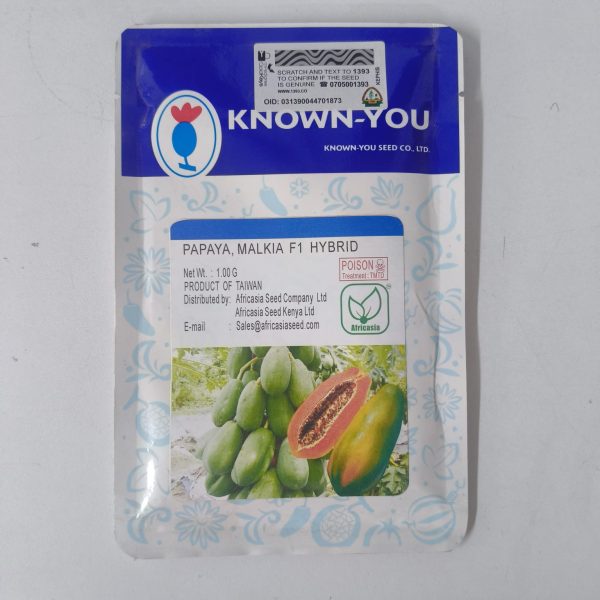
This is a highly productive dwarf variety with excellent aroma.
Characteristics:
- Maturity; 8 months
- A semi-dwarf variety
- Fruit weight: 1.5-2kg
- High brix (sugar content 13% to 14%)
- Red flesh
- High yield potential of 40-50 fruits per season
- Starts bearing fruits from 50-80cm height.
- Flowering starts after 5months from transplanting
- Female plants produce short oblong fruits while fruits of Bisexual or hermaphrodites flowers are elongated.
Planting Recommendations
- Seed rate: 10g/acre
- Recommended spacing: row to row- 2 to 2.5m and plant to plant- 2m
- Highly tolerant to papaya ring spot virus
Certified by the following bodies: Kephis Kenya
MALKIA PAWPAW F1 PLANTING GUIDE
1. Variety Overview
Type: Hybrid papaya
Fruit characteristics: Large, oval fruits (1.5–3 kg), deep orange flesh, sweet and aromatic.
Maturity period: 8–10 months after transplanting.
Yield: Up to 60–100 tonnes per hectare under good management.
Flower type: Hermaphrodite (self-pollinating).
2. Climatic & Soil Requirements
Temperature: 20–30°C (optimum).
Altitude: Below 1800 m above sea level.
Rainfall: 1000–1500 mm annually, well distributed.
Soil: Deep, well-drained loam or sandy loam soils rich in organic matter.
pH: 5.5–7.5.
Avoid waterlogging — papayas are very sensitive to root rot.
3. Land Preparation
Clear the field and remove old roots or debris.
Deep plough and harrow to a fine tilth.
Prepare raised beds or ridges in areas prone to waterlogging.
Mix well-decomposed manure (10–15 tons/ha) into the topsoil before planting.
4. Seedling Production
Sow seeds in nursery trays or polythene bags filled with a mixture of soil, sand, and compost (1:1:1).
Sow 2–3 seeds per hole, 1 cm deep.
Keep nursery moist but not waterlogged.
Germination occurs in 10–15 days.
Thin to one healthy seedling per hole after 2–3 weeks.
Transplant at 4–6 weeks, when seedlings are about 15–20 cm tall.
5. Field Planting
Spacing: 2.5 m × 2.5 m (approx. 1,600 plants/ha).
Planting holes: 60 cm × 60 cm × 60 cm.
Mix topsoil with 10–15 kg of manure + 100 g DAP per hole.
Plant in the evening or on a cool day to reduce transplant shock.
Water immediately after transplanting.
6. Fertilizer Program (General Guide)
| Stage | Fertilizer | Rate/Plant | Timing |
|---|---|---|---|
| At planting | DAP | 100 g | In hole |
| 1 month after transplanting | CAN | 50 g | Around base |
| 3–4 months | NPK (17:17:17) | 100 g | Every 6 weeks |
| Flowering to fruiting | NPK (12:12:24) or fruit booster | 150 g | Monthly |
| Every 3 months | Manure | 5 kg | As mulch |
(Adjust based on soil test results.)
7. Watering
Maintain consistent moisture — especially during dry spells.
Avoid overwatering to prevent root rot.
Drip irrigation is highly recommended.
8. Weed and Pest Management
Weeds: Keep field weed-free; use mulching or shallow hoeing.
Pests: Aphids, whiteflies, fruit flies, and spider mites — use safe insecticides or biocontrols.
Diseases:
Powdery mildew, anthracnose, papaya ringspot virus — apply preventive fungicides and control vectors.
Rogue diseased plants immediately.
9. Flowering & Pollination
Malkia F1 is self-pollinating (hermaphrodite), so no need for male plants.
First flowers appear 4–6 months after transplanting.
10. Harvesting
Harvest starts 8–10 months after transplanting.
Pick fruits when skin turns slightly yellow.
Handle carefully to avoid bruising.
Fruits can be ripened off the field at room temperature.
11. Expected Yields
Average: 60–100 tonnes/ha per year under proper care.
Productive life span: 3–4 years before replanting is needed.
12. Post-Harvest Handling
Wash fruits with clean water to remove latex and dirt.
Grade according to size and appearance.
Pack in ventilated crates or cartons.