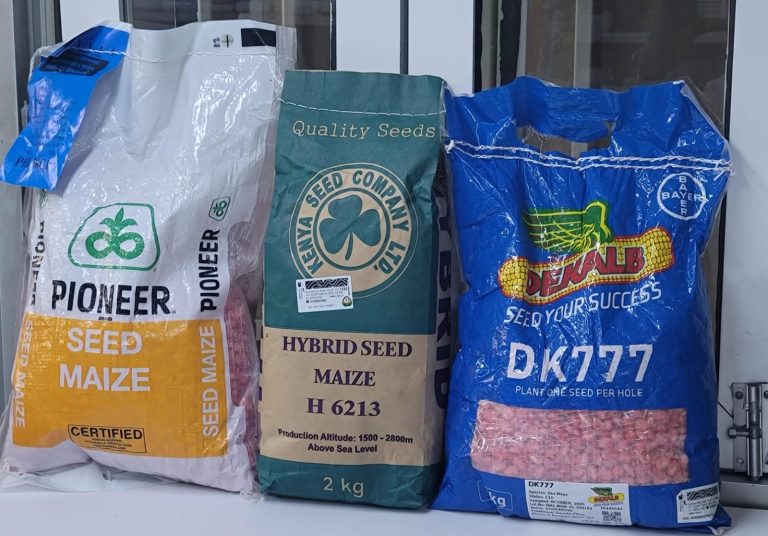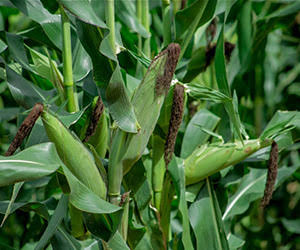
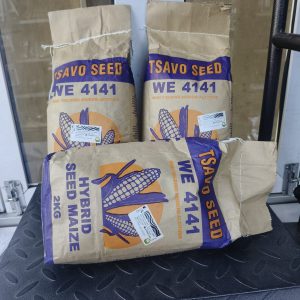
Tsavo 4141 maize is a productive maize option for Kenyan farmers when it is grown in the right area and managed well. This guide explains the full production process, including seed rate per acre, planting spacing, fertilizer use, foliar feeding, soil care, weed control, fall armyworm control, stalk borer management, expected yield and harvesting.
Although quality seed is important, good maize farming requires much more. Farmers also need to plant on time, maintain the correct plant population, feed the crop well, manage weeds early and protect the crop from pests.
In addition, good soil moisture and proper harvesting can make a major difference in final yield. For this reason, this practical guide from Dawn Farmers Ltd covers the crop from land preparation to storage.
🌽 Check Current Seed Price & Availability at Dawn Farmers →
1. What Is Tsavo 4141 Maize?
Tsavo 4141 maize is suitable for farmers who want good yield potential under suitable growing conditions.
With good crop care, farmers can target about 35–45 bags of 90 kg grain per acre.
However, this is a production target rather than a guaranteed yield. Final production depends on the seed, weather, soil and farm management.
For example, yield can be affected by:
- Rainfall and soil moisture
- Soil fertility
- Soil pH
- Planting time
- Plant population
- Weed control
- Basal fertilizer
- Top dressing
- Micronutrients
- Fall armyworm
- Stalk borers
- Diseases
- Harvest and storage practices
2. How Much Tsavo 4141 Maize Seed Is Needed Per Acre?
A practical seed requirement for Tsavo 4141 maize is about 8–10 kg per acre. The exact amount may vary with seed size, germination and field conditions.
For easy planning, a farmer can budget for:
5 × 2 kg packets = 10 kg of seed per acre.
This small allowance can also provide seed for filling gaps where some plants fail to emerge.
3. Recommended Spacing for Tsavo 4141 Maize
Correct spacing helps Tsavo 4141 maize use water, nutrients and sunlight more efficiently.
There are two practical planting methods.
Method 1: Two Seeds Per Hole
Use a spacing of:
75 cm between rows × 50 cm between planting holes.
Then place 2 seeds per hole.
At this spacing, one acre has about 10,790 planting holes.
Therefore:
10,790 holes × 2 seeds = about 21,580 seeds per acre.
Method 2: One Seed Per Hole
Alternatively, use:
75 cm between rows × 25 cm between plants.
In this method, place 1 seed per hole.
This gives about 21,580 planting positions per acre.
As a result, both methods aim for almost the same plant population. The main difference is how the plants are spread along the row.
Very wide spacing lowers the number of productive plants. On the other hand, overcrowding increases competition for light, water and nutrients.
4. Land Preparation
Prepare the land before the expected rains begin. A good seedbed allows maize roots to grow freely and helps the crop emerge evenly.
First, control large or difficult weeds before planting. Where needed, plough early enough to expose some soil pests and allow crop remains to break down.
Next, break large soil clods using a second cultivation or harrowing. This creates a better planting surface.
However, avoid too much cultivation because repeated soil disturbance can damage soil structure and increase erosion.
5. Test the Soil Before Planting
A soil test helps a farmer know what the field needs before buying fertilizer or soil amendments.
In particular, a soil test can show:
- Soil pH
- Phosphorus
- Potassium
- Calcium
- Magnesium
- Organic matter
- Important trace nutrients
Maize usually performs well at about pH 5.5–7.0. However, the best range can vary from one field to another.
If the soil is too acidic, some nutrients become harder for roots to take up. Therefore, lime may be needed where a soil test recommends it.
Do not guess the lime rate. Instead, use a soil-test recommendation because the correct amount depends on soil condition and lime quality.
6. Improve Soil Organic Matter
Where possible, add well-rotted manure or compost.
Organic matter can improve:
- Soil structure
- Water holding
- Nutrient storage
- Root growth
- Soil life
However, avoid placing large amounts of fresh manure directly against maize seed because it may affect germination.
7. Humic Soil Amendments
Humic products can support soil health, especially where organic matter is low.
One option available from Dawn Farmers is
Humipower
.
These products can help support soil condition and nutrient use. However, they should not replace the main fertilizer programme.
Therefore, apply them according to the product label and the condition of the soil.
8. Using EM.1 in Soil Management
Dawn Farmers also stocks
EM.1
.
EM.1 may be used as part of a wider soil-care programme where its label allows.
For best results, combine soil biological products with good organic matter, enough moisture and a balanced fertilizer plan.
9. Where Does SporeMax Fit?
SporeMax may also be included in a soil-health programme where the product label allows.
However, it should not be treated as a replacement for fertilizer.
Instead, use it as part of a wider programme that may include:
- Correct soil pH
- Organic matter
- Balanced fertilizer
- Enough soil moisture
- Crop rotation
- Good soil care
Most importantly, follow the SporeMax label for the correct rate, timing, method and mixing instructions.
10. When Should You Plant?
Plant when the soil has enough moisture and the seasonal rains have started well.
Late planting can reduce yield because the crop may face:
- A shorter growing season
- Moisture stress
- Higher pest pressure
- Poor grain filling
- Lower yield
In most cases, maize seed can be planted about 3–5 cm deep, depending on soil type and moisture.
If seed is planted too deep, emergence may be slow. On the other hand, shallow seed can dry out or be exposed to birds and rodents.
11. Basal Fertilizer Application for Tsavo 4141 Maize
Good early nutrition helps Tsavo 4141 maize build strong roots and establish quickly.
Phosphorus is especially important during early growth because it supports root formation.
For this reason, the best planting fertilizer should preferably be chosen after a soil test.
One option from Dawn Farmers is
Microp Planting Fertilizer
.
Farmers can also consider
Yara DAP Chapa Meli
where suitable.
DAP supplies both phosphorus and nitrogen. Therefore, it is commonly used during maize planting.
About 50 kg of suitable planting fertilizer per acre is a common practical starting point. However, soil-test results should come first.
Important: Do not allow concentrated fertilizer to touch the seed directly.
Instead, place the fertilizer in the hole or furrow, cover it lightly with soil, and then place the seed. This reduces the risk of fertilizer burn.
12. Top Dressing Tsavo 4141 Maize
As Tsavo 4141 maize grows, its need for nitrogen increases.
Nitrogen helps support:
- Leaf growth
- Green colour
- Photosynthesis
- Stem growth
- Cob formation
- Grain yield
One top-dressing option available from Dawn Farmers is
YaraBela CAN
.
Another option is
Thabiti CAN
.
In addition, farmers may consider
YaraVera Amidas
where it suits the crop programme.
Apply top dressing when the soil has enough moisture. Also, keep fertilizer a few centimetres away from the maize stem.
The total amount needed will depend on soil fertility, manure use, rainfall and yield target. Therefore, avoid using the same rate on every field without checking conditions.
Where suitable, split nitrogen into two applications. This can improve nutrient use and reduce losses.
13. Foliar Feeding
Foliar fertilizer can support crop nutrition and help correct some nutrient shortages.
However, foliar feeding should not replace soil-applied fertilizer.
Maize needs large amounts of nitrogen, phosphorus and potassium. Therefore, most of these nutrients should still come through the soil.
Foliar products are best used as an extra support.
Foliar Feeding During Vegetative Growth
During fast vegetative growth, the maize crop needs steady nutrition.
One option from Dawn Farmers is
YaraVita Power Boost
.
Another option is
Poly-Feed NPK 19:19:19 + 2MgO + TE
.
For better results, follow the label and spray during cooler hours. Early morning or late afternoon is often suitable.
14. Zinc Nutrition in Maize
Zinc is an important trace nutrient for maize.
If zinc is lacking, young leaves may show pale or whitish bands. Plant growth may also slow down.
Where zinc is needed, Dawn Farmers stocks
Cabozinc SC
.
Even so, avoid applying zinc automatically. Where possible, confirm the need using crop signs, soil tests or leaf tests.
15. Weed Management
Early weed control is very important because weeds compete strongly with young maize.
They compete for:
- Water
- Nitrogen
- Phosphorus
- Potassium
- Sunlight
- Root space
If weeds are allowed to grow for too long, the maize may lose yield potential. In some cases, the crop may not recover fully even after later weeding.
Farmers can weed by hand, use light cultivation or apply a suitable maize herbicide.
One product listed by Dawn Farmers is
Maize Succeed 280 OD
.
However, herbicide choice depends on the weed type and maize stage. Therefore, always follow the product label.
Never assume every herbicide is safe for maize.
16. Fall Armyworm Control in Tsavo 4141 Maize
Regular scouting is essential for protecting Tsavo 4141 maize from fall armyworm (Spodoptera frugiperda).
Begin checking the field soon after emergence. This is important because young larvae are easier to manage than older larvae.
Common signs include:
- Small window-like marks on young leaves
- Irregular holes
- Ragged leaves
- Fresh damage inside the whorl
- Sawdust-like waste in the whorl
- Live caterpillars hiding in the whorl
As larvae grow, they often move deeper into the whorl. As a result, control becomes more difficult.
Therefore, scout early and act while the larvae are still small.
17. FAWligen for Fall Armyworm Management
Dawn Farmers stocks
FAWligen 32SC
.
This biological option may fit into an integrated fall armyworm programme.
Because biological products often work best under certain conditions, early detection is important.
Therefore, follow the label carefully for rate, timing, storage and mixing instructions.
18. Coragen 20SC for Caterpillar Management
Another option stocked by Dawn Farmers is
Coragen 20SC
.
Coragen contains chlorantraniliprole, an IRAC Group 28 insecticide.
Where the current Kenyan label allows its use on maize for the target pest, it may be used as part of a caterpillar-control programme.
Good spray coverage is important. For example, when fall armyworm is feeding in the whorl, the spray should reach that area.
Most importantly, follow the current label for rate, number of sprays, re-entry time and harvest interval.
19. Ampligo 150ZC
Dawn Farmers also stocks
Ampligo 150ZC
.
Ampligo combines chlorantraniliprole and lambda-cyhalothrin.
Where its current label allows maize use for the target pest, it may fit into an integrated pest-control programme.
However, avoid repeated use of the same mode of action throughout the season.
20. Delegate 250WG
Another product available from Dawn Farmers is
Delegate 250WG
.
Delegate contains spinetoram, which belongs to IRAC Group 5.
Where the label allows its use on maize and the target pest, it may provide another option in a rotation programme.
Again, always use the product label to confirm crop, pest, rate, timing and safety instructions.
21. Do Not Spray Fall Armyworm on a Fixed Calendar
Do not spray insecticides every week simply because the maize is growing.
Instead, use scouting to guide the decision:
- Check the field regularly.
- Look for fresh feeding.
- Inspect the maize whorl.
- Check whether live larvae are present.
- Assess how much of the field is affected.
- Spray only when control is needed.
- Check the crop again after treatment.
This approach can lower costs and protect useful insects. In addition, it helps slow down pesticide resistance.
22. Rotate Insecticide Modes of Action
Changing a product brand does not always mean changing the mode of action.
For example, Coragen contains chlorantraniliprole. Ampligo also contains chlorantraniliprole as one of its active ingredients.
Therefore, moving directly from Coragen to Ampligo does not fully rotate away from chlorantraniliprole.
For better resistance management, consider the active ingredient and IRAC group, not only the brand name.
23. Stalk Borer Control in Tsavo 4141 Maize
Early detection of stalk borer can reduce losses in Tsavo 4141 maize.
Common signs include:
- Shot holes on new leaves
- Dead hearts
- Tunnels inside stems
- Weak stems
- Poor cob growth
- Lodging
- Poor grain filling
Once a larva moves deep into the stalk, it becomes harder for a spray to reach it.
Therefore, early scouting and control of young exposed larvae is much more effective.
24. Integrated Pest Management
Pesticides should not be the only method used to control maize pests.
Plant Early
Planting with reliable rains helps the maize establish quickly. As a result, the crop may cope better with some pest pressure.
Keep the Field Clean
Volunteer maize and old crop remains can help pests survive between seasons. Therefore, manage them properly.
Scout Regularly
Check the crop often during the most vulnerable stages. If pest pressure rises, increase scouting.
Protect Useful Insects
Some insects naturally attack fall armyworm eggs and larvae. For this reason, unnecessary broad-spectrum spraying should be avoided.
Use Biological Control Where Suitable
Biological products may form part of an IPM plan where their labels allow.
Spray Only When Needed
If control is required, choose a product registered for the crop and pest.
Rotate Modes of Action
Finally, avoid using the same IRAC group again and again.
25. Correct Spraying Makes a Difference
Even a good pesticide may fail if it is applied badly.
For fall armyworm, good coverage around the maize whorl is especially important.
Before spraying, calibrate the equipment and make sure it is working well.
One suitable sprayer available from Dawn Farmers is the
Jacto HD Knapsack Sprayer
.
Avoid spraying when:
- Wind is too strong
- Heavy rain is about to start
- Plants are badly drought stressed
- Temperatures are very high
26. Protect Yourself When Applying Pesticides
Crop-protection products must be handled carefully.
Depending on the label, PPE may include:
- Chemical-resistant gloves
- Protective clothing
- Boots
- Eye protection
- Suitable breathing protection
Never eat, drink or smoke while mixing or spraying.
Also, keep pesticides in their original containers and store them away from children, food and animal feed.
27. Water Management
Water stress can reduce maize yield.
Three important stages are:
- Establishment
- Flowering
- Grain filling
Moisture stress during tasselling and silking can be especially damaging because poor pollination may leave cobs with missing grain.
Therefore, conserve soil moisture through:
- Early weed control
- Good soil organic matter
- Correct plant population
- Good residue management
- Less unnecessary soil disturbance
28. Tasselling and Silking
At the reproductive stage, maize produces tassels and silks.
Good pollination needs healthy plants and enough moisture.
During this stage, continue checking for:
- Stalk borers
- Fall armyworm
- Leaf diseases
- Nutrient shortage
- Moisture stress
However, avoid unnecessary late nitrogen unless the crop clearly needs it.
29. Grain Filling
After pollination, the plant directs more food and nutrients to the developing grain.
Healthy green leaves are important because they help produce the sugars needed for grain filling.
Therefore, protect the crop from serious pest damage, drought and early leaf loss.
30. Practical Tsavo 4141 Maize Management Calendar
Before Planting
- Test the soil.
- Prepare the land.
- Correct soil pH if needed.
- Add well-rotted manure where suitable.
- Plan weed control.
- Buy quality seed.
- Buy the right planting fertilizer.
Planting – Week 0
Use either 75 cm × 50 cm with 2 seeds per hole or 75 cm × 25 cm with 1 seed per hole.
At the same time, apply the correct basal fertilizer while keeping it away from direct seed contact.
Week 1
- Check germination.
- Fill major gaps if needed.
- Scout for cutworms.
- Check for termites.
- Begin fall armyworm scouting.
Weeks 2–3
- Scout closely for fall armyworm.
- Control weeds early.
- Check crop colour.
- Look for nutrient shortage.
Weeks 3–5
- Apply the first nitrogen top dressing where needed.
- Continue fall armyworm scouting.
- Check for stalk borers.
- Use foliar feed where justified.
Weeks 5–8
- Keep weeds under control.
- Continue pest scouting.
- Apply the second nitrogen portion where split feeding is used.
- Check crop vigour and moisture.
Pre-Tasselling
- Check crop colour.
- Check soil moisture.
- Scout for pests.
- Check stem strength.
Tasselling and Silking
- Avoid severe water stress.
- Protect healthy leaves.
- Continue pest and disease checks.
- Avoid unnecessary spraying.
Grain Filling
- Keep leaves healthy.
- Check pests and diseases.
- Watch moisture conditions.
- Avoid late inputs that are unlikely to give a return.
31. Harvesting Tsavo 4141 Maize
Harvest Tsavo 4141 maize when the crop is mature and the grain has dried enough for safe harvest and storage.
Signs of maturity include:
- Dry husks
- Hard grain
- Lower grain moisture
- Drying maize plants
Do not leave mature maize in the field for too long. Otherwise, it may suffer damage from birds, rodents, insects, lodging, rain or ear rots.
32. Dry Maize Properly Before Storage
For safe storage, maize grain should generally be dried to about 13–13.5% moisture or lower, depending on the storage system.
Never store wet maize because excess moisture can lead to:
- Mould
- Heating
- Insect attack
- Grain damage
- Aflatoxin and other mycotoxins
Therefore, dry maize on a clean tarpaulin or suitable drying surface rather than on bare soil.
33. What Yield Can Tsavo 4141 Maize Produce Per Acre?
Under good conditions, Tsavo 4141 maize can be managed towards a target of about 35–45 bags of 90 kg grain per acre.
However, quality seed alone cannot guarantee this yield.
Good results depend on:
Quality seed + correct plant population + healthy soil + balanced nutrition + enough water + weed control + pest control + proper harvesting.
For example, late planting, heavy weed pressure or delayed fall armyworm control can reduce final yield.
34. Practical Input Guide Per Acre
| Input | Practical Guide |
|---|---|
| Seed | About 8–10 kg per acre |
| Target population | About 21,600 seeds per acre |
| Planting fertilizer | Soil-test based; about 50 kg/acre is a common starting point |
| Manure/compost | Use according to soil condition and quality |
| Top dressing | Use according to soil test, rainfall and yield target |
| Foliar feed | Use as a supplement according to crop need |
| Fall armyworm control | Scout first and treat where needed |
| Stalk borer control | Scout early and target young larvae |
| Weed control | Keep the field especially clean during early growth |
| Soil amendments | Use according to soil condition and label |
35. Useful Dawn Farmers Inputs for This Maize Programme
Depending on soil, crop stage and pest pressure, the following Dawn Farmers products may fit into the programme:
- Seed:
Check seed pack sizes, price and availability
- Planting fertilizer:
Microp Planting Fertilizer
or
Yara DAP Chapa Meli
- Top dressing:
YaraBela CAN
,
Thabiti CAN
or
YaraVera Amidas
- Soil care:
Humipower
and
EM.1
- Foliar feeding:
YaraVita Power Boost
and
Poly-Feed NPK 19:19:19 + 2MgO + TE
- Zinc support:
Cabozinc SC
where needed - Fall armyworm/IPM:
FAWligen 32SC
,
Coragen 20SC
,
Ampligo 150ZC
or
Delegate 250WG
where the current label allows - Weed control:
Maize Succeed 280 OD
where suitable - Spraying equipment:
Jacto HD Knapsack Sprayer
Important: Do not mix fertilizers, pesticides, biological products or foliar feeds without checking the labels first.
Frequently Asked Questions About Tsavo 4141 Maize
How much seed do I need for one acre?
About 8–10 kg per acre is a practical planning range.
How many 2 kg packets are needed per acre?
About five 2 kg packets provide 10 kg of seed.
What spacing should I use?
Use 75 cm × 50 cm with two seeds per hole or 75 cm × 25 cm with one seed per hole.
What fertilizer should I use at planting?
Use a suitable phosphorus-rich planting fertilizer based on soil-test results. DAP or another maize planting fertilizer may be used where suitable.
When should maize be top dressed?
Top dressing is usually done during vegetative growth when enough soil moisture is available. However, the exact timing depends on the field and fertilizer used.
Can foliar fertilizer replace CAN?
Generally, no. Foliar fertilizer is only a supplement because maize needs large amounts of nutrients through the soil.
How do I control fall armyworm?
Start scouting soon after emergence. Then check for young larvae and fresh damage before deciding whether to spray.
How do I control stalk borers?
Scout for shot holes, dead hearts and young larvae. Early control is better because larvae become harder to reach once they enter the stem.
How many bags can Tsavo 4141 maize produce per acre?
With good management and suitable conditions, about 35–45 bags of 90 kg grain per acre may be used as a production target.
36. Tsavo 4141 Maize Seed Price in Kenya
Farmers looking for seed in Kenya can order from Dawn Farmers Ltd in Nairobi.
We also supply fertilizers, foliar feeds, soil amendments, herbicides and crop-protection products.
🔥 Current Special Offer: KSh 900 per 2 kg pack.
Since one acre may require about 10 kg of seed, a farmer purchasing five 2 kg packs would spend:
5 packs × KSh 900 = KSh 4,500 per acre for seed.
However, prices and stock can change. Therefore, confirm the current offer when ordering.
🌽 Check Current Price, Pack Size & Availability →
37. Where to Buy Tsavo 4141 in Nairobi
Farmers searching for where to buy Tsavo 4141 in Nairobi can visit Dawn Farmers Ltd.
In addition to seed, customers can get fertilizers, foliar feeds, soil-care products and crop-protection inputs.
📍 Location: Dawn Farmers Ltd, Mang Building, Haile Selassie Avenue, Nairobi, Kenya.
38. Order Maize Seed Online in Kenya
Farmers outside Nairobi can also order through Dawn Farmers and arrange delivery to other parts of Kenya.
Whether you are comparing the Tsavo 4141 maize seed price in Kenya or looking for maize farming inputs, Dawn Farmers can assist.
🚚 Countrywide delivery is available at the customer’s cost.
Check Current Seed Offer & Place Your Order →
Finally, for help choosing fertilizer, foliar feeds, soil amendments or pest-control products, provide your location, acreage, crop stage and soil-test results where available.
Dawn Farmers Ltd – Empowering Farmers, Feeding the Nation.
“`