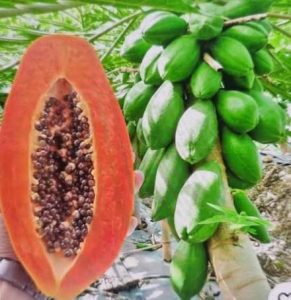
Why Grow Vega F1 Papaya?
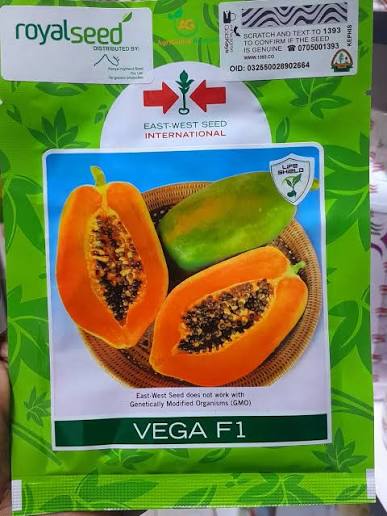
Vega F1 suits commercial growers who want manageable plants, consistent fruit and an early route to market. Good crop care allows the hybrid to remain productive for several seasons.
| Characteristic | Vega F1 performance |
|---|---|
| Plant type | Vigorous, hermaphrodite, semi-dwarf hybrid |
| First maturity | About 8–9 months after transplanting |
| Fruit size | Approximately 1–1.2 kg |
| Flesh | Deep red and sweet |
| Sweetness | About 12–14% Brix under suitable management |
| Yield potential | About 40–60 tonnes per year under good management |
| Productive harvest period | About 3–4 years under good management |
| Virus response | Intermediate tolerance to papaya ringspot virus |
Note: Maturity, sweetness, yield and productive life depend on climate, soil fertility, irrigation, pollination, crop protection and general farm management. Treat these figures as performance potential rather than a guarantee.
Best Climate and Soil for Vega F1 Papaya in Kenya
Papaya grows best in warm, frost-free conditions with plenty of sunlight. Choose a sheltered site because strong wind can tear leaves, scar fruit and topple heavily loaded plants. Avoid frost pockets and prolonged cold conditions.
Select deep, fertile and well-drained soil. Papaya roots react badly to waterlogging, so do not establish the orchard where water collects after rain. Aim for slightly acidic to near-neutral soil and arrange a soil test before planting. The test will guide lime, manure and fertiliser decisions and help you avoid unnecessary costs.
Suitable Kenyan production areas
Vega F1 can perform in warm parts of Eastern, Central, Coast, Rift Valley and Western Kenya where temperatures, drainage and water supply favour papaya. Irrigated farms around Nairobi may also supply the city’s fresh-fruit market efficiently. Always assess the farm’s altitude, night temperatures, water quality and disease pressure before investing at scale.
How to Raise Vega F1 Papaya Seedlings
- Use clean seedling trays or suitable nursery containers with drainage holes.
- Fill them with a clean, light and well-drained propagation medium. You can blend or select products such as treated cocopeat blocks according to your nursery system.
- Sow the seed shallowly, cover it lightly and water with a gentle spray.
- Keep the medium moist but never saturated. Too much water encourages damping-off and weak roots.
- Give emerging seedlings adequate light and airflow. Remove weak, damaged or diseased plants promptly.
- Harden healthy seedlings gradually before transplanting by reducing shade and slightly spacing irrigation.
For orderly nursery production, consider HD 150-cell seedling trays. Choose the final container or transplant stage according to the root space that papaya seedlings need; avoid keeping seedlings root-bound.
Land Preparation, Spacing and Transplanting
Clear the site, control perennial weeds and prepare drainage before the rains. Dig generous planting holes and separate the topsoil from the subsoil. Mix well-decomposed manure with the topsoil. Use soil-test results to select the correct planting fertiliser and rate. Never place fresh manure or concentrated fertiliser against young roots.
Recommended spacing
| Spacing | Approximate plant population | Management consideration |
|---|---|---|
| 3 m × 3 m | About 450 trees per acre | More working space, airflow and light penetration |
| 2.5 m × 2.5 m | About 650 trees per acre | Higher population but more demanding canopy, nutrition and disease management |
Transplant during cool hours, preferably in the late afternoon. Keep the original soil level around the stem; deep planting can encourage collar problems. Water immediately, replace dead plants early and install wind protection where necessary.
Vega F1 Papaya Nutrition and Irrigation
Papaya grows quickly and carries fruit continuously, so it needs balanced nutrition. Split fertiliser applications into smaller, timely doses instead of giving one heavy dose. Supply nitrogen for leaf and canopy growth, phosphorus for root establishment, and potassium for fruit filling and quality. Calcium, magnesium, boron and other micronutrients also support plant strength, flowering and fruit development.
| Crop stage | Main objective | Practical action |
|---|---|---|
| Nursery and establishment | Build roots and reduce transplant stress | Use a mild starter feed such as Easygro Starter only as directed on its label. |
| Vegetative growth | Develop a healthy canopy and stem | Base the programme on soil results; supplement when necessary with a balanced product such as Maxigrow General Premium. |
| Flowering and fruit set | Support flowers, fruit retention and early filling | Shift emphasis toward balanced flowering and fruit nutrition. Consider Easygro Fruit & Flower where the label and crop need allow. |
| Fruit development | Maintain fruit size, sweetness and firmness | Keep moisture steady and adjust potassium, calcium and micronutrients from crop observations and analysis. |
Irrigate consistently, especially during flowering and fruit enlargement. Do not allow severe drought followed by flooding because sudden moisture changes can stress the crop and reduce fruit quality. Drip irrigation delivers water efficiently and keeps foliage drier. Mulch around the root zone, but leave space around the stem to prevent collar rot.
Managing Papaya Pests and Diseases
Scout the orchard at least once a week. Check young leaves, flower clusters, fruit and the underside of mature leaves. Early detection lowers control costs and limits crop damage.
Common pest risks
- Aphids and whiteflies: They suck sap and may spread viral diseases. Control weeds, monitor populations and conserve beneficial insects.
- Red spider mites: They cause speckling, bronzing and leaf decline, especially during hot, dry weather.
- Mealybugs and scales: They weaken plants and contaminate fruit with honeydew and sooty mould.
- Fruit flies: They damage ripening fruit. Collect fallen fruit, maintain orchard sanitation and use an approved baiting or trapping programme.
Important disease risks
- Damping-off and root or collar rots: Use clean nursery media, provide drainage and avoid excess irrigation.
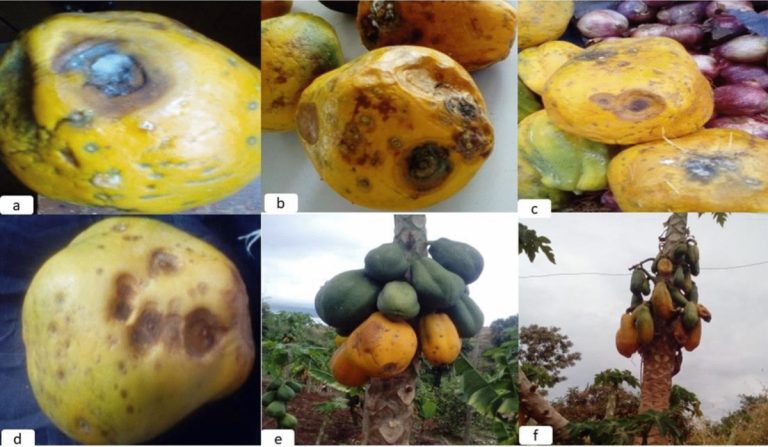
- Anthracnose and other fruit rots: Improve airflow, remove infected material, handle fruit gently and protect the crop according to local disease pressure.
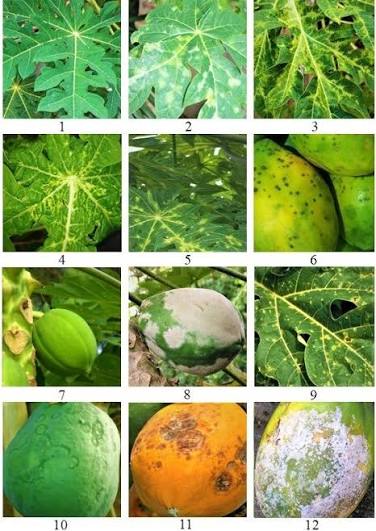
- Papaya ringspot virus: Vega F1 has intermediate tolerance, not immunity. Start with healthy seedlings, remove severely affected plants, suppress weed hosts and manage insect vectors promptly.
When a registered pesticide becomes necessary, confirm that its current Kenyan label covers papaya and the target problem. Follow the label rate, spray interval, maximum applications, protective equipment and pre-harvest interval. Rotate modes of action and seek an agronomist’s diagnosis before spraying. Dawn Farmers stocks crop-protection options and equipment, including the Jacto HD knapsack sprayer. A clean, correctly calibrated sprayer improves coverage and reduces waste.
Routine Orchard Care
- Keep the planting rows free from aggressive weeds, especially during establishment.
- Remove old, diseased or badly damaged leaves with clean tools, but retain enough healthy canopy to feed the fruit.
- Support leaning plants and heavily loaded stems where wind or soft soil creates a risk.
- Remove fallen and rotten fruit from the orchard.
- Record flowering dates, harvest quantities, pesticide applications, fertiliser use and buyer feedback.
Harvesting, Handling and Selling Vega F1 Papaya
Under suitable conditions, farmers can begin harvesting about 8–9 months after transplanting. Pick fruit at the maturity stage required by the buyer. Fruit for nearby Nairobi markets can carry more colour than fruit destined for a longer journey. Harvest carefully with clean tools and prevent fruit from falling onto the ground.
Sort fruit by size, maturity and freedom from defects. Protect the skin from scratches and latex stains, then pack fruit in clean, ventilated containers with suitable cushioning. Keep harvested papaya under shade and move it to market quickly. Consistent grading helps growers build trust with supermarkets, hotels, greengrocers and fruit vendors.
How to improve papaya sales in Kenya
- Speak with buyers before planting and learn their preferred fruit size and ripeness.
- Plant in planned batches where climate and farm size allow so that supply remains steady.
- Target Nairobi’s fresh-fruit shops, estates, hotels, restaurants, juice bars and wholesale markets.
- Use clean crates and a clear farm identity to present a reliable product.
- Track production costs and price fruit by grade instead of mixing every quality in one lot.
Where to Buy Vega F1 Papaya Seeds in Nairobi and Kenya
Buy genuine Vega F1 papaya seeds in Kenya from Dawn Farmers Limited. Visit us at Mang Building along Haile Selassie Avenue, Nairobi, or call 0713 064 228 for availability, package sizes, delivery options and agronomic support.
Order Vega F1 papaya seeds from Dawn Farmers today and prepare your nursery with the right planting media, nutrition and equipment from one trusted supplier.
Frequently Asked Questions About Vega F1 Papaya
How long does Vega F1 papaya take to mature?
Vega F1 can reach its first harvest about 8–9 months after transplanting under suitable weather and good crop management.
How many Vega F1 papaya trees fit in one acre?
A spacing of 3 m × 3 m accommodates about 450 trees per acre, while 2.5 m × 2.5 m accommodates about 650 trees. Field shape, access paths, drainage structures and headlands can change the final number.
What fruit size does Vega F1 produce?
The hybrid produces medium fruit that commonly weighs about 1–1.2 kg under good management.
Is Vega F1 resistant to papaya ringspot virus?
Vega F1 has intermediate tolerance to papaya ringspot virus. Tolerance does not equal immunity, so growers must still control weeds and vectors, monitor the orchard and remove severely affected plants.
Can Dawn Farmers deliver Vega F1 papaya seeds outside Nairobi?
Contact Dawn Farmers on 0713 064 228 to confirm current stock, package sizes and delivery arrangements to your location in Kenya.