The main types of fertilizers in Kenya differ not only by nutrient content but also by how nutrients are delivered to the crop. Granular, foliar and fertigation products can all support crop nutrition, yet each method has different requirements, strengths and limitations. Farmers get better value when the formulation matches the crop stage, irrigation system and field condition.
Granular Foliar and Fertigation Methods Have Different Jobs
| Method | Typical Route | Key Decision |
|---|---|---|
| Granular | Applied to soil | Moisture, placement and root access |
| Foliar | Applied to leaves | Crop stage, concentration and spray coverage |
| Fertigation | Applied through compatible irrigation | Solubility, water quality and system compatibility |
Soil Applied Fertilizer
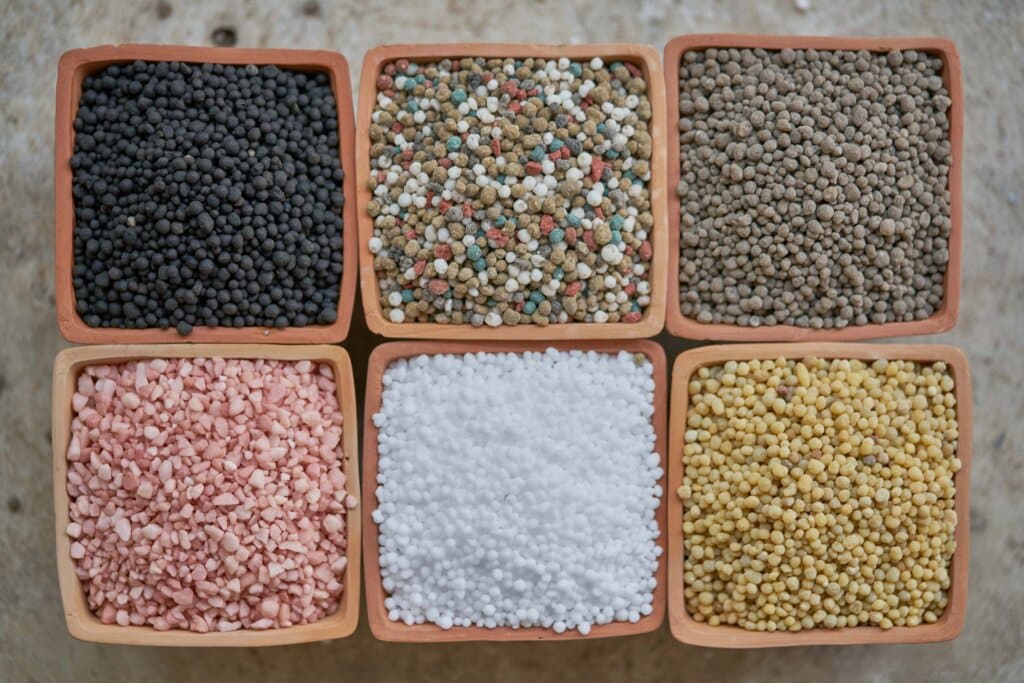
A granular fertilizer in Kenya is normally used through the soil, where nutrient availability depends on placement, moisture and root activity. A soil applied fertilizer should therefore be selected with soil fertility and crop stage in mind. Farmers can compare Dawn Farmers’ granular fertilizer range by analysis and intended use.
Foliar Feeding
A foliar fertilizer in Kenya is applied to plant leaves and can complement a broader nutrition programme when there is a clear reason for foliar feeding. Effective foliar feeding for crops depends on the formulation, crop stage, water quality, nozzle condition and suitable weather. It should not automatically replace correction of major soil fertility problems.
Fertilizer Through Irrigation
A fertigation fertilizer in Kenya must be suitable for dissolution and use in the intended irrigation system. Farmers considering fertilizer through irrigation should check solubility, water quality, filtration and compatibility. A water soluble fertilizer can be useful only when the irrigation system distributes it evenly and safely.
Choose the Method Around Crop Nutrition
Good fertilizer application methods start with the crop need, not with the equipment already available. Crop nutrition in Kenya may require different approaches during establishment, vegetative growth, flowering and harvest development. Soil or plant analysis can help identify where nutrition is limiting rather than assuming every symptom is a fertilizer problem.
When comparing plant nutrition products, read the guaranteed analysis, application instructions and label before mixing or changing rates. Farmers asking how to choose fertilizer should compare nutrient concentration, formulation, crop stage and total programme cost rather than pack price alone.
Browse Fertilizer Categories by Application Method
Dawn Farmers groups products into granular, foliar and fertigation categories so farmers can compare products by application method as well as nutrient analysis.
Field reminder: the best fertilizer method is the one that fits the crop, field and application system. More applications or a stronger concentration do not automatically improve yield.
About the product and variety information used here: Granular, foliar and fertigation fertilizers use different application routes. Formulation, solubility, crop stage and irrigation compatibility determine where each method fits.
Three Application Routes Different Jobs
Granular, foliar and fertigation fertilizers all deliver plant nutrients, but they do so through different routes. Soil-applied granules rely on moisture, dissolution and root uptake; foliar products contact leaves; fertigation products travel with irrigation water.
These methods should not be treated as interchangeable because formulation and crop response differ. The first question is therefore what nutrient problem and application route the farm is trying to manage.
The farm-level value of three Application Routes Different Jobs comes from consistency in granular, foliar and fertigation fertilizer use. One well-managed operation supports the next: uniform establishment improves scouting, good scouting improves timing, and accurate timing makes every later input easier to justify. Small variations in depth, plant population, operator technique or field condition can become large yield differences when they are repeated over a whole field. Use a simple checklist before the operation begins, observe the result afterwards, and record anything unusual so the next season is based on evidence rather than memory.
When applying the lesson from three Application Routes Different Jobs to granular, foliar and fertigation fertilizer use, separate what can be controlled from what cannot. Weather will change, but the farm can still control preparation, timing, input identity, equipment condition and record keeping. When conditions move away from the original plan, adjust the operation through agronomic reasoning instead of adding more product automatically. This approach keeps the decision resilient because it remains linked to the actual field rather than to a rigid recipe.
Before committing money or labour to three Application Routes Different Jobs, ask what information would make the decision less uncertain for granular, foliar and fertigation fertilizer use. It may be a soil test, a seed label, a pest count, a calibration measurement, a weather forecast, a market order or a current price. Collecting that information before spending money usually costs less than correcting the consequences of a poorly matched input. This habit is one of the clearest differences between reactive farming and deliberate farm management.
The idea behind types of fertilizers in Kenya becomes most useful when it is applied to a real field decision. For granular, foliar and fertigation fertilizer use, compare the farm conditions, stage of production and evidence from scouting or records before changing the programme.
Granular Fertilizer and the Root Zone
Granular fertilizers are generally applied to soil where nutrients dissolve and move toward roots. Placement affects how quickly roots encounter nutrients and how much risk there is of seed or root injury.
Soil moisture, texture and pH influence nutrient movement and availability. Granular products are useful when the crop needs meaningful quantities of nutrients that are best supplied through the root zone.
How to Apply Granular Fertilizer and the Root Zone on the Farm
The practical lesson from granular Fertilizer and the Root Zone is to connect nutrient decisions with evidence from the field. In crops, roots can only use nutrients that are available in the root zone and accessible under the prevailing moisture and pH conditions. A crop that is waterlogged, drought stressed or suffering from damaged roots may show poor growth even when fertilizer has been applied. Before adding another product, review what has already been used, where it was placed, recent rainfall or irrigation, and whether the symptom pattern is consistent across the field. This discipline keeps granular, foliar and fertigation fertilizer use from becoming a sequence of expensive fertilizer guesses.
For a commercial grower managing granular, foliar and fertigation fertilizer use, granular Fertilizer and the Root Zone is also a cost-control point. Every pass through the field uses labour, fuel or carrying effort and may expose the crop to additional risk. An operation should therefore have a clear objective and a way to judge whether it worked. Record the date, field or block, input or equipment used and any observation that explains the result. Over time, those records show which practices are worth repeating.
Basal and Top-Dress Granular Applications
Some granular fertilizers are used around planting, while others are applied later as top dressing. The difference is not merely timing; nutrient analysis and crop demand should also fit the stage.
A product rich in phosphorus may be considered for establishment in some programmes, while later nitrogen demand may require a different analysis. Follow crop and soil recommendations rather than assuming every granular fertilizer belongs at planting.
The farm-level value of basal and Top-Dress Granular Applications comes from consistency in granular, foliar and fertigation fertilizer use. One well-managed operation supports the next: uniform establishment improves scouting, good scouting improves timing, and accurate timing makes every later input easier to justify. Small variations in depth, plant population, operator technique or field condition can become large yield differences when they are repeated over a whole field. Use a simple checklist before the operation begins, observe the result afterwards, and record anything unusual so the next season is based on evidence rather than memory.
A common mistake around basal and Top-Dress Granular Applications is to respond to one disappointing symptom by changing several things at once. That makes it difficult to know which change helped and can create hidden interactions. Where possible, correct the most likely limiting factor first, observe granular, foliar and fertigation fertilizer use, and keep other management stable. This is especially important when fertilizers or pesticides are involved, because unnecessary combinations increase cost and may create crop-safety or compatibility problems.
Before committing money or labour to basal and Top-Dress Granular Applications, ask what information would make the decision less uncertain for granular, foliar and fertigation fertilizer use. It may be a soil test, a seed label, a pest count, a calibration measurement, a weather forecast, a market order or a current price. Collecting that information before spending money usually costs less than correcting the consequences of a poorly matched input. This habit is one of the clearest differences between reactive farming and deliberate farm management.
Farmers researching granular fertilizer in Kenya should connect the phrase to practical management: what the crop needs, what the field can supply, what the current label or variety information says and what outcome will be measured afterwards.
Foliar Feeding Through Leaves
Foliar fertilizers are formulated for nutrient uptake through leaves and can be useful for targeted supplementation or rapid correction. Leaf cuticle, humidity, temperature, spray coverage and concentration affect absorption.
Foliar feeding cannot supply every nutrient need economically when the crop requires large quantities. Use it as a specific tool within a broader nutrition programme rather than as a universal replacement for soil fertility.
The farm-level value of foliar Feeding Through Leaves comes from consistency in granular, foliar and fertigation fertilizer use. One well-managed operation supports the next: uniform establishment improves scouting, good scouting improves timing, and accurate timing makes every later input easier to justify. Small variations in depth, plant population, operator technique or field condition can become large yield differences when they are repeated over a whole field. Use a simple checklist before the operation begins, observe the result afterwards, and record anything unusual so the next season is based on evidence rather than memory.
The scale of foliar Feeding Through Leaves matters in granular, foliar and fertigation fertilizer use. A decision that seems minor on a few plants can become expensive over several acres. Before applying it across the whole farm, confirm that the method, product or variety fits the field and that workers understand the procedure. Small trial areas, calibration checks and written instructions can prevent a repeated error from affecting an entire crop.
In practice, foliar fertilizer in Kenya should not be treated as a stand-alone promise. Its value depends on how well the product, variety or method fits granular, foliar and fertigation fertilizer use under the actual conditions on the farm.
When Foliar Nutrition Can Be Useful
Foliar feeding can be valuable when root uptake is temporarily limited or when a crop has a specific micronutrient requirement. It can also complement soil nutrition during demanding growth stages when the product label supports that use.
However, a foliar spray will not correct severe soil acidity, waterlogging or a major shortage of bulk nutrients in the root zone. Diagnose the limitation before selecting a foliar product.
How to Apply When Foliar Nutrition Can Be Useful on the Farm
The practical lesson from when Foliar Nutrition Can Be Useful is to connect nutrient decisions with evidence from the field. In crops, roots can only use nutrients that are available in the root zone and accessible under the prevailing moisture and pH conditions. A crop that is waterlogged, drought stressed or suffering from damaged roots may show poor growth even when fertilizer has been applied. Before adding another product, review what has already been used, where it was placed, recent rainfall or irrigation, and whether the symptom pattern is consistent across the field. This discipline keeps granular, foliar and fertigation fertilizer use from becoming a sequence of expensive fertilizer guesses.
Good decisions about when Foliar Nutrition Can Be Useful also leave room for local knowledge. Soil type, altitude, water quality, pest pressure and market conditions vary across Kenya, so general guidance should be refined with current local recommendations and product information. Use this principle with granular, foliar and fertigation fertilizer use: understand the agronomy first, then adapt the details to the farm rather than copying a programme from a different production environment.
Before committing money or labour to when Foliar Nutrition Can Be Useful, ask what information would make the decision less uncertain for granular, foliar and fertigation fertilizer use. It may be a soil test, a seed label, a pest count, a calibration measurement, a weather forecast, a market order or a current price. Collecting that information before spending money usually costs less than correcting the consequences of a poorly matched input. This habit is one of the clearest differences between reactive farming and deliberate farm management.
Fertigation Through Irrigation Water
Dawn Farmers lists YaraTera Calcinit among its fertilizer products and Nutriplant Organic Plus within the foliar fertilizer range. These examples show why the application route and current product directions should be checked before assuming that every fertilizer is used in the same way.
Fertigation applies soluble nutrients through irrigation, allowing water and nutrition to be scheduled together. The method can improve timing and distribution when the irrigation system is uniform and well managed.
It also requires clean water, filtration, accurate injection and fertilizers that are suitable for the system. Poorly dissolved products or incompatible mixtures can block emitters and create uneven nutrient supply.
For granular, foliar and fertigation fertilizer use, fertigation Through Irrigation Water should be treated as a root-zone decision rather than a fixed calendar. Soil texture, rooting depth, crop size, weather and drainage all change how quickly water becomes limiting. Both shortage and excess can reduce nutrient uptake and make pest or disease symptoms harder to interpret. Check the soil as well as the leaves, and adjust irrigation or moisture-conservation practices before assuming every stress symptom requires another chemical or fertilizer input. Where irrigation is used, uniform delivery across the field is as important as total water applied.
Connect fertigation Through Irrigation Water to the next decision in the granular, foliar and fertigation fertilizer use season. If establishment is uneven, later fertilizer and spray calculations may need to account for a lower plant population. If a pest treatment is delayed, scouting frequency may need to increase. If water is limiting, nutrient uptake may change. Thinking in sequences turns this step into part of a complete crop-management system instead of an isolated task.
A useful way to evaluate fertigation fertilizer in Kenya is to ask what changes in the field if this decision is correct. The answer should be observable through establishment, crop health, application quality, harvest or cost records rather than through marketing language alone.
Solubility Is Not the Same as Compatibility
Two fertilizers can both dissolve in water yet react when mixed in concentrated solutions. Calcium-containing products can form precipitates with some phosphate or sulfate sources, for example.
Precipitation can remove nutrients from solution and damage irrigation equipment. Use manufacturer compatibility guidance and separate stock tanks where necessary.
The farm-level value of solubility Is Not the Same as Compatibility comes from consistency in granular, foliar and fertigation fertilizer use. One well-managed operation supports the next: uniform establishment improves scouting, good scouting improves timing, and accurate timing makes every later input easier to justify. Small variations in depth, plant population, operator technique or field condition can become large yield differences when they are repeated over a whole field. Use a simple checklist before the operation begins, observe the result afterwards, and record anything unusual so the next season is based on evidence rather than memory.
After completing the work around solubility Is Not the Same as Compatibility, set one or two observations to check in granular, foliar and fertigation fertilizer use. These might include emergence uniformity, crop colour, weed escape, pest numbers, nozzle output, fruit quality or marketable harvest depending on the stage. Without a follow-up observation, it is easy to repeat a costly practice simply because it has always been done that way.
Before committing money or labour to solubility Is Not the Same as Compatibility, ask what information would make the decision less uncertain for granular, foliar and fertigation fertilizer use. It may be a soil test, a seed label, a pest count, a calibration measurement, a weather forecast, a market order or a current price. Collecting that information before spending money usually costs less than correcting the consequences of a poorly matched input. This habit is one of the clearest differences between reactive farming and deliberate farm management.
The idea behind water soluble fertilizer becomes most useful when it is applied to a real field decision. For granular, foliar and fertigation fertilizer use, compare the farm conditions, stage of production and evidence from scouting or records before changing the programme.
Water Quality in Fertigation and Foliar Sprays
Water pH, hardness, dissolved salts and suspended solids can influence fertilizer solubility and spray performance. Hard or alkaline water may interact with some products, while dirty water can block fine nozzles or emitters.
Testing irrigation water can be useful where problems recur. A high-quality fertilizer cannot compensate for an irrigation system delivering poor-quality water unevenly.
How to Apply Water Quality in Fertigation and Foliar Sprays on the Farm
For granular, foliar and fertigation fertilizer use, water Quality in Fertigation and Foliar Sprays should always be connected to diagnosis and application quality. The farmer should be able to name the crop, target problem, crop stage and the reason treatment is justified before opening a pesticide container. Then the current label determines whether the product is registered for that use, how it is mixed and applied, what protective equipment is required, and what restrictions apply before harvest or worker re-entry. Changing dose, shortening intervals or adding unlisted tank-mix partners because control looks weak can create more problems than it solves. Review diagnosis, coverage, timing and resistance management first.
If advice about water Quality in Fertigation and Foliar Sprays from a supplier, neighbour and agronomist differs, compare each recommendation against current label or variety information and the conditions in the field. The most persuasive recommendation for granular, foliar and fertigation fertilizer use is the one that explains why it fits the crop, stage and problem. That standard reduces dependence on brand reputation or hearsay.
Crop Stage Determines the Best Route
Young crops, rapidly growing canopies, flowering plants and fruiting crops do not have identical nutrient demands. Root-zone nutrition often provides the foundation, while foliar or fertigation applications can be added for specific stages or systems.
The method should fit the nutrient quantity required and the crop’s ability to absorb it. Design the programme around crop physiology rather than around whichever product is easiest to apply.
The farm-level value of crop Stage Determines the Best Route comes from consistency in granular, foliar and fertigation fertilizer use. One well-managed operation supports the next: uniform establishment improves scouting, good scouting improves timing, and accurate timing makes every later input easier to justify. Small variations in depth, plant population, operator technique or field condition can become large yield differences when they are repeated over a whole field. Use a simple checklist before the operation begins, observe the result afterwards, and record anything unusual so the next season is based on evidence rather than memory.
When applying the lesson from crop Stage Determines the Best Route to granular, foliar and fertigation fertilizer use, separate what can be controlled from what cannot. Weather will change, but the farm can still control preparation, timing, input identity, equipment condition and record keeping. When conditions move away from the original plan, adjust the operation through agronomic reasoning instead of adding more product automatically. This approach keeps the decision resilient because it remains linked to the actual field rather than to a rigid recipe.
Before committing money or labour to crop Stage Determines the Best Route, ask what information would make the decision less uncertain for granular, foliar and fertigation fertilizer use. It may be a soil test, a seed label, a pest count, a calibration measurement, a weather forecast, a market order or a current price. Collecting that information before spending money usually costs less than correcting the consequences of a poorly matched input. This habit is one of the clearest differences between reactive farming and deliberate farm management.
Good practice around fertilizer application methods begins with current product directions, calibrated equipment and the actual crop or field situation. For granular, foliar and fertigation fertilizer use, accuracy and safety should come before attempts to make a product work faster or stronger.
Understand Nutrient Concentration
Concentrated fertilizers can deliver useful nutrients in small amounts of product, but accurate measurement becomes more important. A high analysis does not mean the product should be applied at a high rate.
For foliar and fertigation use, incorrect concentration can damage plants or increase salinity. Always follow the product label and calibrated application equipment.
The practical lesson from understand Nutrient Concentration is to connect nutrient decisions with evidence from the field. In crops, roots can only use nutrients that are available in the root zone and accessible under the prevailing moisture and pH conditions. A crop that is waterlogged, drought stressed or suffering from damaged roots may show poor growth even when fertilizer has been applied. Before adding another product, review what has already been used, where it was placed, recent rainfall or irrigation, and whether the symptom pattern is consistent across the field. This discipline keeps granular, foliar and fertigation fertilizer use from becoming a sequence of expensive fertilizer guesses.
For a commercial grower managing granular, foliar and fertigation fertilizer use, understand Nutrient Concentration is also a cost-control point. Every pass through the field uses labour, fuel or carrying effort and may expose the crop to additional risk. An operation should therefore have a clear objective and a way to judge whether it worked. Record the date, field or block, input or equipment used and any observation that explains the result. Over time, those records show which practices are worth repeating.
In practice, crop nutrition in Kenya should not be treated as a stand-alone promise. Its value depends on how well the product, variety or method fits granular, foliar and fertigation fertilizer use under the actual conditions on the farm.
Salinity and Root-Zone Management
Fertilizer salts contribute to the concentration of dissolved ions around roots. Where irrigation water is already saline or drainage is poor, additional salts can create osmotic stress.
Fertigation programmes should therefore consider water quality, leaching, drainage and total nutrient concentration. Symptoms of salt stress can resemble drought because roots struggle to take up water.
How to Apply Salinity and Root-Zone Management on the Farm
The farm-level value of salinity and Root-Zone Management comes from consistency in granular, foliar and fertigation fertilizer use. One well-managed operation supports the next: uniform establishment improves scouting, good scouting improves timing, and accurate timing makes every later input easier to justify. Small variations in depth, plant population, operator technique or field condition can become large yield differences when they are repeated over a whole field. Use a simple checklist before the operation begins, observe the result afterwards, and record anything unusual so the next season is based on evidence rather than memory.
A common mistake around salinity and Root-Zone Management is to respond to one disappointing symptom by changing several things at once. That makes it difficult to know which change helped and can create hidden interactions. Where possible, correct the most likely limiting factor first, observe granular, foliar and fertigation fertilizer use, and keep other management stable. This is especially important when fertilizers or pesticides are involved, because unnecessary combinations increase cost and may create crop-safety or compatibility problems.
Before committing money or labour to salinity and Root-Zone Management, ask what information would make the decision less uncertain for granular, foliar and fertigation fertilizer use. It may be a soil test, a seed label, a pest count, a calibration measurement, a weather forecast, a market order or a current price. Collecting that information before spending money usually costs less than correcting the consequences of a poorly matched input. This habit is one of the clearest differences between reactive farming and deliberate farm management.
Spray Quality for Foliar Fertilizers
Foliar feeding depends on reasonable coverage without excessive runoff. Nozzle type, pressure, walking speed and spray volume affect how evenly the product reaches the canopy.
Very hot, dry or windy conditions can reduce deposition or increase crop stress. Calibrate the sprayer and follow label guidance rather than compensating for poor coverage by increasing concentration.
The practical lesson from spray Quality for Foliar Fertilizers is to connect nutrient decisions with evidence from the field. In crops, roots can only use nutrients that are available in the root zone and accessible under the prevailing moisture and pH conditions. A crop that is waterlogged, drought stressed or suffering from damaged roots may show poor growth even when fertilizer has been applied. Before adding another product, review what has already been used, where it was placed, recent rainfall or irrigation, and whether the symptom pattern is consistent across the field. This discipline keeps granular, foliar and fertigation fertilizer use from becoming a sequence of expensive fertilizer guesses.
The scale of spray Quality for Foliar Fertilizers matters in granular, foliar and fertigation fertilizer use. A decision that seems minor on a few plants can become expensive over several acres. Before applying it across the whole farm, confirm that the method, product or variety fits the field and that workers understand the procedure. Small trial areas, calibration checks and written instructions can prevent a repeated error from affecting an entire crop.
A useful way to evaluate foliar feeding for crops is to ask what changes in the field if this decision is correct. The answer should be observable through establishment, crop health, application quality, harvest or cost records rather than through marketing language alone.
Granular Spreading Uniformity
Uneven granular application creates zones of excess and deficiency within the same field. Spinner calibration, hand-application technique, granule size and operator consistency all affect distribution.
Visible bands of crop colour can sometimes reflect uneven fertilizer placement rather than soil variability. Check equipment and application pattern whenever inconsistent growth follows fertilizer spreading.
The farm-level value of granular Spreading Uniformity comes from consistency in granular, foliar and fertigation fertilizer use. One well-managed operation supports the next: uniform establishment improves scouting, good scouting improves timing, and accurate timing makes every later input easier to justify. Small variations in depth, plant population, operator technique or field condition can become large yield differences when they are repeated over a whole field. Use a simple checklist before the operation begins, observe the result afterwards, and record anything unusual so the next season is based on evidence rather than memory.
Good decisions about granular Spreading Uniformity also leave room for local knowledge. Soil type, altitude, water quality, pest pressure and market conditions vary across Kenya, so general guidance should be refined with current local recommendations and product information. Use this principle with granular, foliar and fertigation fertilizer use: understand the agronomy first, then adapt the details to the farm rather than copying a programme from a different production environment.
Before committing money or labour to granular Spreading Uniformity, ask what information would make the decision less uncertain for granular, foliar and fertigation fertilizer use. It may be a soil test, a seed label, a pest count, a calibration measurement, a weather forecast, a market order or a current price. Collecting that information before spending money usually costs less than correcting the consequences of a poorly matched input. This habit is one of the clearest differences between reactive farming and deliberate farm management.
The idea behind soil applied fertilizer becomes most useful when it is applied to a real field decision. For granular, foliar and fertigation fertilizer use, compare the farm conditions, stage of production and evidence from scouting or records before changing the programme.
Combining Methods Without Overfeeding
A crop can receive granular, foliar and fertigation nutrition in one season, but each application should have a defined purpose. Adding methods without adjusting the total nutrient plan can result in duplication.
Keep records of nutrient analysis and timing from every product, not only the main basal fertilizer. The goal is coordinated nutrition, not the largest number of products.
How to Apply Combining Methods Without Overfeeding on the Farm
The farm-level value of combining Methods Without Overfeeding comes from consistency in granular, foliar and fertigation fertilizer use. One well-managed operation supports the next: uniform establishment improves scouting, good scouting improves timing, and accurate timing makes every later input easier to justify. Small variations in depth, plant population, operator technique or field condition can become large yield differences when they are repeated over a whole field. Use a simple checklist before the operation begins, observe the result afterwards, and record anything unusual so the next season is based on evidence rather than memory.
Connect combining Methods Without Overfeeding to the next decision in the granular, foliar and fertigation fertilizer use season. If establishment is uneven, later fertilizer and spray calculations may need to account for a lower plant population. If a pest treatment is delayed, scouting frequency may need to increase. If water is limiting, nutrient uptake may change. Thinking in sequences turns this step into part of a complete crop-management system instead of an isolated task.
Diagnose Before Correcting
Leaf colour, stunting, poor flowering or weak fruit set can have nutritional causes, but also water, root, pest or disease causes. Before adding fertilizer, inspect the crop pattern, root condition, soil moisture and recent spray history.
Where possible, use soil or tissue testing to confirm suspected deficiencies. Correcting the wrong problem wastes money and can complicate diagnosis.
The farm-level value of diagnose Before Correcting comes from consistency in granular, foliar and fertigation fertilizer use. One well-managed operation supports the next: uniform establishment improves scouting, good scouting improves timing, and accurate timing makes every later input easier to justify. Small variations in depth, plant population, operator technique or field condition can become large yield differences when they are repeated over a whole field. Use a simple checklist before the operation begins, observe the result afterwards, and record anything unusual so the next season is based on evidence rather than memory.
After completing the work around diagnose Before Correcting, set one or two observations to check in granular, foliar and fertigation fertilizer use. These might include emergence uniformity, crop colour, weed escape, pest numbers, nozzle output, fruit quality or marketable harvest depending on the stage. Without a follow-up observation, it is easy to repeat a costly practice simply because it has always been done that way.
Before committing money or labour to diagnose Before Correcting, ask what information would make the decision less uncertain for granular, foliar and fertigation fertilizer use. It may be a soil test, a seed label, a pest count, a calibration measurement, a weather forecast, a market order or a current price. Collecting that information before spending money usually costs less than correcting the consequences of a poorly matched input. This habit is one of the clearest differences between reactive farming and deliberate farm management.
Farmers researching fertilizer through irrigation should connect the phrase to practical management: what the crop needs, what the field can supply, what the current label or variety information says and what outcome will be measured afterwards.
Compare Cost by Application Objective
Granular, foliar and fertigation products can have very different price per kilogram because their concentration and purpose differ. Comparing pack price alone is therefore misleading.
Consider nutrient supplied, treated area, labour, equipment, number of applications and the value of precise timing. The most economical method is the one that solves the defined crop need efficiently.
The farm-level value of compare Cost by Application Objective comes from consistency in granular, foliar and fertigation fertilizer use. One well-managed operation supports the next: uniform establishment improves scouting, good scouting improves timing, and accurate timing makes every later input easier to justify. Small variations in depth, plant population, operator technique or field condition can become large yield differences when they are repeated over a whole field. Use a simple checklist before the operation begins, observe the result afterwards, and record anything unusual so the next season is based on evidence rather than memory.
If advice about compare Cost by Application Objective from a supplier, neighbour and agronomist differs, compare each recommendation against current label or variety information and the conditions in the field. The most persuasive recommendation for granular, foliar and fertigation fertilizer use is the one that explains why it fits the crop, stage and problem. That standard reduces dependence on brand reputation or hearsay.
In practice, plant nutrition products should not be treated as a stand-alone promise. Its value depends on how well the product, variety or method fits granular, foliar and fertigation fertilizer use under the actual conditions on the farm.
Storage and Mixing Discipline
Keep fertilizers in their original labelled containers, dry and protected from contamination. Use dedicated measuring tools and avoid returning mixed solution to the original pack.
Clean fertigation tanks and sprayers after use according to product and equipment guidance. Good handling reduces cross-contamination and protects equipment.
How to Apply Storage and Mixing Discipline on the Farm
In granular, foliar and fertigation fertilizer use, storage and Mixing Discipline deserves the same attention as establishment because this is when field effort is converted into saleable produce. Harvest quality can be reduced by stress, delayed picking, rough handling, moisture problems or poor storage even when the crop grew well. Plan labour, containers, drying or cooling needs and market timing before the crop reaches peak maturity. Keeping rejected or damaged produce separate also helps the farm measure marketable yield rather than overestimating performance from total biological production.
When applying the lesson from storage and Mixing Discipline to granular, foliar and fertigation fertilizer use, separate what can be controlled from what cannot. Weather will change, but the farm can still control preparation, timing, input identity, equipment condition and record keeping. When conditions move away from the original plan, adjust the operation through agronomic reasoning instead of adding more product automatically. This approach keeps the decision resilient because it remains linked to the actual field rather than to a rigid recipe.
Before committing money or labour to storage and Mixing Discipline, ask what information would make the decision less uncertain for granular, foliar and fertigation fertilizer use. It may be a soil test, a seed label, a pest count, a calibration measurement, a weather forecast, a market order or a current price. Collecting that information before spending money usually costs less than correcting the consequences of a poorly matched input. This habit is one of the clearest differences between reactive farming and deliberate farm management.
How to Choose Between the Three Methods
Choose granular fertilizer when substantial root-zone nutrition is needed and soil application fits the system. Choose foliar feeding when a labelled product can efficiently address a specific leaf-uptake need.
Choose fertigation where soluble fertilizers and a uniform irrigation system allow precise root-zone delivery. Many farms use more than one route, but the programme should remain evidence-based and coordinated.
The farm-level value of how to Choose Between the Three Methods comes from consistency in granular, foliar and fertigation fertilizer use. One well-managed operation supports the next: uniform establishment improves scouting, good scouting improves timing, and accurate timing makes every later input easier to justify. Small variations in depth, plant population, operator technique or field condition can become large yield differences when they are repeated over a whole field. Use a simple checklist before the operation begins, observe the result afterwards, and record anything unusual so the next season is based on evidence rather than memory.
For a commercial grower managing granular, foliar and fertigation fertilizer use, how to Choose Between the Three Methods is also a cost-control point. Every pass through the field uses labour, fuel or carrying effort and may expose the crop to additional risk. An operation should therefore have a clear objective and a way to judge whether it worked. Record the date, field or block, input or equipment used and any observation that explains the result. Over time, those records show which practices are worth repeating.
For how to choose fertilizer, start with the farm environment and production objective, then compare documented characteristics, management needs and cost. That sequence makes the choice more useful for granular, foliar and fertigation fertilizer use than starting with a brand name.
Choosing an application route also becomes clearer when combined with Fertilizer for Maize in Kenya From Planting to Top Dressing and Grain Filling, NPK Fertilizer Meaning DAP CAN and Fertilizer Numbers Explained in Kenya and Fertilizers for Sale in Nairobi Kenya for connected planning and buying decisions.
Frequently Asked Questions
What is the difference between granular and foliar fertilizer?
Granular fertilizer is normally applied to soil, while foliar fertilizer is applied to leaves as a spray.
What is fertigation fertilizer?
It is a water-soluble fertilizer suitable for delivery through compatible irrigation systems according to product and system guidance.
Can foliar fertilizer replace granular fertilizer?
Sometimes foliar feeding is useful for targeted supplementation, but it should not automatically replace soil fertility correction.
Why does water quality matter in fertigation?
Water chemistry can affect solubility, compatibility and the performance of the irrigation system.
When should farmers use more than one fertilizer method?
Only when each method has a clear crop-nutrition purpose and the programme avoids unnecessary duplication.
Where can I compare fertilizer types in Kenya?
Dawn Farmers has separate granular, foliar and fertigation fertilizer categories to make comparison easier.
Can fertilizer choice be made from crop colour alone?
No. Visual symptoms are useful clues, but water stress, root damage, disease, pH problems and herbicide injury can resemble nutrient deficiency.
Why is a soil test useful before buying fertilizer?
A soil test provides information on pH and selected nutrient conditions so the fertilizer programme can be based on the field rather than a generic recipe. In granular, foliar and fertigation fertilizer use, adapt this point to current field conditions, product or variety information and the management capacity of the farm.
Is a higher NPK number always better?
No. Higher numbers mean higher concentration, not automatically better suitability. The nutrient ratio and crop need still have to match.
Can foliar fertilizer replace all soil fertilizer?
Usually not. Foliar feeding can supplement or correct specific needs, but crops often require larger nutrient quantities through the root zone.
Why should fertilizer rates not be increased without evidence?
Excess fertilizer can cause salt stress, nutrient imbalance, crop injury, nutrient loss and unnecessary cost without solving the actual limitation.
What should I compare when buying two fertilizers?
Compare nutrient analysis, formulation, application route, pack size, crop stage, quantity of nutrient supplied and total cost for the intended use.
Need Help Choosing a Fertilizer Type?
Use the guide above to narrow the requirement, then browse fertilizer options. For current stock, pack sizes and prices, contact Dawn Farmers Limited on +254 724 367 713. In granular, foliar and fertigation fertilizer use, adapt this point to current field conditions, product or variety information and the management capacity of the farm.