Agrochemicals for sale in Nairobi Kenya should be chosen by the crop problem and approved label, not by brand recognition alone. Crop-protection products can look similar on a shelf while differing in active ingredient, formulation, registered crop, target pest or disease and application timing.
Begin With Diagnosis Before Buying
When comparing agrochemicals in Nairobi, identify whether the field problem is an insect pest, fungal disease, weed or another issue. Good crop protection products in Kenya only deliver value when the product fits the actual problem. Yellowing or poor growth, for example, can also result from nutrition, water stress or root problems rather than a pest.
Insecticides Fungicides and Herbicides
Farmers searching for insecticides for sale in Nairobi should confirm the crop and target pest on the label. The same applies to fungicides for sale in Nairobi and herbicides for sale in Nairobi. Dawn Farmers maintains separate insecticide, fungicide and herbicide categories for easier comparison.
Read Active Ingredient Formulation and Label
Different pesticides for sale in Nairobi may use different chemistry even when they target similar problems. Compare the active ingredient, formulation, mode of action and registration. This is especially important with agricultural chemicals in Kenya because repeated use of closely related chemistry can contribute to resistance pressure.
Compare Real Product Examples
Dawn Farmers lists products such as Chess 50WG, Ridomil Gold MZ 68 WG and Dual Gold 960 EC. These are different agrovet chemicals in Nairobi with different intended uses; none should be substituted for another without checking the label.
Check Stock Price and Delivery
A reliable agrochemical shop in Nairobi should be able to confirm the exact product and pack size available. Call +254 724 367 713 before travelling where stock confirmation is important. Customers outside the city can enquire about agrochemical delivery in Kenya by providing the destination, product and quantity.
When comparing agrochemical suppliers in Kenya, consider product identity, label information, current availability and clear communication in addition to price.
Safety reminder: never increase a pesticide rate or apply an agrochemical to a crop that is not listed on the approved label. Use suitable protective equipment and follow current handling instructions.
About the product and variety information used here: Agrochemical buying should begin with the crop problem and the approved label. Active ingredient, formulation, pack integrity, registration information, supplier traceability and safe handling matter before price.
Diagnose Before You Buy
The safest agrochemical purchase starts with the crop problem, not the brand name. Identify whether the issue is an insect, disease, weed, nutrient disorder or environmental stress.
A pesticide cannot solve a problem outside its labelled target. Where diagnosis is uncertain, obtain agronomic help before buying multiple products.
For buying agrochemicals in Nairobi and Kenya, the decision around diagnose Before You Buy is strongest when the farmer can explain exactly what is being purchased and why. That means comparing specification or label information, the quantity required, storage or handling needs, and the cost of getting the input to the farm. A lower shelf price can be poor value when the wrong product is bought, while a higher-priced option is not automatically better simply because it carries a recognised brand. Keep the production objective in front of the buying decision and ask for the exact item, formulation, variety or specification rather than accepting a vague substitute.
When applying the lesson from diagnose Before You Buy to buying agrochemicals in Nairobi and Kenya, separate what can be controlled from what cannot. Weather will change, but the farm can still control preparation, timing, input identity, equipment condition and record keeping. When conditions move away from the original plan, adjust the operation through agronomic reasoning instead of adding more product automatically. This approach keeps the decision resilient because it remains linked to the actual field rather than to a rigid recipe.
Before committing money or labour to diagnose Before You Buy, ask what information would make the decision less uncertain for buying agrochemicals in Nairobi and Kenya. It may be a soil test, a seed label, a pest count, a calibration measurement, a weather forecast, a market order or a current price. Collecting that information before spending money usually costs less than correcting the consequences of a poorly matched input. This habit is one of the clearest differences between reactive farming and deliberate farm management.
When farmers compare agrochemicals for sale in Nairobi Kenya, the buying decision should follow suitability, current label or variety information, pack size, supplier traceability and the total farm requirement rather than price alone. This keeps the purchase connected to buying agrochemicals in Nairobi and Kenya and reduces the risk of buying an input that does not fit the production plan.
Separate Insecticides Fungicides and Herbicides
Insecticides target labelled insect pests, fungicides target labelled fungal or fungus-like diseases, and herbicides manage labelled weeds. These categories are not interchangeable.
A yellow leaf can be caused by insects, root disease, nutrient deficiency or herbicide injury, so symptoms alone do not tell you which category to buy. Correct identification avoids unnecessary pesticide use.
How to Apply Separate Insecticides Fungicides and Herbicides on the Farm
For buying agrochemicals in Nairobi and Kenya, separate Insecticides Fungicides and Herbicides should always be connected to diagnosis and application quality. The farmer should be able to name the crop, target problem, crop stage and the reason treatment is justified before opening a pesticide container. Then the current label determines whether the product is registered for that use, how it is mixed and applied, what protective equipment is required, and what restrictions apply before harvest or worker re-entry. Changing dose, shortening intervals or adding unlisted tank-mix partners because control looks weak can create more problems than it solves. Review diagnosis, coverage, timing and resistance management first.
For a commercial grower managing buying agrochemicals in Nairobi and Kenya, separate Insecticides Fungicides and Herbicides is also a cost-control point. Every pass through the field uses labour, fuel or carrying effort and may expose the crop to additional risk. An operation should therefore have a clear objective and a way to judge whether it worked. Record the date, field or block, input or equipment used and any observation that explains the result. Over time, those records show which practices are worth repeating.
Read the Active Ingredient
The active ingredient is the pesticidal component that determines much of a product’s mode of action. Different brands can contain the same active ingredient, so rotating brand names may not rotate chemistry.
Concentration and formulation also matter. Compare the complete label rather than the front of the package.
The farm-level value of read the Active Ingredient comes from consistency in buying agrochemicals in Nairobi and Kenya. One well-managed operation supports the next: uniform establishment improves scouting, good scouting improves timing, and accurate timing makes every later input easier to justify. Small variations in depth, plant population, operator technique or field condition can become large yield differences when they are repeated over a whole field. Use a simple checklist before the operation begins, observe the result afterwards, and record anything unusual so the next season is based on evidence rather than memory.
A common mistake around read the Active Ingredient is to respond to one disappointing symptom by changing several things at once. That makes it difficult to know which change helped and can create hidden interactions. Where possible, correct the most likely limiting factor first, observe buying agrochemicals in Nairobi and Kenya, and keep other management stable. This is especially important when fertilizers or pesticides are involved, because unnecessary combinations increase cost and may create crop-safety or compatibility problems.
Before committing money or labour to read the Active Ingredient, ask what information would make the decision less uncertain for buying agrochemicals in Nairobi and Kenya. It may be a soil test, a seed label, a pest count, a calibration measurement, a weather forecast, a market order or a current price. Collecting that information before spending money usually costs less than correcting the consequences of a poorly matched input. This habit is one of the clearest differences between reactive farming and deliberate farm management.
Farmers researching agrochemicals in Nairobi should connect the phrase to practical management: what the crop needs, what the field can supply, what the current label or variety information says and what outcome will be measured afterwards.
Understand Formulation
WG, SC, EC, SL, WP and other formulation codes describe how the active ingredient is prepared for application. Formulations differ in mixing behaviour, solvents, dust, suspension and sometimes crop safety.
The labelled rate for one formulation cannot be copied to another. Always buy and use the exact formulation intended for the crop programme.
The farm-level value of understand Formulation comes from consistency in buying agrochemicals in Nairobi and Kenya. One well-managed operation supports the next: uniform establishment improves scouting, good scouting improves timing, and accurate timing makes every later input easier to justify. Small variations in depth, plant population, operator technique or field condition can become large yield differences when they are repeated over a whole field. Use a simple checklist before the operation begins, observe the result afterwards, and record anything unusual so the next season is based on evidence rather than memory.
The scale of understand Formulation matters in buying agrochemicals in Nairobi and Kenya. A decision that seems minor on a few plants can become expensive over several acres. Before applying it across the whole farm, confirm that the method, product or variety fits the field and that workers understand the procedure. Small trial areas, calibration checks and written instructions can prevent a repeated error from affecting an entire crop.
In practice, crop protection products in Kenya should not be treated as a stand-alone promise. Its value depends on how well the product, variety or method fits buying agrochemicals in Nairobi and Kenya under the actual conditions on the farm.
Check the Crop and Target on the Label
A pesticide approved for tomatoes is not automatically approved for cabbage, maize or onions. The label connects a specific product with specific crops, targets and directions.
This is especially important for minor crops where fewer products may be registered. Do not rely on verbal advice that contradicts the printed label.
How to Apply Check the Crop and Target on the Label on the Farm
For buying agrochemicals in Nairobi and Kenya, check the Crop and Target on the Label should always be connected to diagnosis and application quality. The farmer should be able to name the crop, target problem, crop stage and the reason treatment is justified before opening a pesticide container. Then the current label determines whether the product is registered for that use, how it is mixed and applied, what protective equipment is required, and what restrictions apply before harvest or worker re-entry. Changing dose, shortening intervals or adding unlisted tank-mix partners because control looks weak can create more problems than it solves. Review diagnosis, coverage, timing and resistance management first.
Good decisions about check the Crop and Target on the Label also leave room for local knowledge. Soil type, altitude, water quality, pest pressure and market conditions vary across Kenya, so general guidance should be refined with current local recommendations and product information. Use this principle with buying agrochemicals in Nairobi and Kenya: understand the agronomy first, then adapt the details to the farm rather than copying a programme from a different production environment.
Before committing money or labour to check the Crop and Target on the Label, ask what information would make the decision less uncertain for buying agrochemicals in Nairobi and Kenya. It may be a soil test, a seed label, a pest count, a calibration measurement, a weather forecast, a market order or a current price. Collecting that information before spending money usually costs less than correcting the consequences of a poorly matched input. This habit is one of the clearest differences between reactive farming and deliberate farm management.
Mode of Action and Resistance
Repeated use of one pesticide mode of action can select resistant pest, pathogen or weed populations. A good buying plan therefore considers resistance groups before purchasing several products for a season.
Two different brands may belong to the same group. Use recognised resistance-management guidance and label restrictions when building rotations.
For buying agrochemicals in Nairobi and Kenya, mode of Action and Resistance should always be connected to diagnosis and application quality. The farmer should be able to name the crop, target problem, crop stage and the reason treatment is justified before opening a pesticide container. Then the current label determines whether the product is registered for that use, how it is mixed and applied, what protective equipment is required, and what restrictions apply before harvest or worker re-entry. Changing dose, shortening intervals or adding unlisted tank-mix partners because control looks weak can create more problems than it solves. Review diagnosis, coverage, timing and resistance management first.
Connect mode of Action and Resistance to the next decision in the buying agrochemicals in Nairobi and Kenya season. If establishment is uneven, later fertilizer and spray calculations may need to account for a lower plant population. If a pest treatment is delayed, scouting frequency may need to increase. If water is limiting, nutrient uptake may change. Thinking in sequences turns this step into part of a complete crop-management system instead of an isolated task.
When farmers compare pesticides for sale in Nairobi, the buying decision should follow suitability, current label or variety information, pack size, supplier traceability and the total farm requirement rather than price alone. This keeps the purchase connected to buying agrochemicals in Nairobi and Kenya and reduces the risk of buying an input that does not fit the production plan.
Pre-Harvest and Re-Entry Requirements
Food crops require careful attention to the pre-harvest interval on the label. Worker re-entry instructions also protect people who weed, harvest or scout treated fields.
These restrictions should influence which product is purchased when harvest is approaching. Never choose a shorter interval from memory; confirm the current label.
In buying agrochemicals in Nairobi and Kenya, pre-Harvest and Re-Entry Requirements deserves the same attention as establishment because this is when field effort is converted into saleable produce. Harvest quality can be reduced by stress, delayed picking, rough handling, moisture problems or poor storage even when the crop grew well. Plan labour, containers, drying or cooling needs and market timing before the crop reaches peak maturity. Keeping rejected or damaged produce separate also helps the farm measure marketable yield rather than overestimating performance from total biological production.
After completing the work around pre-Harvest and Re-Entry Requirements, set one or two observations to check in buying agrochemicals in Nairobi and Kenya. These might include emergence uniformity, crop colour, weed escape, pest numbers, nozzle output, fruit quality or marketable harvest depending on the stage. Without a follow-up observation, it is easy to repeat a costly practice simply because it has always been done that way.
Before committing money or labour to pre-Harvest and Re-Entry Requirements, ask what information would make the decision less uncertain for buying agrochemicals in Nairobi and Kenya. It may be a soil test, a seed label, a pest count, a calibration measurement, a weather forecast, a market order or a current price. Collecting that information before spending money usually costs less than correcting the consequences of a poorly matched input. This habit is one of the clearest differences between reactive farming and deliberate farm management.
PPE Is Part of the Purchase
If a pesticide label requires gloves, protective clothing, boots, eye protection or respiratory protection, the farm needs that equipment before the product is used. Buying pesticide without the required PPE leaves workers unprotected.
Include measuring equipment, clean water and spill-management supplies in the application plan. Safety cost is part of the true cost of pesticide use.
How to Apply PPE Is Part of the Purchase on the Farm
For buying agrochemicals in Nairobi and Kenya, pPE Is Part of the Purchase should always be connected to diagnosis and application quality. The farmer should be able to name the crop, target problem, crop stage and the reason treatment is justified before opening a pesticide container. Then the current label determines whether the product is registered for that use, how it is mixed and applied, what protective equipment is required, and what restrictions apply before harvest or worker re-entry. Changing dose, shortening intervals or adding unlisted tank-mix partners because control looks weak can create more problems than it solves. Review diagnosis, coverage, timing and resistance management first.
If advice about pPE Is Part of the Purchase from a supplier, neighbour and agronomist differs, compare each recommendation against current label or variety information and the conditions in the field. The most persuasive recommendation for buying agrochemicals in Nairobi and Kenya is the one that explains why it fits the crop, stage and problem. That standard reduces dependence on brand reputation or hearsay.
When farmers compare insecticides for sale in Nairobi, the buying decision should follow suitability, current label or variety information, pack size, supplier traceability and the total farm requirement rather than price alone. This keeps the purchase connected to buying agrochemicals in Nairobi and Kenya and reduces the risk of buying an input that does not fit the production plan.
Inspect the Seal and Label
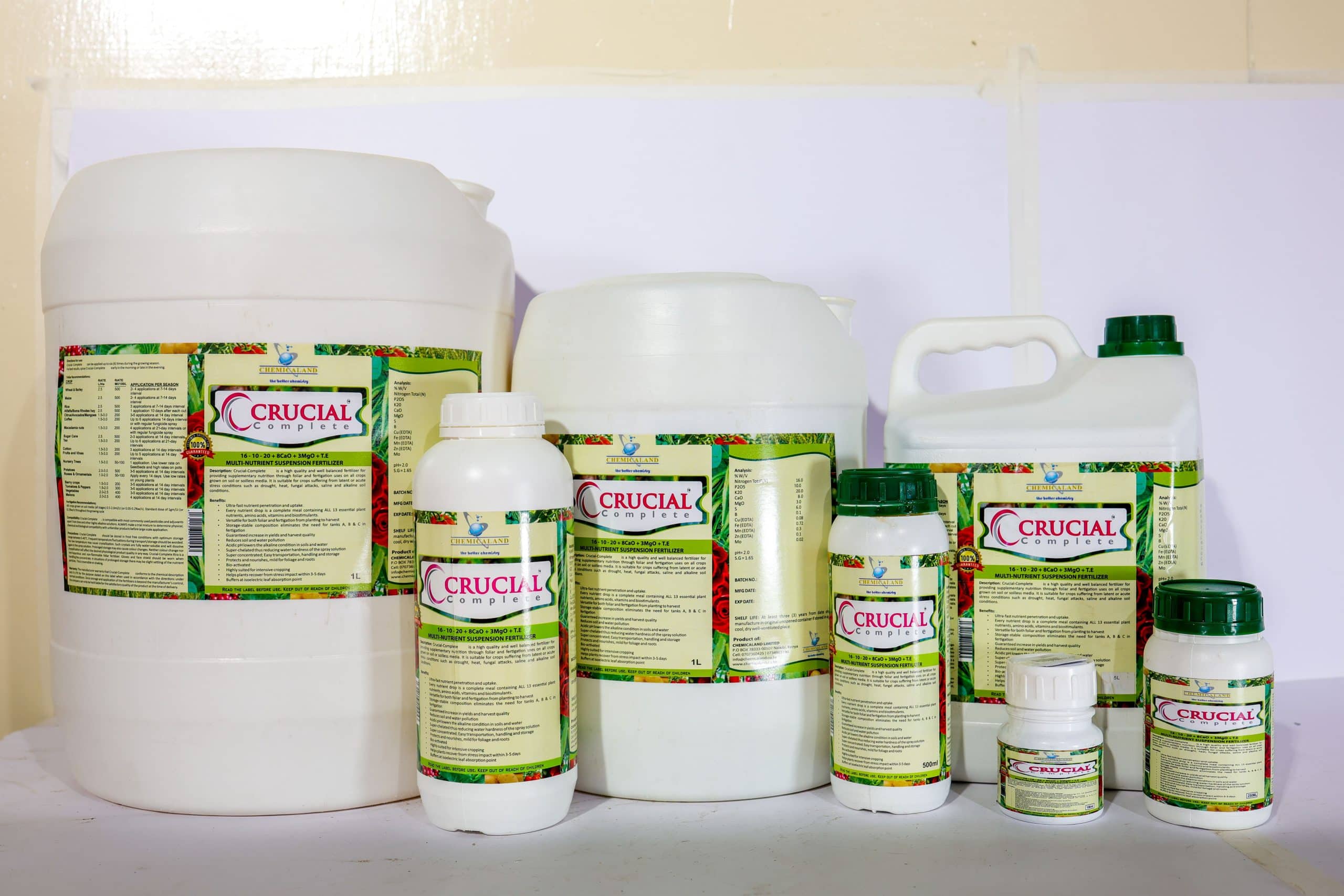
Before payment, check that the container is intact, sealed and clearly labelled. Avoid leaking bottles, faded labels, broken caps or containers that appear refilled.
The batch or lot information should be preserved where provided. Keep the receipt for traceability.
For buying agrochemicals in Nairobi and Kenya, inspect the Seal and Label should always be connected to diagnosis and application quality. The farmer should be able to name the crop, target problem, crop stage and the reason treatment is justified before opening a pesticide container. Then the current label determines whether the product is registered for that use, how it is mixed and applied, what protective equipment is required, and what restrictions apply before harvest or worker re-entry. Changing dose, shortening intervals or adding unlisted tank-mix partners because control looks weak can create more problems than it solves. Review diagnosis, coverage, timing and resistance management first.
When applying the lesson from inspect the Seal and Label to buying agrochemicals in Nairobi and Kenya, separate what can be controlled from what cannot. Weather will change, but the farm can still control preparation, timing, input identity, equipment condition and record keeping. When conditions move away from the original plan, adjust the operation through agronomic reasoning instead of adding more product automatically. This approach keeps the decision resilient because it remains linked to the actual field rather than to a rigid recipe.
Before committing money or labour to inspect the Seal and Label, ask what information would make the decision less uncertain for buying agrochemicals in Nairobi and Kenya. It may be a soil test, a seed label, a pest count, a calibration measurement, a weather forecast, a market order or a current price. Collecting that information before spending money usually costs less than correcting the consequences of a poorly matched input. This habit is one of the clearest differences between reactive farming and deliberate farm management.
When farmers compare fungicides for sale in Nairobi, the buying decision should follow suitability, current label or variety information, pack size, supplier traceability and the total farm requirement rather than price alone. This keeps the purchase connected to buying agrochemicals in Nairobi and Kenya and reduces the risk of buying an input that does not fit the production plan.
Avoid Decanted or Unlabelled Pesticides
A pesticide poured into a smaller unlabelled bottle loses critical information on active ingredient, concentration, hazards and directions. The farmer also cannot confirm whether the product is genuine.
Never store agrochemicals in drink bottles or food containers. Buy sealed, properly labelled packs in a size the farm can use safely.
The practical lesson from avoid Decanted or Unlabelled Pesticides is to connect nutrient decisions with evidence from the field. In crops, roots can only use nutrients that are available in the root zone and accessible under the prevailing moisture and pH conditions. A crop that is waterlogged, drought stressed or suffering from damaged roots may show poor growth even when fertilizer has been applied. Before adding another product, review what has already been used, where it was placed, recent rainfall or irrigation, and whether the symptom pattern is consistent across the field. This discipline keeps buying agrochemicals in Nairobi and Kenya from becoming a sequence of expensive fertilizer guesses.
For a commercial grower managing buying agrochemicals in Nairobi and Kenya, avoid Decanted or Unlabelled Pesticides is also a cost-control point. Every pass through the field uses labour, fuel or carrying effort and may expose the crop to additional risk. An operation should therefore have a clear objective and a way to judge whether it worked. Record the date, field or block, input or equipment used and any observation that explains the result. Over time, those records show which practices are worth repeating.
Compare Price by Labelled Use
The cheapest bottle is not necessarily the cheapest treatment. Concentration, labelled rate, number of permitted applications and treated area all affect cost.
A concentrated product may cost more per litre but less per hectare when used correctly. Price should be compared only after suitability is confirmed.
How to Apply Compare Price by Labelled Use on the Farm
For buying agrochemicals in Nairobi and Kenya, the decision around compare Price by Labelled Use is strongest when the farmer can explain exactly what is being purchased and why. That means comparing specification or label information, the quantity required, storage or handling needs, and the cost of getting the input to the farm. A lower shelf price can be poor value when the wrong product is bought, while a higher-priced option is not automatically better simply because it carries a recognised brand. Keep the production objective in front of the buying decision and ask for the exact item, formulation, variety or specification rather than accepting a vague substitute.
A common mistake around compare Price by Labelled Use is to respond to one disappointing symptom by changing several things at once. That makes it difficult to know which change helped and can create hidden interactions. Where possible, correct the most likely limiting factor first, observe buying agrochemicals in Nairobi and Kenya, and keep other management stable. This is especially important when fertilizers or pesticides are involved, because unnecessary combinations increase cost and may create crop-safety or compatibility problems.
Before committing money or labour to compare Price by Labelled Use, ask what information would make the decision less uncertain for buying agrochemicals in Nairobi and Kenya. It may be a soil test, a seed label, a pest count, a calibration measurement, a weather forecast, a market order or a current price. Collecting that information before spending money usually costs less than correcting the consequences of a poorly matched input. This habit is one of the clearest differences between reactive farming and deliberate farm management.
In practice, agrochemical delivery in Kenya should not be treated as a stand-alone promise. Its value depends on how well the product, variety or method fits buying agrochemicals in Nairobi and Kenya under the actual conditions on the farm.
Current Stock and Pack Size
A product may be available in several pack sizes, and not every pack may be in stock at the same time. Before travelling to Nairobi, confirm the exact active ingredient or brand, formulation and pack size required.
For large orders, ask whether stock comes from consistent current consignments. Avoid buying excessive pesticide simply because only a large pack is available.
For buying agrochemicals in Nairobi and Kenya, the decision around current Stock and Pack Size is strongest when the farmer can explain exactly what is being purchased and why. That means comparing specification or label information, the quantity required, storage or handling needs, and the cost of getting the input to the farm. A lower shelf price can be poor value when the wrong product is bought, while a higher-priced option is not automatically better simply because it carries a recognised brand. Keep the production objective in front of the buying decision and ask for the exact item, formulation, variety or specification rather than accepting a vague substitute.
The scale of current Stock and Pack Size matters in buying agrochemicals in Nairobi and Kenya. A decision that seems minor on a few plants can become expensive over several acres. Before applying it across the whole farm, confirm that the method, product or variety fits the field and that workers understand the procedure. Small trial areas, calibration checks and written instructions can prevent a repeated error from affecting an entire crop.
When farmers compare herbicides for sale in Nairobi, the buying decision should follow suitability, current label or variety information, pack size, supplier traceability and the total farm requirement rather than price alone. This keeps the purchase connected to buying agrochemicals in Nairobi and Kenya and reduces the risk of buying an input that does not fit the production plan.
Buying Insecticides
For insecticides, state the crop, pest, life stage and crop stage. Products such as Chess 50WG serve different labelled purposes from other insecticides such as Delegate or Pirimor.
Do not choose among them by strength. Compare active ingredient, mode of action, target pest and current label.
For buying agrochemicals in Nairobi and Kenya, the decision around buying Insecticides is strongest when the farmer can explain exactly what is being purchased and why. That means comparing specification or label information, the quantity required, storage or handling needs, and the cost of getting the input to the farm. A lower shelf price can be poor value when the wrong product is bought, while a higher-priced option is not automatically better simply because it carries a recognised brand. Keep the production objective in front of the buying decision and ask for the exact item, formulation, variety or specification rather than accepting a vague substitute.
Good decisions about buying Insecticides also leave room for local knowledge. Soil type, altitude, water quality, pest pressure and market conditions vary across Kenya, so general guidance should be refined with current local recommendations and product information. Use this principle with buying agrochemicals in Nairobi and Kenya: understand the agronomy first, then adapt the details to the farm rather than copying a programme from a different production environment.
Before committing money or labour to buying Insecticides, ask what information would make the decision less uncertain for buying agrochemicals in Nairobi and Kenya. It may be a soil test, a seed label, a pest count, a calibration measurement, a weather forecast, a market order or a current price. Collecting that information before spending money usually costs less than correcting the consequences of a poorly matched input. This habit is one of the clearest differences between reactive farming and deliberate farm management.
Buying Fungicides
For fungicides, describe symptoms, crop stage, recent weather and whether disease has been confirmed. Ridomil Gold, Saaf and other fungicides differ in active ingredients and disease spectrum.
Protective and systemic properties also differ. A product that works for one disease may be unsuitable for another.
How to Apply Buying Fungicides on the Farm
For buying agrochemicals in Nairobi and Kenya, the decision around buying Fungicides is strongest when the farmer can explain exactly what is being purchased and why. That means comparing specification or label information, the quantity required, storage or handling needs, and the cost of getting the input to the farm. A lower shelf price can be poor value when the wrong product is bought, while a higher-priced option is not automatically better simply because it carries a recognised brand. Keep the production objective in front of the buying decision and ask for the exact item, formulation, variety or specification rather than accepting a vague substitute.
Connect buying Fungicides to the next decision in the buying agrochemicals in Nairobi and Kenya season. If establishment is uneven, later fertilizer and spray calculations may need to account for a lower plant population. If a pest treatment is delayed, scouting frequency may need to increase. If water is limiting, nutrient uptake may change. Thinking in sequences turns this step into part of a complete crop-management system instead of an isolated task.
The idea behind agricultural chemicals in Kenya becomes most useful when it is applied to a real field decision. For buying agrochemicals in Nairobi and Kenya, compare the farm conditions, stage of production and evidence from scouting or records before changing the programme.
Buying Herbicides
For herbicides, identify the crop, main weed species and whether weeds have emerged. Pre-emergence, post-emergence, selective and non-selective herbicides solve different problems.
Products such as Dual Gold and Basta should not be substituted without reading their labels. Crop safety and rotational restrictions are essential.
For buying agrochemicals in Nairobi and Kenya, the decision around buying Herbicides is strongest when the farmer can explain exactly what is being purchased and why. That means comparing specification or label information, the quantity required, storage or handling needs, and the cost of getting the input to the farm. A lower shelf price can be poor value when the wrong product is bought, while a higher-priced option is not automatically better simply because it carries a recognised brand. Keep the production objective in front of the buying decision and ask for the exact item, formulation, variety or specification rather than accepting a vague substitute.
After completing the work around buying Herbicides, set one or two observations to check in buying agrochemicals in Nairobi and Kenya. These might include emergence uniformity, crop colour, weed escape, pest numbers, nozzle output, fruit quality or marketable harvest depending on the stage. Without a follow-up observation, it is easy to repeat a costly practice simply because it has always been done that way.
Before committing money or labour to buying Herbicides, ask what information would make the decision less uncertain for buying agrochemicals in Nairobi and Kenya. It may be a soil test, a seed label, a pest count, a calibration measurement, a weather forecast, a market order or a current price. Collecting that information before spending money usually costs less than correcting the consequences of a poorly matched input. This habit is one of the clearest differences between reactive farming and deliberate farm management.
Delivery and Transport Safety
Agrochemicals should be transported upright, protected from heat and physical damage and separated from food and personal items. Leaking containers require safe containment and should not be accepted casually.
For courier delivery, confirm that the service can handle the product lawfully and safely. Keep children and passengers away from pesticide packages.
The farm-level value of delivery and Transport Safety comes from consistency in buying agrochemicals in Nairobi and Kenya. One well-managed operation supports the next: uniform establishment improves scouting, good scouting improves timing, and accurate timing makes every later input easier to justify. Small variations in depth, plant population, operator technique or field condition can become large yield differences when they are repeated over a whole field. Use a simple checklist before the operation begins, observe the result afterwards, and record anything unusual so the next season is based on evidence rather than memory.
If advice about delivery and Transport Safety from a supplier, neighbour and agronomist differs, compare each recommendation against current label or variety information and the conditions in the field. The most persuasive recommendation for buying agrochemicals in Nairobi and Kenya is the one that explains why it fits the crop, stage and problem. That standard reduces dependence on brand reputation or hearsay.
Farmers researching agrovet chemicals in Nairobi should connect the phrase to practical management: what the crop needs, what the field can supply, what the current label or variety information says and what outcome will be measured afterwards.
Storage After Purchase
Store pesticides locked, labelled and away from food, feed, seed and household goods. Keep products in original containers.
Manage temperature and moisture according to label directions. A good purchase becomes a safety problem if storage is poor.
How to Apply Storage After Purchase on the Farm
In buying agrochemicals in Nairobi and Kenya, storage After Purchase deserves the same attention as establishment because this is when field effort is converted into saleable produce. Harvest quality can be reduced by stress, delayed picking, rough handling, moisture problems or poor storage even when the crop grew well. Plan labour, containers, drying or cooling needs and market timing before the crop reaches peak maturity. Keeping rejected or damaged produce separate also helps the farm measure marketable yield rather than overestimating performance from total biological production.
When applying the lesson from storage After Purchase to buying agrochemicals in Nairobi and Kenya, separate what can be controlled from what cannot. Weather will change, but the farm can still control preparation, timing, input identity, equipment condition and record keeping. When conditions move away from the original plan, adjust the operation through agronomic reasoning instead of adding more product automatically. This approach keeps the decision resilient because it remains linked to the actual field rather than to a rigid recipe.
Before committing money or labour to storage After Purchase, ask what information would make the decision less uncertain for buying agrochemicals in Nairobi and Kenya. It may be a soil test, a seed label, a pest count, a calibration measurement, a weather forecast, a market order or a current price. Collecting that information before spending money usually costs less than correcting the consequences of a poorly matched input. This habit is one of the clearest differences between reactive farming and deliberate farm management.
A farmer looking for a agrochemical shop in Nairobi should check traceability, current stock, product identity, storage condition and the accuracy of technical information supplied. For buying agrochemicals in Nairobi and Kenya, a reliable source is valuable because the farmer can confirm exactly what is being purchased before it reaches the field.
Keep a Spray Inventory
Record what products are on the farm, their active ingredients, pack sizes and expiry or shelf information where provided. This prevents unnecessary duplicate purchases.
It also helps resistance planning because the farm can see which modes of action are already being used. Review inventory before every new pesticide order.
For buying agrochemicals in Nairobi and Kenya, keep a Spray Inventory should always be connected to diagnosis and application quality. The farmer should be able to name the crop, target problem, crop stage and the reason treatment is justified before opening a pesticide container. Then the current label determines whether the product is registered for that use, how it is mixed and applied, what protective equipment is required, and what restrictions apply before harvest or worker re-entry. Changing dose, shortening intervals or adding unlisted tank-mix partners because control looks weak can create more problems than it solves. Review diagnosis, coverage, timing and resistance management first.
For a commercial grower managing buying agrochemicals in Nairobi and Kenya, keep a Spray Inventory is also a cost-control point. Every pass through the field uses labour, fuel or carrying effort and may expose the crop to additional risk. An operation should therefore have a clear objective and a way to judge whether it worked. Record the date, field or block, input or equipment used and any observation that explains the result. Over time, those records show which practices are worth repeating.
Buying From Dawn Farmers
Dawn Farmers lists insecticide, fungicide and herbicide categories as well as individual products in its crop-production catalogue. Use those categories to identify options, then confirm the current label, crop use, pack size, price and availability.
For specific crop problems, provide enough information for the enquiry to be meaningful. The final application decision should remain label-led and diagnosis-led.
For buying agrochemicals in Nairobi and Kenya, the decision around buying From Dawn Farmers is strongest when the farmer can explain exactly what is being purchased and why. That means comparing specification or label information, the quantity required, storage or handling needs, and the cost of getting the input to the farm. A lower shelf price can be poor value when the wrong product is bought, while a higher-priced option is not automatically better simply because it carries a recognised brand. Keep the production objective in front of the buying decision and ask for the exact item, formulation, variety or specification rather than accepting a vague substitute.
A common mistake around buying From Dawn Farmers is to respond to one disappointing symptom by changing several things at once. That makes it difficult to know which change helped and can create hidden interactions. Where possible, correct the most likely limiting factor first, observe buying agrochemicals in Nairobi and Kenya, and keep other management stable. This is especially important when fertilizers or pesticides are involved, because unnecessary combinations increase cost and may create crop-safety or compatibility problems.
Before committing money or labour to buying From Dawn Farmers, ask what information would make the decision less uncertain for buying agrochemicals in Nairobi and Kenya. It may be a soil test, a seed label, a pest count, a calibration measurement, a weather forecast, a market order or a current price. Collecting that information before spending money usually costs less than correcting the consequences of a poorly matched input. This habit is one of the clearest differences between reactive farming and deliberate farm management.
A farmer looking for a agrochemical suppliers in Kenya should check traceability, current stock, product identity, storage condition and the accuracy of technical information supplied. For buying agrochemicals in Nairobi and Kenya, a reliable source is valuable because the farmer can confirm exactly what is being purchased before it reaches the field.
Agrochemical buying becomes safer and more precise when combined with Insecticide Active Ingredients Explained for Farmers and Crop Protection in Kenya, Systemic and Contact Fungicides in Kenya and and Pre Emergence and Post Emergence Herbicides in Kenya and for connected planning and buying decisions.
Frequently Asked Questions
What agrochemicals does Dawn Farmers sell?
The crop-protection range includes insecticides, fungicides, herbicides and related products depending on current stock.
How do I choose between insecticide and fungicide?
First identify whether the problem is an insect pest or a fungal disease. Similar-looking symptoms can have other causes, so diagnosis matters.
Can I buy agrochemicals by brand name only?
It is better to confirm the active ingredient, formulation, crop registration and target problem as well as the brand.
Are pesticide prices fixed?
Prices can change with pack size, supplier pricing and availability. Confirm the current price before ordering.
Can agrochemicals be delivered outside Nairobi?
Delivery enquiries are possible, subject to product type, destination, quantity and applicable handling requirements.
What should I provide when asking for a pesticide recommendation?
Provide the crop, target pest, disease or weed, growth stage and product name if already known.
Why is the pesticide label so important?
The label specifies approved crops and targets, dose, timing, protective equipment, harvest or re-entry restrictions and other legally important directions.
Can I use a higher pesticide dose if control was poor?
Do not exceed the label. Poor control should be investigated for diagnosis, timing, coverage, resistance, weather, calibration and product suitability.
What is pesticide resistance?
Resistance occurs when a pest, pathogen or weed population becomes less sensitive to a pesticide mode of action after repeated selection pressure.
Is changing pesticide brand names enough to manage resistance?
Not always. Different brands can contain the same active ingredient or mode of action, so resistance groups should be checked.
Can pesticides be mixed with foliar fertilizer in the same tank?
Only when the labels and reliable compatibility guidance support the mixture. Convenience does not prove physical, chemical or crop compatibility.
What should be recorded after a pesticide application?
Record date, field, crop, target problem, product, active ingredient, rate, water volume, operator, weather and any harvest or re-entry restrictions.
Looking for Agrochemicals in Nairobi?
Use the guide above to narrow the requirement, then browse crop protection products. For current stock, pack sizes and prices, contact Dawn Farmers Limited on +254 724 367 713. In buying agrochemicals in Nairobi and Kenya, adapt this point to current field conditions, product or variety information and the management capacity of the farm.