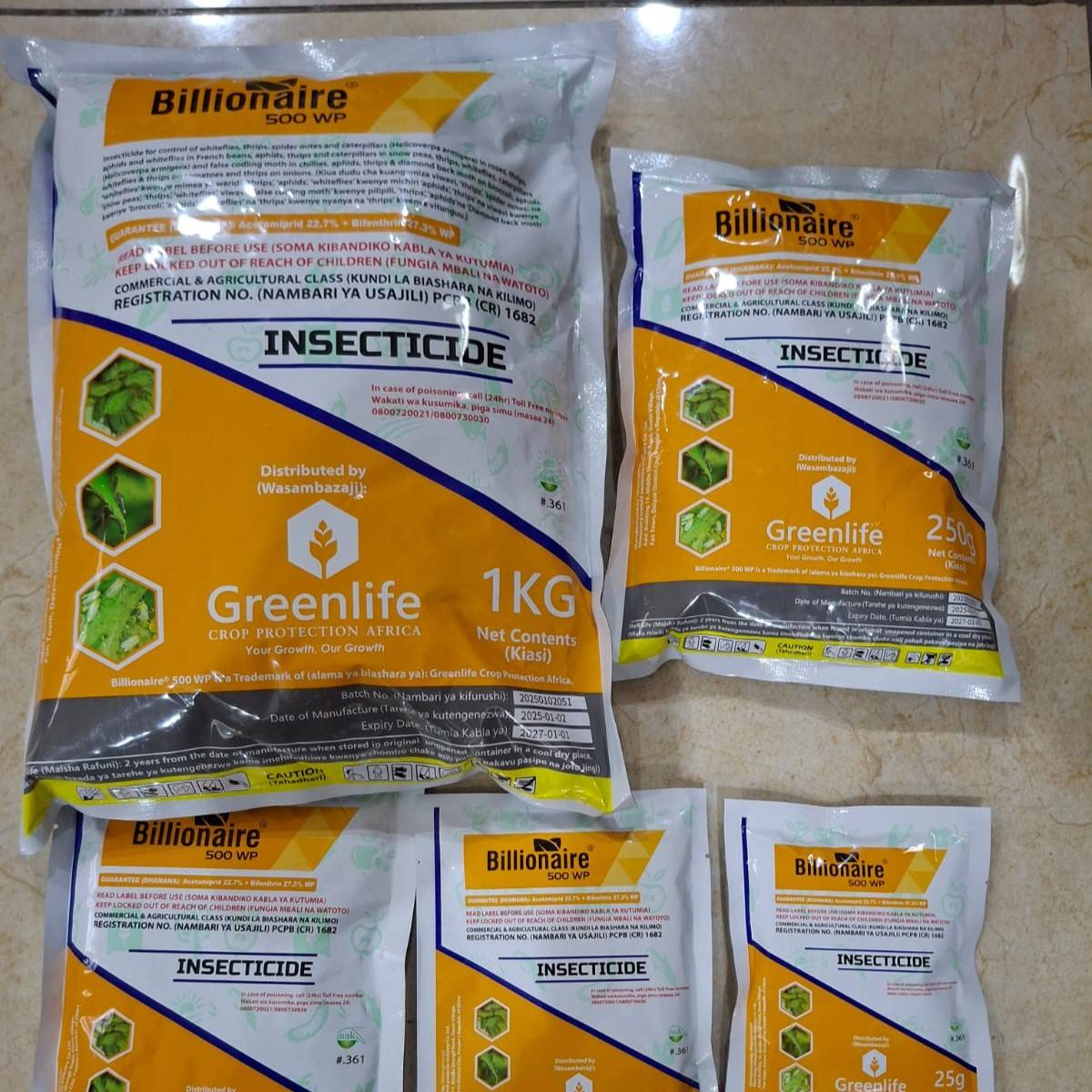
Insecticide active ingredients are one of the most useful things a farmer can learn to read on a pesticide label. Brand names may change, but the active ingredient, formulation, registered crop, target pest and mode of action explain what the product is designed to do. This matters when comparing insecticides in Kenya and when planning resistance management.
Why Active Ingredients Matter More Than Brand Names
Two insecticide brands can target similar pests while using different chemistry, and two different brands can sometimes rely on closely related chemistry. A systemic insecticide may move within plant tissue to some degree, while a contact insecticide depends more directly on treated surfaces and exposure. The exact behaviour varies by active ingredient and formulation, so the approved label remains the reference.
Read the Mode of Action
The insecticide mode of action helps explain how a product affects the target pest and supports better rotation decisions. Useful pesticide label information also includes the registered crop, target pest, application timing, safety precautions, re-entry requirements and pre-harvest interval where applicable.
Identify the Pest Before Choosing the Product
Good crop pest control in Kenya begins with scouting and diagnosis. An aphid insecticide should only be considered when aphids are correctly identified and the product is registered for the crop and pest. The same principle applies when comparing a thrips insecticide; crop stage, pest pressure and label directions matter more than brand popularity.
Rotate Chemistry Deliberately
Insecticide resistance management is strengthened by avoiding unnecessary applications and by rotating suitable modes of action when repeated treatment is genuinely needed. Repeating the same chemistry because it worked previously can increase selection pressure and reduce long-term control.
Application Quality and Safety Still Matter
Even well-selected crop protection products depend on correct calibration, nozzle condition, coverage, water quality and suitable weather. Farmers can compare agricultural sprayers alongside crop-protection products. Safe insecticide use also means following the label, using suitable protective equipment and handling concentrates carefully.
Compare Insecticide Options at Dawn Farmers
Dawn Farmers lists an insecticides category with products such as Chess 50WG, Pirimor 50 WG, Delegate 250 WG and other options. These links are for comparison; product suitability must still be checked against the current label and the actual field problem.
Safety reminder: never increase an insecticide rate because pest pressure appears severe. Follow the approved label and seek qualified agronomic guidance when the diagnosis or treatment decision is uncertain.
About the product and variety information used here: Insecticide choice should begin with pest identification and the approved crop-and-pest label. Active ingredient, mode of action, formulation, resistance management and application quality all influence whether a treatment fits.
Begin With Pest Identification
The first insecticide decision is identifying the pest accurately enough to know whether an insecticide is even appropriate. Chewing damage, sap-sucking, mining, boring and root feeding can be caused by very different pest groups.
The same symptom can also have non-insect causes, so field scouting should look for the insect, its life stage, feeding pattern and distribution. Buying a pesticide before identifying the target can waste money and expose the crop and applicator unnecessarily.
For insecticide active ingredients and crop pest control, begin With Pest Identification should always be connected to diagnosis and application quality. The farmer should be able to name the crop, target problem, crop stage and the reason treatment is justified before opening a pesticide container. Then the current label determines whether the product is registered for that use, how it is mixed and applied, what protective equipment is required, and what restrictions apply before harvest or worker re-entry. Changing dose, shortening intervals or adding unlisted tank-mix partners because control looks weak can create more problems than it solves. Review diagnosis, coverage, timing and resistance management first.
When applying the lesson from begin With Pest Identification to insecticide active ingredients and crop pest control, separate what can be controlled from what cannot. Weather will change, but the farm can still control preparation, timing, input identity, equipment condition and record keeping. When conditions move away from the original plan, adjust the operation through agronomic reasoning instead of adding more product automatically. This approach keeps the decision resilient because it remains linked to the actual field rather than to a rigid recipe.
Before committing money or labour to begin With Pest Identification, ask what information would make the decision less uncertain for insecticide active ingredients and crop pest control. It may be a soil test, a seed label, a pest count, a calibration measurement, a weather forecast, a market order or a current price. Collecting that information before spending money usually costs less than correcting the consequences of a poorly matched input. This habit is one of the clearest differences between reactive farming and deliberate farm management.
The idea behind insecticide active ingredients becomes most useful when it is applied to a real field decision. For insecticide active ingredients and crop pest control, compare the farm conditions, stage of production and evidence from scouting or records before changing the programme.
Active Ingredient Versus Brand Name
A pesticide brand name identifies a commercial product, while the active ingredient is the chemical or biological component responsible for pesticidal action. Different brands may contain the same active ingredient, and one brand name can sometimes exist in different formulations or concentrations.
Reading the active ingredient helps farmers compare products more intelligently and avoid repeating the same chemistry under different brand names. The label remains the authority for approved crops, pests, rates and use directions.
How to Apply Active Ingredient Versus Brand Name on the Farm
The farm-level value of active Ingredient Versus Brand Name comes from consistency in insecticide active ingredients and crop pest control. One well-managed operation supports the next: uniform establishment improves scouting, good scouting improves timing, and accurate timing makes every later input easier to justify. Small variations in depth, plant population, operator technique or field condition can become large yield differences when they are repeated over a whole field. Use a simple checklist before the operation begins, observe the result afterwards, and record anything unusual so the next season is based on evidence rather than memory.
For a commercial grower managing insecticide active ingredients and crop pest control, active Ingredient Versus Brand Name is also a cost-control point. Every pass through the field uses labour, fuel or carrying effort and may expose the crop to additional risk. An operation should therefore have a clear objective and a way to judge whether it worked. Record the date, field or block, input or equipment used and any observation that explains the result. Over time, those records show which practices are worth repeating.
Understand Formulation Codes
Formulation codes such as WG, SC, EC, SL or WP describe how an active ingredient is prepared for handling and application. Formulation affects mixing, dustiness, solvent content, suspension behaviour, crop safety and equipment requirements.
Two products with the same active ingredient but different formulations may not be used at the same rate. Never transfer a rate from one formulation to another without the current label.
The farm-level value of understand Formulation Codes comes from consistency in insecticide active ingredients and crop pest control. One well-managed operation supports the next: uniform establishment improves scouting, good scouting improves timing, and accurate timing makes every later input easier to justify. Small variations in depth, plant population, operator technique or field condition can become large yield differences when they are repeated over a whole field. Use a simple checklist before the operation begins, observe the result afterwards, and record anything unusual so the next season is based on evidence rather than memory.
A common mistake around understand Formulation Codes is to respond to one disappointing symptom by changing several things at once. That makes it difficult to know which change helped and can create hidden interactions. Where possible, correct the most likely limiting factor first, observe insecticide active ingredients and crop pest control, and keep other management stable. This is especially important when fertilizers or pesticides are involved, because unnecessary combinations increase cost and may create crop-safety or compatibility problems.
Before committing money or labour to understand Formulation Codes, ask what information would make the decision less uncertain for insecticide active ingredients and crop pest control. It may be a soil test, a seed label, a pest count, a calibration measurement, a weather forecast, a market order or a current price. Collecting that information before spending money usually costs less than correcting the consequences of a poorly matched input. This habit is one of the clearest differences between reactive farming and deliberate farm management.
Farmers researching insecticides in Kenya should connect the phrase to practical management: what the crop needs, what the field can supply, what the current label or variety information says and what outcome will be measured afterwards.
Contact Systemic and Translaminar Activity
Contact insecticides primarily act when the pest comes into contact with treated surfaces, while systemic products can move within plant tissues to varying degrees. Translaminar activity refers to movement from one side of a leaf to the other rather than movement throughout the entire plant.
These properties influence where spray coverage matters most and which pest-feeding habits may be targeted. Movement terminology should not be used as a shortcut for choosing a product; the labelled pest and crop still determine suitability.
The farm-level value of contact Systemic and Translaminar Activity comes from consistency in insecticide active ingredients and crop pest control. One well-managed operation supports the next: uniform establishment improves scouting, good scouting improves timing, and accurate timing makes every later input easier to justify. Small variations in depth, plant population, operator technique or field condition can become large yield differences when they are repeated over a whole field. Use a simple checklist before the operation begins, observe the result afterwards, and record anything unusual so the next season is based on evidence rather than memory.
The scale of contact Systemic and Translaminar Activity matters in insecticide active ingredients and crop pest control. A decision that seems minor on a few plants can become expensive over several acres. Before applying it across the whole farm, confirm that the method, product or variety fits the field and that workers understand the procedure. Small trial areas, calibration checks and written instructions can prevent a repeated error from affecting an entire crop.
In practice, systemic insecticide should not be treated as a stand-alone promise. Its value depends on how well the product, variety or method fits insecticide active ingredients and crop pest control under the actual conditions on the farm.
Mode of Action and Resistance Groups
Mode of action describes the biological process an insecticide disrupts in the target pest. Resistance can develop when a pest population is repeatedly exposed to the same mode of action and resistant individuals survive.
Rotating brand names is not enough if the brands belong to the same resistance group. Resistance planning should follow recognised mode-of-action guidance, local recommendations and the product label.
How to Apply Mode of Action and Resistance Groups on the Farm
For insecticide active ingredients and crop pest control, mode of Action and Resistance Groups should always be connected to diagnosis and application quality. The farmer should be able to name the crop, target problem, crop stage and the reason treatment is justified before opening a pesticide container. Then the current label determines whether the product is registered for that use, how it is mixed and applied, what protective equipment is required, and what restrictions apply before harvest or worker re-entry. Changing dose, shortening intervals or adding unlisted tank-mix partners because control looks weak can create more problems than it solves. Review diagnosis, coverage, timing and resistance management first.
Good decisions about mode of Action and Resistance Groups also leave room for local knowledge. Soil type, altitude, water quality, pest pressure and market conditions vary across Kenya, so general guidance should be refined with current local recommendations and product information. Use this principle with insecticide active ingredients and crop pest control: understand the agronomy first, then adapt the details to the farm rather than copying a programme from a different production environment.
Before committing money or labour to mode of Action and Resistance Groups, ask what information would make the decision less uncertain for insecticide active ingredients and crop pest control. It may be a soil test, a seed label, a pest count, a calibration measurement, a weather forecast, a market order or a current price. Collecting that information before spending money usually costs less than correcting the consequences of a poorly matched input. This habit is one of the clearest differences between reactive farming and deliberate farm management.
Know the Pest Life Stage
Eggs, larvae, nymphs and adults can differ in susceptibility to a given insecticide. Some products are strongest against actively feeding immature stages, while others may target different stages or have limited effect on eggs.
Scouting therefore needs to record not only which pest is present but also which stage dominates the field. Timing a labelled treatment to a susceptible stage can be more important than increasing product quantity.
For insecticide active ingredients and crop pest control, know the Pest Life Stage should always be connected to diagnosis and application quality. The farmer should be able to name the crop, target problem, crop stage and the reason treatment is justified before opening a pesticide container. Then the current label determines whether the product is registered for that use, how it is mixed and applied, what protective equipment is required, and what restrictions apply before harvest or worker re-entry. Changing dose, shortening intervals or adding unlisted tank-mix partners because control looks weak can create more problems than it solves. Review diagnosis, coverage, timing and resistance management first.
Connect know the Pest Life Stage to the next decision in the insecticide active ingredients and crop pest control season. If establishment is uneven, later fertilizer and spray calculations may need to account for a lower plant population. If a pest treatment is delayed, scouting frequency may need to increase. If water is limiting, nutrient uptake may change. Thinking in sequences turns this step into part of a complete crop-management system instead of an isolated task.
A useful way to evaluate contact insecticide is to ask what changes in the field if this decision is correct. The answer should be observable through establishment, crop health, application quality, harvest or cost records rather than through marketing language alone.
Economic Damage and Treatment Decisions
Not every insect seen in a field requires immediate spraying. Integrated pest management considers crop stage, pest density, damage, natural enemies, expected crop value and the likely benefit of treatment.
Unnecessary applications add cost and can disrupt beneficial insects. Where threshold information is available for the crop and pest, use it to support the treatment decision.
The farm-level value of economic Damage and Treatment Decisions comes from consistency in insecticide active ingredients and crop pest control. One well-managed operation supports the next: uniform establishment improves scouting, good scouting improves timing, and accurate timing makes every later input easier to justify. Small variations in depth, plant population, operator technique or field condition can become large yield differences when they are repeated over a whole field. Use a simple checklist before the operation begins, observe the result afterwards, and record anything unusual so the next season is based on evidence rather than memory.
After completing the work around economic Damage and Treatment Decisions, set one or two observations to check in insecticide active ingredients and crop pest control. These might include emergence uniformity, crop colour, weed escape, pest numbers, nozzle output, fruit quality or marketable harvest depending on the stage. Without a follow-up observation, it is easy to repeat a costly practice simply because it has always been done that way.
Before committing money or labour to economic Damage and Treatment Decisions, ask what information would make the decision less uncertain for insecticide active ingredients and crop pest control. It may be a soil test, a seed label, a pest count, a calibration measurement, a weather forecast, a market order or a current price. Collecting that information before spending money usually costs less than correcting the consequences of a poorly matched input. This habit is one of the clearest differences between reactive farming and deliberate farm management.
Beneficial Insects and Natural Control
Predators, parasitoids and pathogens can suppress many crop pests naturally. Broad-spectrum insecticide use can reduce beneficial populations and sometimes allow secondary pests to increase.
Scouting should therefore record beneficial organisms as well as pests. Choosing the narrowest effective labelled option and treating only when justified can help preserve biological control.
How to Apply Beneficial Insects and Natural Control on the Farm
For insecticide active ingredients and crop pest control, beneficial Insects and Natural Control should always be connected to diagnosis and application quality. The farmer should be able to name the crop, target problem, crop stage and the reason treatment is justified before opening a pesticide container. Then the current label determines whether the product is registered for that use, how it is mixed and applied, what protective equipment is required, and what restrictions apply before harvest or worker re-entry. Changing dose, shortening intervals or adding unlisted tank-mix partners because control looks weak can create more problems than it solves. Review diagnosis, coverage, timing and resistance management first.
If advice about beneficial Insects and Natural Control from a supplier, neighbour and agronomist differs, compare each recommendation against current label or variety information and the conditions in the field. The most persuasive recommendation for insecticide active ingredients and crop pest control is the one that explains why it fits the crop, stage and problem. That standard reduces dependence on brand reputation or hearsay.
The idea behind insecticide mode of action becomes most useful when it is applied to a real field decision. For insecticide active ingredients and crop pest control, compare the farm conditions, stage of production and evidence from scouting or records before changing the programme.
Read the Crop and Pest on the Label
A pesticide is not automatically suitable for every crop attacked by the same insect. The label specifies registered crops, target pests, dose, timing, maximum applications, protective equipment and other restrictions.
Using a product on an unlisted crop can create crop-safety, residue and legal problems. Always confirm the exact crop and pest combination before mixing the spray.
For insecticide active ingredients and crop pest control, read the Crop and Pest on the Label should always be connected to diagnosis and application quality. The farmer should be able to name the crop, target problem, crop stage and the reason treatment is justified before opening a pesticide container. Then the current label determines whether the product is registered for that use, how it is mixed and applied, what protective equipment is required, and what restrictions apply before harvest or worker re-entry. Changing dose, shortening intervals or adding unlisted tank-mix partners because control looks weak can create more problems than it solves. Review diagnosis, coverage, timing and resistance management first.
When applying the lesson from read the Crop and Pest on the Label to insecticide active ingredients and crop pest control, separate what can be controlled from what cannot. Weather will change, but the farm can still control preparation, timing, input identity, equipment condition and record keeping. When conditions move away from the original plan, adjust the operation through agronomic reasoning instead of adding more product automatically. This approach keeps the decision resilient because it remains linked to the actual field rather than to a rigid recipe.
Before committing money or labour to read the Crop and Pest on the Label, ask what information would make the decision less uncertain for insecticide active ingredients and crop pest control. It may be a soil test, a seed label, a pest count, a calibration measurement, a weather forecast, a market order or a current price. Collecting that information before spending money usually costs less than correcting the consequences of a poorly matched input. This habit is one of the clearest differences between reactive farming and deliberate farm management.
Good practice around pesticide label information begins with current product directions, calibrated equipment and the actual crop or field situation. For insecticide active ingredients and crop pest control, accuracy and safety should come before attempts to make a product work faster or stronger.
Understand Pre-Harvest and Re-Entry Information
Labels may specify a pre-harvest interval, which is the minimum time that must pass between the final application and harvest. They may also specify a re-entry interval or precautions for workers returning to a treated area.
These restrictions are essential parts of safe pesticide use, not optional notes. Farm labour and harvest plans should be organised around them before treatment.
In insecticide active ingredients and crop pest control, understand Pre-Harvest and Re-Entry Information deserves the same attention as establishment because this is when field effort is converted into saleable produce. Harvest quality can be reduced by stress, delayed picking, rough handling, moisture problems or poor storage even when the crop grew well. Plan labour, containers, drying or cooling needs and market timing before the crop reaches peak maturity. Keeping rejected or damaged produce separate also helps the farm measure marketable yield rather than overestimating performance from total biological production.
For a commercial grower managing insecticide active ingredients and crop pest control, understand Pre-Harvest and Re-Entry Information is also a cost-control point. Every pass through the field uses labour, fuel or carrying effort and may expose the crop to additional risk. An operation should therefore have a clear objective and a way to judge whether it worked. Record the date, field or block, input or equipment used and any observation that explains the result. Over time, those records show which practices are worth repeating.
Calibration Before Calculating Product Quantity
A knapsack or boom sprayer must be calibrated so the operator knows how much spray mixture is applied to a known area. Nozzle output, pressure, walking speed and spray width influence spray volume.
Once the spray volume is known, the product amount can be calculated from the approved label rate. Guessing the tank dose without knowing the area covered by a tank is a common source of under- and over-application.
How to Apply Calibration Before Calculating Product Quantity on the Farm
The farm-level value of calibration Before Calculating Product Quantity comes from consistency in insecticide active ingredients and crop pest control. One well-managed operation supports the next: uniform establishment improves scouting, good scouting improves timing, and accurate timing makes every later input easier to justify. Small variations in depth, plant population, operator technique or field condition can become large yield differences when they are repeated over a whole field. Use a simple checklist before the operation begins, observe the result afterwards, and record anything unusual so the next season is based on evidence rather than memory.
A common mistake around calibration Before Calculating Product Quantity is to respond to one disappointing symptom by changing several things at once. That makes it difficult to know which change helped and can create hidden interactions. Where possible, correct the most likely limiting factor first, observe insecticide active ingredients and crop pest control, and keep other management stable. This is especially important when fertilizers or pesticides are involved, because unnecessary combinations increase cost and may create crop-safety or compatibility problems.
Before committing money or labour to calibration Before Calculating Product Quantity, ask what information would make the decision less uncertain for insecticide active ingredients and crop pest control. It may be a soil test, a seed label, a pest count, a calibration measurement, a weather forecast, a market order or a current price. Collecting that information before spending money usually costs less than correcting the consequences of a poorly matched input. This habit is one of the clearest differences between reactive farming and deliberate farm management.
Effective crop pest control in Kenya is rarely a single-product decision. It combines prevention, field observation, timing, accurate application and follow-up so that insecticide active ingredients and crop pest control is managed as a system rather than through isolated reactions.
Nozzle Selection and Coverage
Nozzles determine droplet size, spray pattern and flow rate, which affects coverage and drift. A dense crop canopy or a pest on leaf undersides may require different coverage considerations from a pest exposed on upper leaves.
Worn nozzles can deliver more liquid than expected and create uneven application. Inspect and replace nozzles based on output and condition rather than waiting for obvious failure.
The farm-level value of nozzle Selection and Coverage comes from consistency in insecticide active ingredients and crop pest control. One well-managed operation supports the next: uniform establishment improves scouting, good scouting improves timing, and accurate timing makes every later input easier to justify. Small variations in depth, plant population, operator technique or field condition can become large yield differences when they are repeated over a whole field. Use a simple checklist before the operation begins, observe the result afterwards, and record anything unusual so the next season is based on evidence rather than memory.
The scale of nozzle Selection and Coverage matters in insecticide active ingredients and crop pest control. A decision that seems minor on a few plants can become expensive over several acres. Before applying it across the whole farm, confirm that the method, product or variety fits the field and that workers understand the procedure. Small trial areas, calibration checks and written instructions can prevent a repeated error from affecting an entire crop.
Effective insecticide resistance management is rarely a single-product decision. It combines prevention, field observation, timing, accurate application and follow-up so that insecticide active ingredients and crop pest control is managed as a system rather than through isolated reactions.
Weather During Insecticide Application
Wind, temperature, humidity and expected rainfall can affect deposition, evaporation, drift and wash-off. Very windy conditions increase the risk of spray moving beyond the target area.
Hot dry conditions can increase evaporation and crop stress, while rain soon after application may reduce performance for products that need time on the leaf. Follow label directions for weather restrictions and avoid spraying simply because labour is available.
For insecticide active ingredients and crop pest control, weather During Insecticide Application should always be connected to diagnosis and application quality. The farmer should be able to name the crop, target problem, crop stage and the reason treatment is justified before opening a pesticide container. Then the current label determines whether the product is registered for that use, how it is mixed and applied, what protective equipment is required, and what restrictions apply before harvest or worker re-entry. Changing dose, shortening intervals or adding unlisted tank-mix partners because control looks weak can create more problems than it solves. Review diagnosis, coverage, timing and resistance management first.
Good decisions about weather During Insecticide Application also leave room for local knowledge. Soil type, altitude, water quality, pest pressure and market conditions vary across Kenya, so general guidance should be refined with current local recommendations and product information. Use this principle with insecticide active ingredients and crop pest control: understand the agronomy first, then adapt the details to the farm rather than copying a programme from a different production environment.
Before committing money or labour to weather During Insecticide Application, ask what information would make the decision less uncertain for insecticide active ingredients and crop pest control. It may be a soil test, a seed label, a pest count, a calibration measurement, a weather forecast, a market order or a current price. Collecting that information before spending money usually costs less than correcting the consequences of a poorly matched input. This habit is one of the clearest differences between reactive farming and deliberate farm management.
Water Quality and Mixing Order
Water pH, hardness, suspended soil and organic matter can influence the performance of some pesticides. Use clean water and follow the label or manufacturer guidance where conditioning is recommended.
When tank mixing, add products in the correct order and maintain agitation where required. Never combine products merely because they are individually approved for the same crop.
How to Apply Water Quality and Mixing Order on the Farm
For insecticide active ingredients and crop pest control, the decision around water Quality and Mixing Order is strongest when the farmer can explain exactly what is being purchased and why. That means comparing specification or label information, the quantity required, storage or handling needs, and the cost of getting the input to the farm. A lower shelf price can be poor value when the wrong product is bought, while a higher-priced option is not automatically better simply because it carries a recognised brand. Keep the production objective in front of the buying decision and ask for the exact item, formulation, variety or specification rather than accepting a vague substitute.
Connect water Quality and Mixing Order to the next decision in the insecticide active ingredients and crop pest control season. If establishment is uneven, later fertilizer and spray calculations may need to account for a lower plant population. If a pest treatment is delayed, scouting frequency may need to increase. If water is limiting, nutrient uptake may change. Thinking in sequences turns this step into part of a complete crop-management system instead of an isolated task.
The idea behind aphid insecticide becomes most useful when it is applied to a real field decision. For insecticide active ingredients and crop pest control, compare the farm conditions, stage of production and evidence from scouting or records before changing the programme.
Adjuvants Are Not Automatically Helpful
Adjuvants can change wetting, spreading, sticking, penetration or water quality, but their usefulness depends on the pesticide and crop. An adjuvant that improves one product can increase crop injury or alter performance with another.
Use an adjuvant only when the label or reliable technical guidance supports it. Adding extra soap or household detergent is not a safe substitute for a labelled agricultural adjuvant.
The farm-level value of adjuvants Are Not Automatically Helpful comes from consistency in insecticide active ingredients and crop pest control. One well-managed operation supports the next: uniform establishment improves scouting, good scouting improves timing, and accurate timing makes every later input easier to justify. Small variations in depth, plant population, operator technique or field condition can become large yield differences when they are repeated over a whole field. Use a simple checklist before the operation begins, observe the result afterwards, and record anything unusual so the next season is based on evidence rather than memory.
After completing the work around adjuvants Are Not Automatically Helpful, set one or two observations to check in insecticide active ingredients and crop pest control. These might include emergence uniformity, crop colour, weed escape, pest numbers, nozzle output, fruit quality or marketable harvest depending on the stage. Without a follow-up observation, it is easy to repeat a costly practice simply because it has always been done that way.
Before committing money or labour to adjuvants Are Not Automatically Helpful, ask what information would make the decision less uncertain for insecticide active ingredients and crop pest control. It may be a soil test, a seed label, a pest count, a calibration measurement, a weather forecast, a market order or a current price. Collecting that information before spending money usually costs less than correcting the consequences of a poorly matched input. This habit is one of the clearest differences between reactive farming and deliberate farm management.
Protect the Applicator
Personal protective equipment should be selected from the pesticide label and may include gloves, protective clothing, boots, eye protection or respiratory protection. PPE must be in usable condition and worn during mixing, spraying and cleaning as directed.
Contaminated clothing should be handled separately from household laundry. Never eat, drink or smoke while handling pesticides, and wash thoroughly after application.
The farm-level value of protect the Applicator comes from consistency in insecticide active ingredients and crop pest control. One well-managed operation supports the next: uniform establishment improves scouting, good scouting improves timing, and accurate timing makes every later input easier to justify. Small variations in depth, plant population, operator technique or field condition can become large yield differences when they are repeated over a whole field. Use a simple checklist before the operation begins, observe the result afterwards, and record anything unusual so the next season is based on evidence rather than memory.
If advice about protect the Applicator from a supplier, neighbour and agronomist differs, compare each recommendation against current label or variety information and the conditions in the field. The most persuasive recommendation for insecticide active ingredients and crop pest control is the one that explains why it fits the crop, stage and problem. That standard reduces dependence on brand reputation or hearsay.
Farmers researching thrips insecticide should connect the phrase to practical management: what the crop needs, what the field can supply, what the current label or variety information says and what outcome will be measured afterwards.
Store and Dispose of Pesticides Responsibly
Pesticides should remain in their original labelled containers in a secure, ventilated storage area away from food, feed and children. Do not transfer insecticide into beverage bottles or unlabelled containers.
Empty containers and leftover spray mixture should be managed according to label and local disposal requirements. Never reuse pesticide containers for water, food or household storage.
How to Apply Store and Dispose of Pesticides Responsibly on the Farm
For insecticide active ingredients and crop pest control, store and Dispose of Pesticides Responsibly should always be connected to diagnosis and application quality. The farmer should be able to name the crop, target problem, crop stage and the reason treatment is justified before opening a pesticide container. Then the current label determines whether the product is registered for that use, how it is mixed and applied, what protective equipment is required, and what restrictions apply before harvest or worker re-entry. Changing dose, shortening intervals or adding unlisted tank-mix partners because control looks weak can create more problems than it solves. Review diagnosis, coverage, timing and resistance management first.
When applying the lesson from store and Dispose of Pesticides Responsibly to insecticide active ingredients and crop pest control, separate what can be controlled from what cannot. Weather will change, but the farm can still control preparation, timing, input identity, equipment condition and record keeping. When conditions move away from the original plan, adjust the operation through agronomic reasoning instead of adding more product automatically. This approach keeps the decision resilient because it remains linked to the actual field rather than to a rigid recipe.
Before committing money or labour to store and Dispose of Pesticides Responsibly, ask what information would make the decision less uncertain for insecticide active ingredients and crop pest control. It may be a soil test, a seed label, a pest count, a calibration measurement, a weather forecast, a market order or a current price. Collecting that information before spending money usually costs less than correcting the consequences of a poorly matched input. This habit is one of the clearest differences between reactive farming and deliberate farm management.
In practice, crop protection products should not be treated as a stand-alone promise. Its value depends on how well the product, variety or method fits insecticide active ingredients and crop pest control under the actual conditions on the farm.
Compare Chess Pirimor Delegate and Other Products by Label
Dawn Farmers lists products such as Chess 50WG, Pirimor 50 WG and Delegate 250 WG in the insecticide category. Those products should not be treated as interchangeable simply because they are all insecticides.
Compare active ingredient, formulation, labelled pest, crop, mode-of-action group and use directions. The right product is the one whose current label matches the diagnosed problem and resistance-management plan.
For insecticide active ingredients and crop pest control, compare Chess Pirimor Delegate and Other Products by Label should always be connected to diagnosis and application quality. The farmer should be able to name the crop, target problem, crop stage and the reason treatment is justified before opening a pesticide container. Then the current label determines whether the product is registered for that use, how it is mixed and applied, what protective equipment is required, and what restrictions apply before harvest or worker re-entry. Changing dose, shortening intervals or adding unlisted tank-mix partners because control looks weak can create more problems than it solves. Review diagnosis, coverage, timing and resistance management first.
For a commercial grower managing insecticide active ingredients and crop pest control, compare Chess Pirimor Delegate and Other Products by Label is also a cost-control point. Every pass through the field uses labour, fuel or carrying effort and may expose the crop to additional risk. An operation should therefore have a clear objective and a way to judge whether it worked. Record the date, field or block, input or equipment used and any observation that explains the result. Over time, those records show which practices are worth repeating.
Buying Insecticides From a Traceable Supplier
Before buying, inspect packaging, seal, label, active ingredient, concentration, pack size and manufacturer information. Confirm that the product is appropriate for the target crop and pest before price becomes the main discussion.
For delivery, make sure containers will be protected from damage and separated from food or passenger items. Keep purchase records and product labels so later field records can identify exactly what was used.
For insecticide active ingredients and crop pest control, the decision around buying Insecticides From a Traceable Supplier is strongest when the farmer can explain exactly what is being purchased and why. That means comparing specification or label information, the quantity required, storage or handling needs, and the cost of getting the input to the farm. A lower shelf price can be poor value when the wrong product is bought, while a higher-priced option is not automatically better simply because it carries a recognised brand. Keep the production objective in front of the buying decision and ask for the exact item, formulation, variety or specification rather than accepting a vague substitute.
A common mistake around buying Insecticides From a Traceable Supplier is to respond to one disappointing symptom by changing several things at once. That makes it difficult to know which change helped and can create hidden interactions. Where possible, correct the most likely limiting factor first, observe insecticide active ingredients and crop pest control, and keep other management stable. This is especially important when fertilizers or pesticides are involved, because unnecessary combinations increase cost and may create crop-safety or compatibility problems.
Before committing money or labour to buying Insecticides From a Traceable Supplier, ask what information would make the decision less uncertain for insecticide active ingredients and crop pest control. It may be a soil test, a seed label, a pest count, a calibration measurement, a weather forecast, a market order or a current price. Collecting that information before spending money usually costs less than correcting the consequences of a poorly matched input. This habit is one of the clearest differences between reactive farming and deliberate farm management.
Good practice around safe insecticide use begins with current product directions, calibrated equipment and the actual crop or field situation. For insecticide active ingredients and crop pest control, accuracy and safety should come before attempts to make a product work faster or stronger.
A complete pest-management programme also benefits from understanding Systemic and Contact Fungicides in Kenya and, Pre Emergence and Post Emergence Herbicides in Kenya and and Agrochemicals for Sale in Nairobi Kenya Guide to Choosing Crop Protection Products for connected planning and buying decisions.
Frequently Asked Questions
What is an insecticide active ingredient?
It is the chemical or biological component responsible for the pesticidal effect, separate from the brand name and formulation ingredients.
What is the difference between systemic and contact insecticides?
Systemic products move within plant tissues to varying degrees, while contact activity depends more directly on the pest contacting treated surfaces. Always confirm the product label.
Why should insecticide modes of action be rotated?
Rotation can reduce repeated selection pressure on the same pest population and forms part of resistance-management planning.
Can one insecticide control aphids and thrips on every crop?
No. The registered crop, target pest, formulation and label directions determine whether a product is appropriate.
Why is the pesticide label important?
It gives approved crops, targets, rates, timing, safety requirements and other instructions needed for responsible use.
Where can farmers compare insecticides in Kenya?
Dawn Farmers has an insecticides category with products such as Chess, Pirimor, Delegate, Tihan, Calypso and Kohinor.
Why is the pesticide label so important?
The label specifies approved crops and targets, dose, timing, protective equipment, harvest or re-entry restrictions and other legally important directions.
Can I use a higher pesticide dose if control was poor?
Do not exceed the label. Poor control should be investigated for diagnosis, timing, coverage, resistance, weather, calibration and product suitability.
What is pesticide resistance?
Resistance occurs when a pest, pathogen or weed population becomes less sensitive to a pesticide mode of action after repeated selection pressure.
Is changing pesticide brand names enough to manage resistance?
Not always. Different brands can contain the same active ingredient or mode of action, so resistance groups should be checked.
Can pesticides be mixed with foliar fertilizer in the same tank?
Only when the labels and reliable compatibility guidance support the mixture. Convenience does not prove physical, chemical or crop compatibility.
What should be recorded after a pesticide application?
Record date, field, crop, target problem, product, active ingredient, rate, water volume, operator, weather and any harvest or re-entry restrictions.
Need the Right Crop Protection Product?
Use the guide above to narrow the requirement, then browse crop protection products. For current stock, pack sizes and prices, contact Dawn Farmers Limited on +254 724 367 713. In insecticide active ingredients and crop pest control, adapt this point to current field conditions, product or variety information and the management capacity of the farm.