Tausi F1 collard is a hybrid sukuma wiki option in the Dawn Farmers seed catalogue. The existing product information describes it as a vigorous collard with broad green leaves and a long pick-and-regrow harvest window under good management. Seed choice is only the beginning; nursery quality, soil fertility, irrigation and harvest rhythm all shape the crop.
Plan Sukuma Wiki Farming From Nursery to Harvest
Sukuma wiki farming in Kenya benefits from a well-drained site, dependable water and a market plan for repeated leaf harvesting. Collard farming in Kenya should also account for soil condition, labour for picking and field access during wet periods.
Seedlings and Spacing
Hybrid collard seeds give better establishment when seedlings are raised in clean media and transplanted while healthy and uniform. Sukuma wiki spacing affects airflow, leaf development, plant population and ease of repeated harvesting. Use current variety recommendations for the local production system.
Nutrition Water and Pest Management
Collard fertilizer planning should support repeated leaf production without assuming that more nitrogen always means better marketable quality. Soil condition and crop stage should guide fertilizer decisions. Regular irrigation should maintain growth without creating prolonged waterlogging.
Scout Before Choosing Crop Protection
Sukuma wiki pest management starts with field observation and correct identification. Caterpillars, aphids, thrips and diseases can require different responses. Browse Dawn Farmers’ crop-production categories only after the actual field problem is understood.
Harvest Rhythm and Marketable Leaves
Collard harvesting should remove market-ready outer leaves while protecting the growing point and avoiding excessive stress. Tausi F1 sukuma wiki can be evaluated by leaf quality, field adaptation and the ability to maintain harvests under the farm’s management.
Buying Tausi F1 Seed
Farmers comparing sukuma wiki seeds in Kenya can review the Seeds category. For Tausi F1 seeds for sale, Dawn Farmers lists Tausi F1 Collard. Strong kale farming in Kenya still requires good nursery management, moisture, nutrition and consistent scouting.
Farmer reminder: plan harvest frequency around market demand and crop recovery so repeated picking does not weaken the stand.
About the product and variety information used here: Dawn Farmers lists Tausi F1 collard seed. Exact variety recommendations should be confirmed from current seed information, while nursery hygiene, transplant quality, nutrition, irrigation and repeated harvest management remain central to crop performance.
Match Sukuma Wiki Production to Market Demand
Sukuma wiki is harvested repeatedly, so market access and harvest frequency are central to production planning. A field can look productive and still perform poorly financially when harvest volume does not match buyer demand.
Before planting, identify likely buyers, preferred leaf size and how often the market can absorb produce. This commercial rhythm should influence area planted and the timing of successive plantings.
For Tausi F1 sukuma wiki farming, the decision around match Sukuma Wiki Production to Market Demand is strongest when the farmer can explain exactly what is being purchased and why. That means comparing specification or label information, the quantity required, storage or handling needs, and the cost of getting the input to the farm. A lower shelf price can be poor value when the wrong product is bought, while a higher-priced option is not automatically better simply because it carries a recognised brand. Keep the production objective in front of the buying decision and ask for the exact item, formulation, variety or specification rather than accepting a vague substitute.
When applying the lesson from match Sukuma Wiki Production to Market Demand to Tausi F1 sukuma wiki farming, separate what can be controlled from what cannot. Weather will change, but the farm can still control preparation, timing, input identity, equipment condition and record keeping. When conditions move away from the original plan, adjust the operation through agronomic reasoning instead of adding more product automatically. This approach keeps the decision resilient because it remains linked to the actual field rather than to a rigid recipe.
Before committing money or labour to match Sukuma Wiki Production to Market Demand, ask what information would make the decision less uncertain for Tausi F1 sukuma wiki farming. It may be a soil test, a seed label, a pest count, a calibration measurement, a weather forecast, a market order or a current price. Collecting that information before spending money usually costs less than correcting the consequences of a poorly matched input. This habit is one of the clearest differences between reactive farming and deliberate farm management.
The idea behind Tausi F1 collard becomes most useful when it is applied to a real field decision. For Tausi F1 sukuma wiki farming, compare the farm conditions, stage of production and evidence from scouting or records before changing the programme.
Understand the Tausi F1 Variety
Tausi F1 collard is a named hybrid in the Dawn Farmers seed catalogue. Exact maturity, plant habit, tolerance traits and spacing should be confirmed from current seed information.
Hybrid seed quality is only one part of performance; nursery management, transplant quality and repeated harvest care remain important. Keep seed-pack information for traceability.
How to Apply Understand the Tausi F1 Variety on the Farm
The farm-level value of understand the Tausi F1 Variety comes from consistency in Tausi F1 sukuma wiki farming. One well-managed operation supports the next: uniform establishment improves scouting, good scouting improves timing, and accurate timing makes every later input easier to justify. Small variations in depth, plant population, operator technique or field condition can become large yield differences when they are repeated over a whole field. Use a simple checklist before the operation begins, observe the result afterwards, and record anything unusual so the next season is based on evidence rather than memory.
For a commercial grower managing Tausi F1 sukuma wiki farming, understand the Tausi F1 Variety is also a cost-control point. Every pass through the field uses labour, fuel or carrying effort and may expose the crop to additional risk. An operation should therefore have a clear objective and a way to judge whether it worked. Record the date, field or block, input or equipment used and any observation that explains the result. Over time, those records show which practices are worth repeating.
Prepare a Healthy Nursery
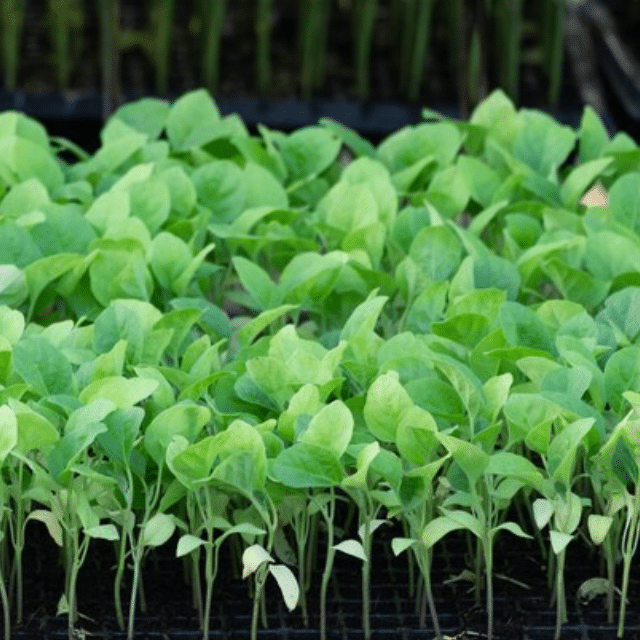
A clean nursery makes it easier to produce uniform transplants with healthy roots. Use clean propagation media, trays or beds with good drainage and avoid excessive seedling density.
Overwatering encourages weak roots and disease, while drought stress can stunt young plants. Remove diseased seedlings promptly and keep weeds from hosting pests around the nursery.
The farm-level value of prepare a Healthy Nursery comes from consistency in Tausi F1 sukuma wiki farming. One well-managed operation supports the next: uniform establishment improves scouting, good scouting improves timing, and accurate timing makes every later input easier to justify. Small variations in depth, plant population, operator technique or field condition can become large yield differences when they are repeated over a whole field. Use a simple checklist before the operation begins, observe the result afterwards, and record anything unusual so the next season is based on evidence rather than memory.
A common mistake around prepare a Healthy Nursery is to respond to one disappointing symptom by changing several things at once. That makes it difficult to know which change helped and can create hidden interactions. Where possible, correct the most likely limiting factor first, observe Tausi F1 sukuma wiki farming, and keep other management stable. This is especially important when fertilizers or pesticides are involved, because unnecessary combinations increase cost and may create crop-safety or compatibility problems.
Before committing money or labour to prepare a Healthy Nursery, ask what information would make the decision less uncertain for Tausi F1 sukuma wiki farming. It may be a soil test, a seed label, a pest count, a calibration measurement, a weather forecast, a market order or a current price. Collecting that information before spending money usually costs less than correcting the consequences of a poorly matched input. This habit is one of the clearest differences between reactive farming and deliberate farm management.
Farmers researching sukuma wiki farming in Kenya should connect the phrase to practical management: what the crop needs, what the field can supply, what the current label or variety information says and what outcome will be measured afterwards.
Manage Seedling Nutrition and Light
Seedlings need enough nutrition to grow steadily without becoming soft and overgrown. Excess nitrogen can produce tender growth that is harder to transplant, while severe nutrient shortage creates weak plants.
Provide adequate light and gradually expose seedlings to field conditions before transplanting. A compact, healthy transplant usually establishes better than a tall, stretched seedling.
The practical lesson from manage Seedling Nutrition and Light is to connect nutrient decisions with evidence from the field. In sukuma wiki or collard, roots can only use nutrients that are available in the root zone and accessible under the prevailing moisture and pH conditions. A crop that is waterlogged, drought stressed or suffering from damaged roots may show poor growth even when fertilizer has been applied. Before adding another product, review what has already been used, where it was placed, recent rainfall or irrigation, and whether the symptom pattern is consistent across the field. This discipline keeps Tausi F1 sukuma wiki farming from becoming a sequence of expensive fertilizer guesses.
The scale of manage Seedling Nutrition and Light matters in Tausi F1 sukuma wiki farming. A decision that seems minor on a few plants can become expensive over several acres. Before applying it across the whole farm, confirm that the method, product or variety fits the field and that workers understand the procedure. Small trial areas, calibration checks and written instructions can prevent a repeated error from affecting an entire crop.
In practice, collard farming in Kenya should not be treated as a stand-alone promise. Its value depends on how well the product, variety or method fits Tausi F1 sukuma wiki farming under the actual conditions on the farm.
Field Preparation and Organic Matter
Collards perform best in a soil that drains well, holds moisture and supports active roots. Mature compost or other suitable organic amendments can improve soil structure where they fit the system.
Avoid poorly decomposed manure close to young roots. Soil testing can guide pH and nutrient corrections before a long harvesting period begins.
How to Apply Field Preparation and Organic Matter on the Farm
The practical lesson from field Preparation and Organic Matter is to connect nutrient decisions with evidence from the field. In sukuma wiki or collard, roots can only use nutrients that are available in the root zone and accessible under the prevailing moisture and pH conditions. A crop that is waterlogged, drought stressed or suffering from damaged roots may show poor growth even when fertilizer has been applied. Before adding another product, review what has already been used, where it was placed, recent rainfall or irrigation, and whether the symptom pattern is consistent across the field. This discipline keeps Tausi F1 sukuma wiki farming from becoming a sequence of expensive fertilizer guesses.
Good decisions about field Preparation and Organic Matter also leave room for local knowledge. Soil type, altitude, water quality, pest pressure and market conditions vary across Kenya, so general guidance should be refined with current local recommendations and product information. Use this principle with Tausi F1 sukuma wiki farming: understand the agronomy first, then adapt the details to the farm rather than copying a programme from a different production environment.
Before committing money or labour to field Preparation and Organic Matter, ask what information would make the decision less uncertain for Tausi F1 sukuma wiki farming. It may be a soil test, a seed label, a pest count, a calibration measurement, a weather forecast, a market order or a current price. Collecting that information before spending money usually costs less than correcting the consequences of a poorly matched input. This habit is one of the clearest differences between reactive farming and deliberate farm management.
Spacing for Airflow and Harvest Access
Spacing determines plant population, canopy overlap and how easily workers can move during repeated harvests. Exact spacing should follow current variety and local guidance.
Very tight stands can create humid canopies and difficult picking, while overly wide spacing reduces plant population. Plan rows for irrigation, scouting, spraying and harvest traffic.
In Tausi F1 sukuma wiki farming, spacing for Airflow and Harvest Access deserves the same attention as establishment because this is when field effort is converted into saleable produce. Harvest quality can be reduced by stress, delayed picking, rough handling, moisture problems or poor storage even when the crop grew well. Plan labour, containers, drying or cooling needs and market timing before the crop reaches peak maturity. Keeping rejected or damaged produce separate also helps the farm measure marketable yield rather than overestimating performance from total biological production.
Connect spacing for Airflow and Harvest Access to the next decision in the Tausi F1 sukuma wiki farming season. If establishment is uneven, later fertilizer and spray calculations may need to account for a lower plant population. If a pest treatment is delayed, scouting frequency may need to increase. If water is limiting, nutrient uptake may change. Thinking in sequences turns this step into part of a complete crop-management system instead of an isolated task.
A useful way to evaluate hybrid collard seeds is to ask what changes in the field if this decision is correct. The answer should be observable through establishment, crop health, application quality, harvest or cost records rather than through marketing language alone.
Transplanting and Early Establishment
Transplant healthy seedlings into moist soil and reduce root disturbance as much as possible. Cooler planting hours and immediate watering can reduce transplant stress.
Replace dead seedlings early enough that the new plants do not remain far behind the rest of the crop. Uniform establishment creates a more predictable harvest.
The farm-level value of transplanting and Early Establishment comes from consistency in Tausi F1 sukuma wiki farming. One well-managed operation supports the next: uniform establishment improves scouting, good scouting improves timing, and accurate timing makes every later input easier to justify. Small variations in depth, plant population, operator technique or field condition can become large yield differences when they are repeated over a whole field. Use a simple checklist before the operation begins, observe the result afterwards, and record anything unusual so the next season is based on evidence rather than memory.
After completing the work around transplanting and Early Establishment, set one or two observations to check in Tausi F1 sukuma wiki farming. These might include emergence uniformity, crop colour, weed escape, pest numbers, nozzle output, fruit quality or marketable harvest depending on the stage. Without a follow-up observation, it is easy to repeat a costly practice simply because it has always been done that way.
Before committing money or labour to transplanting and Early Establishment, ask what information would make the decision less uncertain for Tausi F1 sukuma wiki farming. It may be a soil test, a seed label, a pest count, a calibration measurement, a weather forecast, a market order or a current price. Collecting that information before spending money usually costs less than correcting the consequences of a poorly matched input. This habit is one of the clearest differences between reactive farming and deliberate farm management.
Irrigation for Continuous Leaf Production
Repeated leaf harvest requires steady regrowth, which depends on reliable moisture. Severe drought slows leaf expansion and can make leaves tougher, while waterlogging limits root function.
Irrigation frequency should respond to soil type, weather and crop size. Mulch and weed control can reduce unnecessary water loss.
How to Apply Irrigation for Continuous Leaf Production on the Farm
For Tausi F1 sukuma wiki farming, irrigation for Continuous Leaf Production should be treated as a root-zone decision rather than a fixed calendar. Soil texture, rooting depth, crop size, weather and drainage all change how quickly water becomes limiting. Both shortage and excess can reduce nutrient uptake and make pest or disease symptoms harder to interpret. Check the soil as well as the leaves, and adjust irrigation or moisture-conservation practices before assuming every stress symptom requires another chemical or fertilizer input. Where irrigation is used, uniform delivery across the field is as important as total water applied.
If advice about irrigation for Continuous Leaf Production from a supplier, neighbour and agronomist differs, compare each recommendation against current label or variety information and the conditions in the field. The most persuasive recommendation for Tausi F1 sukuma wiki farming is the one that explains why it fits the crop, stage and problem. That standard reduces dependence on brand reputation or hearsay.
The idea behind sukuma wiki spacing becomes most useful when it is applied to a real field decision. For Tausi F1 sukuma wiki farming, compare the farm conditions, stage of production and evidence from scouting or records before changing the programme.
Nutrition for Repeated Harvesting
Sukuma wiki removes nutrients from the field every time leaves are harvested. A nutrition programme should therefore support both the standing plant and the new leaves that must regrow.
Nitrogen is important for leaf growth, but potassium, calcium, sulfur, magnesium and micronutrients also contribute to plant function. Use soil information, crop response and agronomic guidance rather than relying on nitrogen alone.
The practical lesson from nutrition for Repeated Harvesting is to connect nutrient decisions with evidence from the field. In sukuma wiki or collard, roots can only use nutrients that are available in the root zone and accessible under the prevailing moisture and pH conditions. A crop that is waterlogged, drought stressed or suffering from damaged roots may show poor growth even when fertilizer has been applied. Before adding another product, review what has already been used, where it was placed, recent rainfall or irrigation, and whether the symptom pattern is consistent across the field. This discipline keeps Tausi F1 sukuma wiki farming from becoming a sequence of expensive fertilizer guesses.
When applying the lesson from nutrition for Repeated Harvesting to Tausi F1 sukuma wiki farming, separate what can be controlled from what cannot. Weather will change, but the farm can still control preparation, timing, input identity, equipment condition and record keeping. When conditions move away from the original plan, adjust the operation through agronomic reasoning instead of adding more product automatically. This approach keeps the decision resilient because it remains linked to the actual field rather than to a rigid recipe.
Before committing money or labour to nutrition for Repeated Harvesting, ask what information would make the decision less uncertain for Tausi F1 sukuma wiki farming. It may be a soil test, a seed label, a pest count, a calibration measurement, a weather forecast, a market order or a current price. Collecting that information before spending money usually costs less than correcting the consequences of a poorly matched input. This habit is one of the clearest differences between reactive farming and deliberate farm management.
Farmers researching collard fertilizer should connect the phrase to practical management: what the crop needs, what the field can supply, what the current label or variety information says and what outcome will be measured afterwards.
Foliar Feeding and Deficiency Correction
Foliar fertilizer can supplement a collard nutrition programme when a specific need is identified. It should not replace correction of major soil nutrient limitations.
Because leaves are the harvested product, observe product labels, crop safety and any harvest restrictions carefully. Avoid untested tank mixtures that may mark or burn marketable leaves.
The farm-level value of foliar Feeding and Deficiency Correction comes from consistency in Tausi F1 sukuma wiki farming. One well-managed operation supports the next: uniform establishment improves scouting, good scouting improves timing, and accurate timing makes every later input easier to justify. Small variations in depth, plant population, operator technique or field condition can become large yield differences when they are repeated over a whole field. Use a simple checklist before the operation begins, observe the result afterwards, and record anything unusual so the next season is based on evidence rather than memory.
For a commercial grower managing Tausi F1 sukuma wiki farming, foliar Feeding and Deficiency Correction is also a cost-control point. Every pass through the field uses labour, fuel or carrying effort and may expose the crop to additional risk. An operation should therefore have a clear objective and a way to judge whether it worked. Record the date, field or block, input or equipment used and any observation that explains the result. Over time, those records show which practices are worth repeating.
Weed Management Between Harvests
Weeds compete for water and nutrients and can interfere with harvest and pest scouting. Control weeds while they are small through cultivation, mulching, hand weeding or labelled herbicides where appropriate.
Avoid deep cultivation that damages crop roots. Keeping field borders clean can also reduce weed seed entering the production area.
How to Apply Weed Management Between Harvests on the Farm
For Tausi F1 sukuma wiki farming, weed Management Between Harvests should always be connected to diagnosis and application quality. The farmer should be able to name the crop, target problem, crop stage and the reason treatment is justified before opening a pesticide container. Then the current label determines whether the product is registered for that use, how it is mixed and applied, what protective equipment is required, and what restrictions apply before harvest or worker re-entry. Changing dose, shortening intervals or adding unlisted tank-mix partners because control looks weak can create more problems than it solves. Review diagnosis, coverage, timing and resistance management first.
A common mistake around weed Management Between Harvests is to respond to one disappointing symptom by changing several things at once. That makes it difficult to know which change helped and can create hidden interactions. Where possible, correct the most likely limiting factor first, observe Tausi F1 sukuma wiki farming, and keep other management stable. This is especially important when fertilizers or pesticides are involved, because unnecessary combinations increase cost and may create crop-safety or compatibility problems.
Before committing money or labour to weed Management Between Harvests, ask what information would make the decision less uncertain for Tausi F1 sukuma wiki farming. It may be a soil test, a seed label, a pest count, a calibration measurement, a weather forecast, a market order or a current price. Collecting that information before spending money usually costs less than correcting the consequences of a poorly matched input. This habit is one of the clearest differences between reactive farming and deliberate farm management.
Effective sukuma wiki pest management is rarely a single-product decision. It combines prevention, field observation, timing, accurate application and follow-up so that Tausi F1 sukuma wiki farming is managed as a system rather than through isolated reactions.
Scout for Caterpillars and Other Leaf Pests
Leaf-feeding insects are economically important because damage occurs directly on the part sold to customers. Inspect young leaves and the centre of plants where caterpillars may hide.
Sap-sucking pests can also cause distortion or contamination. Use integrated pest management and choose insecticides only when the crop and pest are listed on the label.
For Tausi F1 sukuma wiki farming, scout for Caterpillars and Other Leaf Pests should always be connected to diagnosis and application quality. The farmer should be able to name the crop, target problem, crop stage and the reason treatment is justified before opening a pesticide container. Then the current label determines whether the product is registered for that use, how it is mixed and applied, what protective equipment is required, and what restrictions apply before harvest or worker re-entry. Changing dose, shortening intervals or adding unlisted tank-mix partners because control looks weak can create more problems than it solves. Review diagnosis, coverage, timing and resistance management first.
The scale of scout for Caterpillars and Other Leaf Pests matters in Tausi F1 sukuma wiki farming. A decision that seems minor on a few plants can become expensive over several acres. Before applying it across the whole farm, confirm that the method, product or variety fits the field and that workers understand the procedure. Small trial areas, calibration checks and written instructions can prevent a repeated error from affecting an entire crop.
A useful way to evaluate collard harvesting is to ask what changes in the field if this decision is correct. The answer should be observable through establishment, crop health, application quality, harvest or cost records rather than through marketing language alone.
Protect Beneficial Insects
Natural enemies can help suppress aphids, caterpillars and other pests. Repeated broad-spectrum spraying can reduce these beneficial populations.
Scouting should therefore record predators and parasitoids as well as pest numbers. Use selective options and resistance-management rotations where labelled products are needed.
For Tausi F1 sukuma wiki farming, protect Beneficial Insects should always be connected to diagnosis and application quality. The farmer should be able to name the crop, target problem, crop stage and the reason treatment is justified before opening a pesticide container. Then the current label determines whether the product is registered for that use, how it is mixed and applied, what protective equipment is required, and what restrictions apply before harvest or worker re-entry. Changing dose, shortening intervals or adding unlisted tank-mix partners because control looks weak can create more problems than it solves. Review diagnosis, coverage, timing and resistance management first.
Good decisions about protect Beneficial Insects also leave room for local knowledge. Soil type, altitude, water quality, pest pressure and market conditions vary across Kenya, so general guidance should be refined with current local recommendations and product information. Use this principle with Tausi F1 sukuma wiki farming: understand the agronomy first, then adapt the details to the farm rather than copying a programme from a different production environment.
Before committing money or labour to protect Beneficial Insects, ask what information would make the decision less uncertain for Tausi F1 sukuma wiki farming. It may be a soil test, a seed label, a pest count, a calibration measurement, a weather forecast, a market order or a current price. Collecting that information before spending money usually costs less than correcting the consequences of a poorly matched input. This habit is one of the clearest differences between reactive farming and deliberate farm management.
Manage Foliar Diseases and Leaf Wetness
Leaf diseases can reduce market quality even when plants remain alive. Good airflow, irrigation timing, clean field practices and removal of badly infected material can reduce disease pressure.
Diagnose the disease before selecting a fungicide. Protective sprays work best as part of a programme rather than as a response to severe leaf destruction.
How to Apply Manage Foliar Diseases and Leaf Wetness on the Farm
For Tausi F1 sukuma wiki farming, manage Foliar Diseases and Leaf Wetness should always be connected to diagnosis and application quality. The farmer should be able to name the crop, target problem, crop stage and the reason treatment is justified before opening a pesticide container. Then the current label determines whether the product is registered for that use, how it is mixed and applied, what protective equipment is required, and what restrictions apply before harvest or worker re-entry. Changing dose, shortening intervals or adding unlisted tank-mix partners because control looks weak can create more problems than it solves. Review diagnosis, coverage, timing and resistance management first.
Connect manage Foliar Diseases and Leaf Wetness to the next decision in the Tausi F1 sukuma wiki farming season. If establishment is uneven, later fertilizer and spray calculations may need to account for a lower plant population. If a pest treatment is delayed, scouting frequency may need to increase. If water is limiting, nutrient uptake may change. Thinking in sequences turns this step into part of a complete crop-management system instead of an isolated task.
The idea behind Tausi F1 sukuma wiki becomes most useful when it is applied to a real field decision. For Tausi F1 sukuma wiki farming, compare the farm conditions, stage of production and evidence from scouting or records before changing the programme.
Harvest Leaves Without Weakening the Plant
Repeated harvesting should remove marketable leaves while preserving enough healthy foliage for continued photosynthesis. Rough pulling can damage stems or growing points and reduce future production.
Use clean hands or tools and avoid harvesting wet diseased foliage when this can spread pathogens. Train workers to pick consistently so plant structure remains productive.
In Tausi F1 sukuma wiki farming, harvest Leaves Without Weakening the Plant deserves the same attention as establishment because this is when field effort is converted into saleable produce. Harvest quality can be reduced by stress, delayed picking, rough handling, moisture problems or poor storage even when the crop grew well. Plan labour, containers, drying or cooling needs and market timing before the crop reaches peak maturity. Keeping rejected or damaged produce separate also helps the farm measure marketable yield rather than overestimating performance from total biological production.
After completing the work around harvest Leaves Without Weakening the Plant, set one or two observations to check in Tausi F1 sukuma wiki farming. These might include emergence uniformity, crop colour, weed escape, pest numbers, nozzle output, fruit quality or marketable harvest depending on the stage. Without a follow-up observation, it is easy to repeat a costly practice simply because it has always been done that way.
Before committing money or labour to harvest Leaves Without Weakening the Plant, ask what information would make the decision less uncertain for Tausi F1 sukuma wiki farming. It may be a soil test, a seed label, a pest count, a calibration measurement, a weather forecast, a market order or a current price. Collecting that information before spending money usually costs less than correcting the consequences of a poorly matched input. This habit is one of the clearest differences between reactive farming and deliberate farm management.
Food Safety and Pre-Harvest Intervals
Because sukuma wiki leaves are eaten, pesticide harvest intervals require strict attention. Every pesticide application should be recorded with date, product and treated block.
Harvest workers need to know which areas are still within a restricted period. Never shorten the pre-harvest interval because market demand is high.
In Tausi F1 sukuma wiki farming, food Safety and Pre-Harvest Intervals deserves the same attention as establishment because this is when field effort is converted into saleable produce. Harvest quality can be reduced by stress, delayed picking, rough handling, moisture problems or poor storage even when the crop grew well. Plan labour, containers, drying or cooling needs and market timing before the crop reaches peak maturity. Keeping rejected or damaged produce separate also helps the farm measure marketable yield rather than overestimating performance from total biological production.
If advice about food Safety and Pre-Harvest Intervals from a supplier, neighbour and agronomist differs, compare each recommendation against current label or variety information and the conditions in the field. The most persuasive recommendation for Tausi F1 sukuma wiki farming is the one that explains why it fits the crop, stage and problem. That standard reduces dependence on brand reputation or hearsay.
Farmers researching sukuma wiki seeds in Kenya should connect the phrase to practical management: what the crop needs, what the field can supply, what the current label or variety information says and what outcome will be measured afterwards.
Post-Harvest Handling
Fresh collard leaves lose water quickly after harvest. Keep harvested produce out of direct sun, handle gently and move it to market or cooling as quickly as the system allows.
Dirty crates and standing water can increase contamination. Post-harvest care protects the quality created through months of field management.
How to Apply Post-Harvest Handling on the Farm
In Tausi F1 sukuma wiki farming, post-Harvest Handling deserves the same attention as establishment because this is when field effort is converted into saleable produce. Harvest quality can be reduced by stress, delayed picking, rough handling, moisture problems or poor storage even when the crop grew well. Plan labour, containers, drying or cooling needs and market timing before the crop reaches peak maturity. Keeping rejected or damaged produce separate also helps the farm measure marketable yield rather than overestimating performance from total biological production.
When applying the lesson from post-Harvest Handling to Tausi F1 sukuma wiki farming, separate what can be controlled from what cannot. Weather will change, but the farm can still control preparation, timing, input identity, equipment condition and record keeping. When conditions move away from the original plan, adjust the operation through agronomic reasoning instead of adding more product automatically. This approach keeps the decision resilient because it remains linked to the actual field rather than to a rigid recipe.
Before committing money or labour to post-Harvest Handling, ask what information would make the decision less uncertain for Tausi F1 sukuma wiki farming. It may be a soil test, a seed label, a pest count, a calibration measurement, a weather forecast, a market order or a current price. Collecting that information before spending money usually costs less than correcting the consequences of a poorly matched input. This habit is one of the clearest differences between reactive farming and deliberate farm management.
When farmers compare Tausi F1 seeds for sale, the buying decision should follow suitability, current label or variety information, pack size, supplier traceability and the total farm requirement rather than price alone. This keeps the purchase connected to Tausi F1 sukuma wiki farming and reduces the risk of buying an input that does not fit the production plan.
Plan Successive Plantings
Staggered planting can help supply the market more consistently instead of producing one large flush. The interval between plantings should reflect nursery capacity, expected harvest duration and buyer demand.
Staggering also spreads labour and input requirements. Farm records from earlier crops help estimate the area needed for each planting.
The farm-level value of plan Successive Plantings comes from consistency in Tausi F1 sukuma wiki farming. One well-managed operation supports the next: uniform establishment improves scouting, good scouting improves timing, and accurate timing makes every later input easier to justify. Small variations in depth, plant population, operator technique or field condition can become large yield differences when they are repeated over a whole field. Use a simple checklist before the operation begins, observe the result afterwards, and record anything unusual so the next season is based on evidence rather than memory.
For a commercial grower managing Tausi F1 sukuma wiki farming, plan Successive Plantings is also a cost-control point. Every pass through the field uses labour, fuel or carrying effort and may expose the crop to additional risk. An operation should therefore have a clear objective and a way to judge whether it worked. Record the date, field or block, input or equipment used and any observation that explains the result. Over time, those records show which practices are worth repeating.
Buying Tausi F1 Seed and Crop Inputs
Confirm current Tausi F1 seed pack size, variety information and stock before ordering. At the same time, budget for nursery supplies, fertilizer, irrigation and crop protection rather than treating seed as the only major input.
Dawn Farmers lists seed and crop-production categories that can be used to compare options. Buy products because they fit a defined stage or problem, not because they are commonly used by other growers.
For Tausi F1 sukuma wiki farming, the decision around buying Tausi F1 Seed and Crop Inputs is strongest when the farmer can explain exactly what is being purchased and why. That means comparing specification or label information, the quantity required, storage or handling needs, and the cost of getting the input to the farm. A lower shelf price can be poor value when the wrong product is bought, while a higher-priced option is not automatically better simply because it carries a recognised brand. Keep the production objective in front of the buying decision and ask for the exact item, formulation, variety or specification rather than accepting a vague substitute.
A common mistake around buying Tausi F1 Seed and Crop Inputs is to respond to one disappointing symptom by changing several things at once. That makes it difficult to know which change helped and can create hidden interactions. Where possible, correct the most likely limiting factor first, observe Tausi F1 sukuma wiki farming, and keep other management stable. This is especially important when fertilizers or pesticides are involved, because unnecessary combinations increase cost and may create crop-safety or compatibility problems.
Before committing money or labour to buying Tausi F1 Seed and Crop Inputs, ask what information would make the decision less uncertain for Tausi F1 sukuma wiki farming. It may be a soil test, a seed label, a pest count, a calibration measurement, a weather forecast, a market order or a current price. Collecting that information before spending money usually costs less than correcting the consequences of a poorly matched input. This habit is one of the clearest differences between reactive farming and deliberate farm management.
A useful way to evaluate kale farming in Kenya is to ask what changes in the field if this decision is correct. The answer should be observable through establishment, crop health, application quality, harvest or cost records rather than through marketing language alone.
Sukuma wiki production planning also connects naturally with Vegetable Seeds for Sale in Kenya, Organic Fertilizer in Kenya and Foliar Crop Nutrition Products Explained and Agrochemicals for Sale in Nairobi Kenya Guide to Choosing Crop Protection Products for connected planning and buying decisions.
Frequently Asked Questions
What is Tausi F1 collard?
Tausi F1 is a hybrid collard or sukuma wiki variety listed by Dawn Farmers for leafy vegetable production.
When can Tausi F1 start harvesting?
Existing product information describes it as early maturing, but first harvest depends on nursery age, transplant recovery, weather and management.
How should sukuma wiki spacing be chosen?
Use current variety recommendations together with fertility, irrigation and market preferences for leaf size.
What fertilizer is suitable for collards?
Plan nutrition around soil fertility and repeated leaf harvest. Nitrogen is important for leafy growth, but balanced nutrition and soil testing remain useful.
How often should collards be harvested?
Pick market-ready outer leaves regularly while protecting the growing point and avoiding excessive stripping that weakens the plant.
Where can I buy Tausi F1 seed?
Dawn Farmers lists Tausi F1 Collard in its seed category. Confirm current pack size and availability before ordering.
Why is nursery hygiene important for vegetable and fruit crops?
A clean nursery reduces the risk of transplanting root disease, weeds and weak seedlings into the production field.
Can I copy spacing from another variety?
Spacing should follow current variety and local recommendations because plant vigour, market size, climate and production system can differ.
How does irrigation affect nutrient uptake?
Roots need both water and oxygen. Drought limits nutrient movement and uptake, while waterlogging reduces root aeration and can also restrict uptake.
Should I spray whenever I see leaf damage?
No. Identify the cause first, assess the crop and pest or disease pressure, then use a labelled treatment only when it is justified.
Why should harvest intervals be recorded?
Food crops must not be harvested before the label-specified pre-harvest interval has passed after a pesticide application.
What farm records are useful for crop planning?
Record seed variety, planting date, nursery or transplant details, irrigation, fertilizer, pesticide applications, harvest quantity and market price.
Need Tausi F1 Seed or Crop Inputs?
Use the guide above to narrow the requirement, then browse the Seeds category. For current stock, pack sizes and prices, contact Dawn Farmers Limited on +254 724 367 713. In Tausi F1 sukuma wiki farming, adapt this point to current field conditions, product or variety information and the management capacity of the farm.