Vegetable seeds for sale in Kenya cover crops with very different maturity periods, market requirements and field conditions. Choosing a hybrid should start with the crop, production environment and intended market, then move to variety traits, pack size and price.
Choose Vegetable Seed by Crop and Market
| Crop Group | Useful Variety Questions | Examples to Compare |
|---|---|---|
| Cabbage | Maturity, head type, disease tolerance and market | Oxylus F1, Tropicana F1 |
| Collard | Leaf quality, vigour and harvest pattern | Tausi F1 |
| Papaya | Plant habit, fruit traits and maturity | Malkia F1 |
| Onion | Day length, bulb type, maturity and storage | Neptune F1 |
Hybrid seeds in Kenya should be compared using documented variety characteristics rather than assuming every hybrid is suited to every production area. Certified vegetable seeds also provide clearer identity and quality assurance when farmers are investing in a commercial crop.
Cabbage Collard and Leafy Vegetable Seed
Farmers searching for cabbage seeds for sale in Kenya can compare Oxylus F1 and Tropicana F1. For sukuma wiki seeds for sale, Tausi F1 Collard is one catalogue option. Compare maturity, harvest pattern and market preference before choosing.
Papaya Onion Chilli and Watermelon Seed
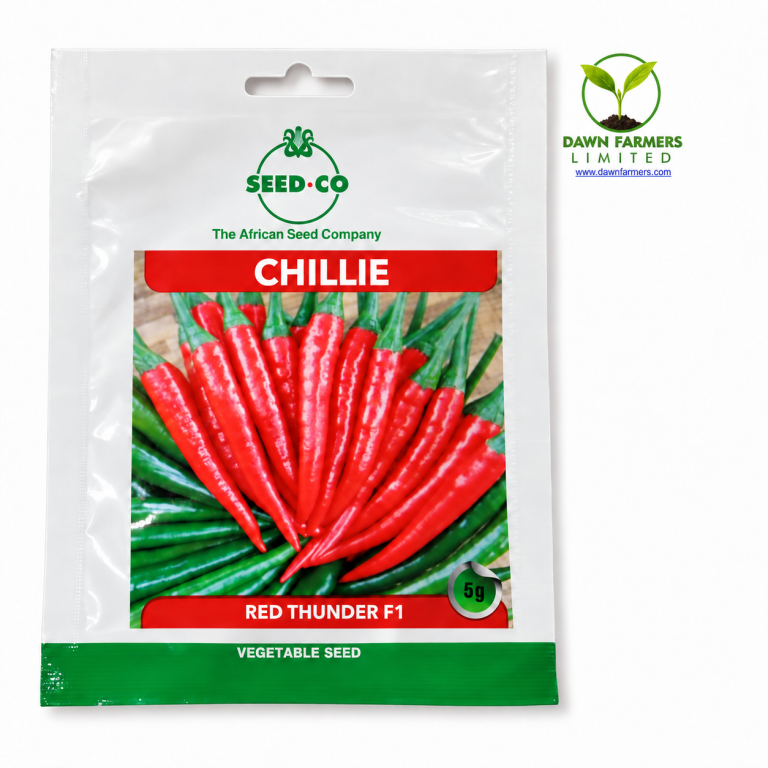
Papaya seeds for sale in Kenya can be compared through products such as Malkia F1 Papaya. Farmers researching onion seeds for sale in Kenya can review Neptune F1 Onion. The catalogue also includes options for chilli seeds for sale in Kenya such as Red Thunder F1 and watermelon seeds for sale in Kenya such as Sukari F1.
Buy the Variety Not Just the Crop Name
A good vegetable seed supplier in Kenya should identify the exact variety and pack size. A seed shop in Kenya may stock several varieties of the same crop, so compare the actual traits and intended growing conditions instead of requesting only “cabbage seed” or “onion seed.”
When comparing vegetable seed suppliers in Kenya, check variety identity, current stock and product information. Dawn Farmers’ Seeds category provides a starting point before calling +254 724 367 713 to confirm availability.
Buying point: choose seed around the production environment and market plan. Pack price matters only after the variety has been matched to the farm.
About the product and variety information used here: Vegetable seed buying is a production decision. Variety adaptation, market type, maturity, disease traits, seed pack size, nursery requirements and supplier traceability all deserve attention before planting.
Start With the Crop and Market
Vegetable seed selection should begin with what the market buys and what the farm can grow reliably. Cabbage, collard, onion, chilli, watermelon and papaya have different production cycles, labour needs and post-harvest risks.
A variety that looks attractive in a catalogue may not fit the buyer or the local season. Market information should therefore come before large seed orders.
For buying vegetable seed in Kenya, the decision around start With the Crop and Market is strongest when the farmer can explain exactly what is being purchased and why. That means comparing specification or label information, the quantity required, storage or handling needs, and the cost of getting the input to the farm. A lower shelf price can be poor value when the wrong product is bought, while a higher-priced option is not automatically better simply because it carries a recognised brand. Keep the production objective in front of the buying decision and ask for the exact item, formulation, variety or specification rather than accepting a vague substitute.
When applying the lesson from start With the Crop and Market to buying vegetable seed in Kenya, separate what can be controlled from what cannot. Weather will change, but the farm can still control preparation, timing, input identity, equipment condition and record keeping. When conditions move away from the original plan, adjust the operation through agronomic reasoning instead of adding more product automatically. This approach keeps the decision resilient because it remains linked to the actual field rather than to a rigid recipe.
Before committing money or labour to start With the Crop and Market, ask what information would make the decision less uncertain for buying vegetable seed in Kenya. It may be a soil test, a seed label, a pest count, a calibration measurement, a weather forecast, a market order or a current price. Collecting that information before spending money usually costs less than correcting the consequences of a poorly matched input. This habit is one of the clearest differences between reactive farming and deliberate farm management.
When farmers compare vegetable seeds for sale in Kenya, the buying decision should follow suitability, current label or variety information, pack size, supplier traceability and the total farm requirement rather than price alone. This keeps the purchase connected to buying vegetable seed in Kenya and reduces the risk of buying an input that does not fit the production plan.
Hybrid Seed and Open-Pollinated Seed
Hybrid seed is produced from selected parental lines and is used for uniformity or specific documented traits. Open-pollinated varieties reproduce differently and may fit some farming systems well.
Neither category is automatically superior for every farm. Compare variety performance, seed cost, market requirements and the farmer’s production goals.
How to Apply Hybrid Seed and Open-Pollinated Seed on the Farm
The farm-level value of hybrid Seed and Open-Pollinated Seed comes from consistency in buying vegetable seed in Kenya. One well-managed operation supports the next: uniform establishment improves scouting, good scouting improves timing, and accurate timing makes every later input easier to justify. Small variations in depth, plant population, operator technique or field condition can become large yield differences when they are repeated over a whole field. Use a simple checklist before the operation begins, observe the result afterwards, and record anything unusual so the next season is based on evidence rather than memory.
For a commercial grower managing buying vegetable seed in Kenya, hybrid Seed and Open-Pollinated Seed is also a cost-control point. Every pass through the field uses labour, fuel or carrying effort and may expose the crop to additional risk. An operation should therefore have a clear objective and a way to judge whether it worked. Record the date, field or block, input or equipment used and any observation that explains the result. Over time, those records show which practices are worth repeating.
Variety Adaptation
Vegetable varieties differ in temperature tolerance, disease response, maturity and plant habit. A variety suited to one altitude or season can struggle in another.
Check current variety information and local recommendations. Where a new variety is unfamiliar, a small trial is safer than planting the whole farm immediately.
The practical lesson from variety Adaptation is to connect nutrient decisions with evidence from the field. In vegetables, roots can only use nutrients that are available in the root zone and accessible under the prevailing moisture and pH conditions. A crop that is waterlogged, drought stressed or suffering from damaged roots may show poor growth even when fertilizer has been applied. Before adding another product, review what has already been used, where it was placed, recent rainfall or irrigation, and whether the symptom pattern is consistent across the field. This discipline keeps buying vegetable seed in Kenya from becoming a sequence of expensive fertilizer guesses.
A common mistake around variety Adaptation is to respond to one disappointing symptom by changing several things at once. That makes it difficult to know which change helped and can create hidden interactions. Where possible, correct the most likely limiting factor first, observe buying vegetable seed in Kenya, and keep other management stable. This is especially important when fertilizers or pesticides are involved, because unnecessary combinations increase cost and may create crop-safety or compatibility problems.
Before committing money or labour to variety Adaptation, ask what information would make the decision less uncertain for buying vegetable seed in Kenya. It may be a soil test, a seed label, a pest count, a calibration measurement, a weather forecast, a market order or a current price. Collecting that information before spending money usually costs less than correcting the consequences of a poorly matched input. This habit is one of the clearest differences between reactive farming and deliberate farm management.
Farmers researching hybrid seeds in Kenya should connect the phrase to practical management: what the crop needs, what the field can supply, what the current label or variety information says and what outcome will be measured afterwards.
Maturity and Market Timing
Early or late maturity affects when the crop reaches the market and how long land remains occupied. A shorter crop cycle can reduce exposure to some risks but may not fit every market.
Staggered planting can spread harvest and labour demand. Use maturity information together with expected weather and buyer schedules.
For buying vegetable seed in Kenya, the decision around maturity and Market Timing is strongest when the farmer can explain exactly what is being purchased and why. That means comparing specification or label information, the quantity required, storage or handling needs, and the cost of getting the input to the farm. A lower shelf price can be poor value when the wrong product is bought, while a higher-priced option is not automatically better simply because it carries a recognised brand. Keep the production objective in front of the buying decision and ask for the exact item, formulation, variety or specification rather than accepting a vague substitute.
The scale of maturity and Market Timing matters in buying vegetable seed in Kenya. A decision that seems minor on a few plants can become expensive over several acres. Before applying it across the whole farm, confirm that the method, product or variety fits the field and that workers understand the procedure. Small trial areas, calibration checks and written instructions can prevent a repeated error from affecting an entire crop.
In practice, certified vegetable seeds should not be treated as a stand-alone promise. Its value depends on how well the product, variety or method fits buying vegetable seed in Kenya under the actual conditions on the farm.
Disease Resistance and Tolerance
Some vegetable varieties are bred with documented resistance or tolerance to specific diseases. Those traits can reduce risk but do not replace sanitation, rotation and field scouting.
Resistance only applies to the diseases or strains stated in the variety information. Do not assume that a resistant variety needs no crop protection.
How to Apply Disease Resistance and Tolerance on the Farm
For buying vegetable seed in Kenya, disease Resistance and Tolerance should always be connected to diagnosis and application quality. The farmer should be able to name the crop, target problem, crop stage and the reason treatment is justified before opening a pesticide container. Then the current label determines whether the product is registered for that use, how it is mixed and applied, what protective equipment is required, and what restrictions apply before harvest or worker re-entry. Changing dose, shortening intervals or adding unlisted tank-mix partners because control looks weak can create more problems than it solves. Review diagnosis, coverage, timing and resistance management first.
Good decisions about disease Resistance and Tolerance also leave room for local knowledge. Soil type, altitude, water quality, pest pressure and market conditions vary across Kenya, so general guidance should be refined with current local recommendations and product information. Use this principle with buying vegetable seed in Kenya: understand the agronomy first, then adapt the details to the farm rather than copying a programme from a different production environment.
Before committing money or labour to disease Resistance and Tolerance, ask what information would make the decision less uncertain for buying vegetable seed in Kenya. It may be a soil test, a seed label, a pest count, a calibration measurement, a weather forecast, a market order or a current price. Collecting that information before spending money usually costs less than correcting the consequences of a poorly matched input. This habit is one of the clearest differences between reactive farming and deliberate farm management.
Seed Count Pack Size and Area
Vegetable seed can be sold by weight or seed count depending on crop and supplier. A small packet may contain enough seed for a large nursery if seeds are tiny, while large-seeded crops require more physical volume.
Calculate the nursery or field area before buying. Include expected germination and transplant losses according to current variety guidance.
For buying vegetable seed in Kenya, the decision around seed Count Pack Size and Area is strongest when the farmer can explain exactly what is being purchased and why. That means comparing specification or label information, the quantity required, storage or handling needs, and the cost of getting the input to the farm. A lower shelf price can be poor value when the wrong product is bought, while a higher-priced option is not automatically better simply because it carries a recognised brand. Keep the production objective in front of the buying decision and ask for the exact item, formulation, variety or specification rather than accepting a vague substitute.
Connect seed Count Pack Size and Area to the next decision in the buying vegetable seed in Kenya season. If establishment is uneven, later fertilizer and spray calculations may need to account for a lower plant population. If a pest treatment is delayed, scouting frequency may need to increase. If water is limiting, nutrient uptake may change. Thinking in sequences turns this step into part of a complete crop-management system instead of an isolated task.
When farmers compare cabbage seeds for sale in Kenya, the buying decision should follow suitability, current label or variety information, pack size, supplier traceability and the total farm requirement rather than price alone. This keeps the purchase connected to buying vegetable seed in Kenya and reduces the risk of buying an input that does not fit the production plan.
Nursery Crops Versus Direct-Seeded Crops
Cabbage, collard and some other vegetables are commonly raised in nurseries, while other crops may be direct seeded. Nursery production requires trays or beds, propagation media, clean water and transplant care.
Direct seeding requires good field preparation and seed placement. Seed buying should therefore include the establishment method and equipment needed.
The farm-level value of nursery Crops Versus Direct-Seeded Crops comes from consistency in buying vegetable seed in Kenya. One well-managed operation supports the next: uniform establishment improves scouting, good scouting improves timing, and accurate timing makes every later input easier to justify. Small variations in depth, plant population, operator technique or field condition can become large yield differences when they are repeated over a whole field. Use a simple checklist before the operation begins, observe the result afterwards, and record anything unusual so the next season is based on evidence rather than memory.
After completing the work around nursery Crops Versus Direct-Seeded Crops, set one or two observations to check in buying vegetable seed in Kenya. These might include emergence uniformity, crop colour, weed escape, pest numbers, nozzle output, fruit quality or marketable harvest depending on the stage. Without a follow-up observation, it is easy to repeat a costly practice simply because it has always been done that way.
Before committing money or labour to nursery Crops Versus Direct-Seeded Crops, ask what information would make the decision less uncertain for buying vegetable seed in Kenya. It may be a soil test, a seed label, a pest count, a calibration measurement, a weather forecast, a market order or a current price. Collecting that information before spending money usually costs less than correcting the consequences of a poorly matched input. This habit is one of the clearest differences between reactive farming and deliberate farm management.
Cabbage Seed Selection
Dawn Farmers lists hybrid cabbage options including Oxylus F1 and Tropicana F1. Compare current maturity, head characteristics, adaptation and disease information.
Market preference for head size and transport distance can influence the best choice. A hybrid should be matched to local conditions before price comparison.
How to Apply Cabbage Seed Selection on the Farm
The farm-level value of cabbage Seed Selection comes from consistency in buying vegetable seed in Kenya. One well-managed operation supports the next: uniform establishment improves scouting, good scouting improves timing, and accurate timing makes every later input easier to justify. Small variations in depth, plant population, operator technique or field condition can become large yield differences when they are repeated over a whole field. Use a simple checklist before the operation begins, observe the result afterwards, and record anything unusual so the next season is based on evidence rather than memory.
If advice about cabbage Seed Selection from a supplier, neighbour and agronomist differs, compare each recommendation against current label or variety information and the conditions in the field. The most persuasive recommendation for buying vegetable seed in Kenya is the one that explains why it fits the crop, stage and problem. That standard reduces dependence on brand reputation or hearsay.
When farmers compare sukuma wiki seeds for sale, the buying decision should follow suitability, current label or variety information, pack size, supplier traceability and the total farm requirement rather than price alone. This keeps the purchase connected to buying vegetable seed in Kenya and reduces the risk of buying an input that does not fit the production plan.
Sukuma Wiki and Collard Seed
Tausi F1 collard is listed in the Dawn Farmers seed range. Repeated leaf harvesting means plant vigour, recovery and market leaf quality are important production considerations.
Confirm current variety traits and seed pack size. Plan irrigation and nutrition for continuous regrowth rather than one harvest.
The farm-level value of sukuma Wiki and Collard Seed comes from consistency in buying vegetable seed in Kenya. One well-managed operation supports the next: uniform establishment improves scouting, good scouting improves timing, and accurate timing makes every later input easier to justify. Small variations in depth, plant population, operator technique or field condition can become large yield differences when they are repeated over a whole field. Use a simple checklist before the operation begins, observe the result afterwards, and record anything unusual so the next season is based on evidence rather than memory.
When applying the lesson from sukuma Wiki and Collard Seed to buying vegetable seed in Kenya, separate what can be controlled from what cannot. Weather will change, but the farm can still control preparation, timing, input identity, equipment condition and record keeping. When conditions move away from the original plan, adjust the operation through agronomic reasoning instead of adding more product automatically. This approach keeps the decision resilient because it remains linked to the actual field rather than to a rigid recipe.
Before committing money or labour to sukuma Wiki and Collard Seed, ask what information would make the decision less uncertain for buying vegetable seed in Kenya. It may be a soil test, a seed label, a pest count, a calibration measurement, a weather forecast, a market order or a current price. Collecting that information before spending money usually costs less than correcting the consequences of a poorly matched input. This habit is one of the clearest differences between reactive farming and deliberate farm management.
When farmers compare papaya seeds for sale in Kenya, the buying decision should follow suitability, current label or variety information, pack size, supplier traceability and the total farm requirement rather than price alone. This keeps the purchase connected to buying vegetable seed in Kenya and reduces the risk of buying an input that does not fit the production plan.
Papaya Seed
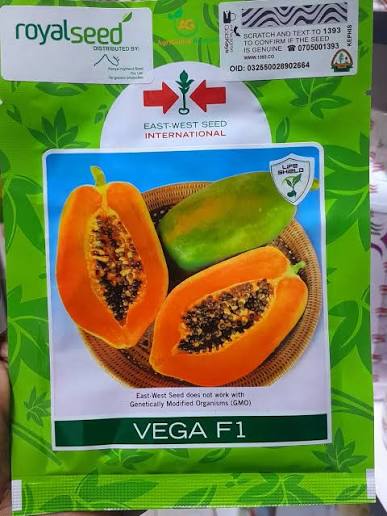
Papaya is a longer-term fruit crop than most leafy vegetables, so seed selection has consequences for several seasons of field use. Dawn Farmers lists Malkia F1 papaya seed.
Confirm current fruit type, maturity and production information before planting. Site drainage, irrigation and market handling should be considered before seed purchase.
The farm-level value of papaya Seed comes from consistency in buying vegetable seed in Kenya. One well-managed operation supports the next: uniform establishment improves scouting, good scouting improves timing, and accurate timing makes every later input easier to justify. Small variations in depth, plant population, operator technique or field condition can become large yield differences when they are repeated over a whole field. Use a simple checklist before the operation begins, observe the result afterwards, and record anything unusual so the next season is based on evidence rather than memory.
For a commercial grower managing buying vegetable seed in Kenya, papaya Seed is also a cost-control point. Every pass through the field uses labour, fuel or carrying effort and may expose the crop to additional risk. An operation should therefore have a clear objective and a way to judge whether it worked. Record the date, field or block, input or equipment used and any observation that explains the result. Over time, those records show which practices are worth repeating.
Onion Seed
Onion variety choice is sensitive to day length, climate, maturity and market preference. Dawn Farmers lists Neptune F1 onion among its seed products.
Confirm whether the variety fits the production zone and intended season. Bulb colour, storage and market use also influence the decision.
How to Apply Onion Seed on the Farm
The farm-level value of onion Seed comes from consistency in buying vegetable seed in Kenya. One well-managed operation supports the next: uniform establishment improves scouting, good scouting improves timing, and accurate timing makes every later input easier to justify. Small variations in depth, plant population, operator technique or field condition can become large yield differences when they are repeated over a whole field. Use a simple checklist before the operation begins, observe the result afterwards, and record anything unusual so the next season is based on evidence rather than memory.
A common mistake around onion Seed is to respond to one disappointing symptom by changing several things at once. That makes it difficult to know which change helped and can create hidden interactions. Where possible, correct the most likely limiting factor first, observe buying vegetable seed in Kenya, and keep other management stable. This is especially important when fertilizers or pesticides are involved, because unnecessary combinations increase cost and may create crop-safety or compatibility problems.
Before committing money or labour to onion Seed, ask what information would make the decision less uncertain for buying vegetable seed in Kenya. It may be a soil test, a seed label, a pest count, a calibration measurement, a weather forecast, a market order or a current price. Collecting that information before spending money usually costs less than correcting the consequences of a poorly matched input. This habit is one of the clearest differences between reactive farming and deliberate farm management.
When farmers compare onion seeds for sale in Kenya, the buying decision should follow suitability, current label or variety information, pack size, supplier traceability and the total farm requirement rather than price alone. This keeps the purchase connected to buying vegetable seed in Kenya and reduces the risk of buying an input that does not fit the production plan.
Chilli Seed
Chilli varieties differ in pungency, fruit size, colour, maturity, plant habit and target market. Red Thunder F1 is one option in the Dawn Farmers catalogue.
Commercial growers should know whether they are supplying fresh, processing or export markets. Seed cost is small compared with the risk of producing the wrong fruit type for the buyer.
The farm-level value of chilli Seed comes from consistency in buying vegetable seed in Kenya. One well-managed operation supports the next: uniform establishment improves scouting, good scouting improves timing, and accurate timing makes every later input easier to justify. Small variations in depth, plant population, operator technique or field condition can become large yield differences when they are repeated over a whole field. Use a simple checklist before the operation begins, observe the result afterwards, and record anything unusual so the next season is based on evidence rather than memory.
The scale of chilli Seed matters in buying vegetable seed in Kenya. A decision that seems minor on a few plants can become expensive over several acres. Before applying it across the whole farm, confirm that the method, product or variety fits the field and that workers understand the procedure. Small trial areas, calibration checks and written instructions can prevent a repeated error from affecting an entire crop.
When farmers compare chilli seeds for sale in Kenya, the buying decision should follow suitability, current label or variety information, pack size, supplier traceability and the total farm requirement rather than price alone. This keeps the purchase connected to buying vegetable seed in Kenya and reduces the risk of buying an input that does not fit the production plan.
Watermelon Seed
Watermelon varieties differ in fruit size, rind, flesh, maturity and adaptation. Sukari F1 is one hybrid listed in the Dawn Farmers catalogue.
Before buying, consider market preference, irrigation, pollination and transport. A large fruit can be difficult to market if buyers prefer smaller sizes.
For buying vegetable seed in Kenya, watermelon Seed should be treated as a root-zone decision rather than a fixed calendar. Soil texture, rooting depth, crop size, weather and drainage all change how quickly water becomes limiting. Both shortage and excess can reduce nutrient uptake and make pest or disease symptoms harder to interpret. Check the soil as well as the leaves, and adjust irrigation or moisture-conservation practices before assuming every stress symptom requires another chemical or fertilizer input. Where irrigation is used, uniform delivery across the field is as important as total water applied.
Good decisions about watermelon Seed also leave room for local knowledge. Soil type, altitude, water quality, pest pressure and market conditions vary across Kenya, so general guidance should be refined with current local recommendations and product information. Use this principle with buying vegetable seed in Kenya: understand the agronomy first, then adapt the details to the farm rather than copying a programme from a different production environment.
Before committing money or labour to watermelon Seed, ask what information would make the decision less uncertain for buying vegetable seed in Kenya. It may be a soil test, a seed label, a pest count, a calibration measurement, a weather forecast, a market order or a current price. Collecting that information before spending money usually costs less than correcting the consequences of a poorly matched input. This habit is one of the clearest differences between reactive farming and deliberate farm management.
Seed Pack Integrity
Check that vegetable seed packs are sealed, dry and clearly labelled. Tiny seed is especially easy to misidentify once removed from original packaging.
Avoid repacked seed without traceable variety information. Keep the pack until the nursery or field stand is established.
How to Apply Seed Pack Integrity on the Farm
For buying vegetable seed in Kenya, the decision around seed Pack Integrity is strongest when the farmer can explain exactly what is being purchased and why. That means comparing specification or label information, the quantity required, storage or handling needs, and the cost of getting the input to the farm. A lower shelf price can be poor value when the wrong product is bought, while a higher-priced option is not automatically better simply because it carries a recognised brand. Keep the production objective in front of the buying decision and ask for the exact item, formulation, variety or specification rather than accepting a vague substitute.
Connect seed Pack Integrity to the next decision in the buying vegetable seed in Kenya season. If establishment is uneven, later fertilizer and spray calculations may need to account for a lower plant population. If a pest treatment is delayed, scouting frequency may need to increase. If water is limiting, nutrient uptake may change. Thinking in sequences turns this step into part of a complete crop-management system instead of an isolated task.
When farmers compare watermelon seeds for sale in Kenya, the buying decision should follow suitability, current label or variety information, pack size, supplier traceability and the total farm requirement rather than price alone. This keeps the purchase connected to buying vegetable seed in Kenya and reduces the risk of buying an input that does not fit the production plan.
Seed Storage
Heat and moisture reduce seed quality over time. Store unopened seed in a cool, dry place and protect it from pests.
Once a packet is opened, reseal unused seed carefully and label it. Do not store seed beside fertilizers or chemicals that can contaminate packaging.
In buying vegetable seed in Kenya, seed Storage deserves the same attention as establishment because this is when field effort is converted into saleable produce. Harvest quality can be reduced by stress, delayed picking, rough handling, moisture problems or poor storage even when the crop grew well. Plan labour, containers, drying or cooling needs and market timing before the crop reaches peak maturity. Keeping rejected or damaged produce separate also helps the farm measure marketable yield rather than overestimating performance from total biological production.
After completing the work around seed Storage, set one or two observations to check in buying vegetable seed in Kenya. These might include emergence uniformity, crop colour, weed escape, pest numbers, nozzle output, fruit quality or marketable harvest depending on the stage. Without a follow-up observation, it is easy to repeat a costly practice simply because it has always been done that way.
Before committing money or labour to seed Storage, ask what information would make the decision less uncertain for buying vegetable seed in Kenya. It may be a soil test, a seed label, a pest count, a calibration measurement, a weather forecast, a market order or a current price. Collecting that information before spending money usually costs less than correcting the consequences of a poorly matched input. This habit is one of the clearest differences between reactive farming and deliberate farm management.
Compare Price per Planting Area
Vegetable seed price is more useful when converted to cost per nursery or field area. A high-priced packet with high seed count may be cheaper per plant than a larger but less concentrated pack.
Germination, expected transplant losses and plant population should be included. Compare value, not packet size alone.
For buying vegetable seed in Kenya, the decision around compare Price per Planting Area is strongest when the farmer can explain exactly what is being purchased and why. That means comparing specification or label information, the quantity required, storage or handling needs, and the cost of getting the input to the farm. A lower shelf price can be poor value when the wrong product is bought, while a higher-priced option is not automatically better simply because it carries a recognised brand. Keep the production objective in front of the buying decision and ask for the exact item, formulation, variety or specification rather than accepting a vague substitute.
If advice about compare Price per Planting Area from a supplier, neighbour and agronomist differs, compare each recommendation against current label or variety information and the conditions in the field. The most persuasive recommendation for buying vegetable seed in Kenya is the one that explains why it fits the crop, stage and problem. That standard reduces dependence on brand reputation or hearsay.
A farmer looking for a vegetable seed supplier in Kenya should check traceability, current stock, product identity, storage condition and the accuracy of technical information supplied. For buying vegetable seed in Kenya, a reliable source is valuable because the farmer can confirm exactly what is being purchased before it reaches the field.
Plan Crop Inputs Before Planting
Seed should be purchased together with a plan for propagation media, fertilizer, irrigation, trellising or staking where relevant and crop protection. A cheap seed purchase becomes expensive if the farm is not prepared for the crop’s management requirements.
Budget labour for nursery, transplanting and harvest. The production system should be ready before the variety is planted.
How to Apply Plan Crop Inputs Before Planting on the Farm
The farm-level value of plan Crop Inputs Before Planting comes from consistency in buying vegetable seed in Kenya. One well-managed operation supports the next: uniform establishment improves scouting, good scouting improves timing, and accurate timing makes every later input easier to justify. Small variations in depth, plant population, operator technique or field condition can become large yield differences when they are repeated over a whole field. Use a simple checklist before the operation begins, observe the result afterwards, and record anything unusual so the next season is based on evidence rather than memory.
When applying the lesson from plan Crop Inputs Before Planting to buying vegetable seed in Kenya, separate what can be controlled from what cannot. Weather will change, but the farm can still control preparation, timing, input identity, equipment condition and record keeping. When conditions move away from the original plan, adjust the operation through agronomic reasoning instead of adding more product automatically. This approach keeps the decision resilient because it remains linked to the actual field rather than to a rigid recipe.
Before committing money or labour to plan Crop Inputs Before Planting, ask what information would make the decision less uncertain for buying vegetable seed in Kenya. It may be a soil test, a seed label, a pest count, a calibration measurement, a weather forecast, a market order or a current price. Collecting that information before spending money usually costs less than correcting the consequences of a poorly matched input. This habit is one of the clearest differences between reactive farming and deliberate farm management.
A farmer looking for a seed shop in Kenya should check traceability, current stock, product identity, storage condition and the accuracy of technical information supplied. For buying vegetable seed in Kenya, a reliable source is valuable because the farmer can confirm exactly what is being purchased before it reaches the field.
Delivery and Bulk Vegetable Seed Orders
For commercial quantities, confirm exact variety, pack size, number of packs and stock before ordering. Seed should be transported dry and protected from heat.
For multiple varieties, keep them separated and clearly labelled on arrival. Check the delivery immediately so damaged packs can be reported.
For buying vegetable seed in Kenya, the decision around delivery and Bulk Vegetable Seed Orders is strongest when the farmer can explain exactly what is being purchased and why. That means comparing specification or label information, the quantity required, storage or handling needs, and the cost of getting the input to the farm. A lower shelf price can be poor value when the wrong product is bought, while a higher-priced option is not automatically better simply because it carries a recognised brand. Keep the production objective in front of the buying decision and ask for the exact item, formulation, variety or specification rather than accepting a vague substitute.
For a commercial grower managing buying vegetable seed in Kenya, delivery and Bulk Vegetable Seed Orders is also a cost-control point. Every pass through the field uses labour, fuel or carrying effort and may expose the crop to additional risk. An operation should therefore have a clear objective and a way to judge whether it worked. Record the date, field or block, input or equipment used and any observation that explains the result. Over time, those records show which practices are worth repeating.
Vegetable Seed Buying Checklist
Know the crop, variety characteristics, market, production season and area to plant. Check adaptation, maturity, pack integrity and seed quantity.
Compare price by expected planting area rather than packet size. Keep variety records so field performance can guide future purchases.
For buying vegetable seed in Kenya, the decision around vegetable Seed Buying Checklist is strongest when the farmer can explain exactly what is being purchased and why. That means comparing specification or label information, the quantity required, storage or handling needs, and the cost of getting the input to the farm. A lower shelf price can be poor value when the wrong product is bought, while a higher-priced option is not automatically better simply because it carries a recognised brand. Keep the production objective in front of the buying decision and ask for the exact item, formulation, variety or specification rather than accepting a vague substitute.
A common mistake around vegetable Seed Buying Checklist is to respond to one disappointing symptom by changing several things at once. That makes it difficult to know which change helped and can create hidden interactions. Where possible, correct the most likely limiting factor first, observe buying vegetable seed in Kenya, and keep other management stable. This is especially important when fertilizers or pesticides are involved, because unnecessary combinations increase cost and may create crop-safety or compatibility problems.
Before committing money or labour to vegetable Seed Buying Checklist, ask what information would make the decision less uncertain for buying vegetable seed in Kenya. It may be a soil test, a seed label, a pest count, a calibration measurement, a weather forecast, a market order or a current price. Collecting that information before spending money usually costs less than correcting the consequences of a poorly matched input. This habit is one of the clearest differences between reactive farming and deliberate farm management.
A farmer looking for a vegetable seed suppliers in Kenya should check traceability, current stock, product identity, storage condition and the accuracy of technical information supplied. For buying vegetable seed in Kenya, a reliable source is valuable because the farmer can confirm exactly what is being purchased before it reaches the field.
Vegetable seed buying should also be connected with Malkia F1 Papaya Farming in Kenya From Seedling Establishment to Fruit Production, Tausi F1 Sukuma Wiki Farming in Kenya From Nursery to Continuous Harvesting and Cabbage Farming in Kenya From Nursery Establishment to Head Formation and Harvest for connected planning and buying decisions.
Frequently Asked Questions
What should I compare when buying vegetable seed?
Compare variety adaptation, maturity, disease tolerance, market preference, pack size and seed quality.
Are hybrid vegetable seeds suitable for every area?
No. Each variety has its own adaptation and management requirements, so production conditions should guide selection.
Where can I buy cabbage seeds in Kenya?
Dawn Farmers lists Oxylus F1, Tropicana F1 and other cabbage seed options in its agricultural seed category.
Does Dawn Farmers sell papaya and onion seed?
Yes. The catalogue includes Malkia F1 Papaya and Neptune F1 Onion among other varieties.
Can I buy sukuma wiki seed online?
Dawn Farmers lists Tausi F1 Collard and other leafy vegetable seed products subject to stock.
Why should I confirm pack size before ordering seed?
Seed varieties can be offered in different pack formats, so confirming the exact pack helps with budgeting and planting plans.
Why is nursery hygiene important for vegetable and fruit crops?
A clean nursery reduces the risk of transplanting root disease, weeds and weak seedlings into the production field.
Can I copy spacing from another variety?
Spacing should follow current variety and local recommendations because plant vigour, market size, climate and production system can differ.
How does irrigation affect nutrient uptake?
Roots need both water and oxygen. Drought limits nutrient movement and uptake, while waterlogging reduces root aeration and can also restrict uptake.
Should I spray whenever I see leaf damage?
No. Identify the cause first, assess the crop and pest or disease pressure, then use a labelled treatment only when it is justified.
Why should harvest intervals be recorded?
Food crops must not be harvested before the label-specified pre-harvest interval has passed after a pesticide application.
What farm records are useful for crop planning?
Record seed variety, planting date, nursery or transplant details, irrigation, fertilizer, pesticide applications, harvest quantity and market price.
Compare Vegetable Seeds Before You Buy
Use the guide above to narrow the requirement, then browse the Seeds category. For current stock, pack sizes and prices, contact Dawn Farmers Limited on +254 724 367 713. In buying vegetable seed in Kenya, adapt this point to current field conditions, product or variety information and the management capacity of the farm.