Agricultural sprayers for sale in Kenya and farm tools should be chosen around the workload, serviceability and availability of replacement parts. A tool that is cheap to buy but uncomfortable, difficult to maintain or unsuitable for the intended job can become expensive during regular farm use.
Match Equipment to the Farm Job
| Equipment Question | What to Compare | Why It Matters |
|---|---|---|
| Sprayer capacity | Tank size and expected area | Affects refilling and operator workload |
| Pump and pressure | Design and intended application | Influences consistent spraying |
| Nozzles | Availability and application type | Different jobs require different spray patterns |
| Serviceability | Seals, filters, lances and spare parts | Reduces downtime |
Farmers comparing farm tools for sale in Kenya should begin with the task, frequency of use and expected working conditions. The same applies to farm equipment in Kenya; specifications and maintenance requirements matter more than appearance.
Knapsack Sprayers
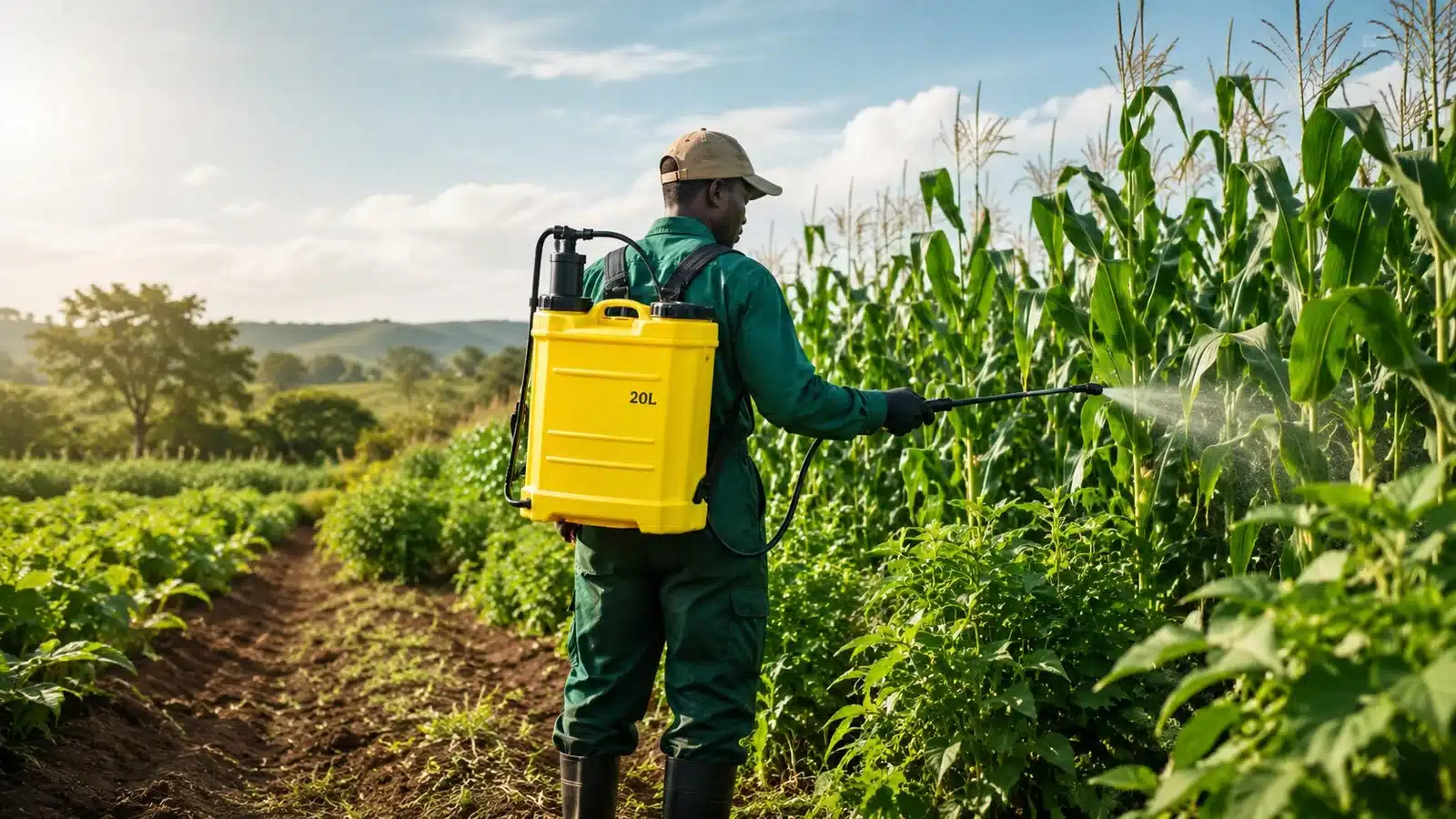
A knapsack sprayer for sale should be evaluated by tank capacity, pump design, lance, nozzle options, seals, straps and access to parts. Farmers checking knapsack sprayer price in Kenya should compare the complete equipment value rather than the tank size alone.
Jacto and Other Sprayer Options
Dawn Farmers lists Jacto HD Knapsack and Jacto XP Knapsack. Farmers searching for a Jacto sprayer in Kenya can compare these with Greenberg Knapsack Sprayer and other products in the Agricultural Sprayers category.
Think About Maintenance Before Buying
Good farming tools and equipment should be cleaned, inspected and stored correctly. For sprayers, filters, hoses, seals, triggers and nozzles need regular attention. Farmers buying agricultural tools in Nairobi should also ask whether common replacement parts can be obtained locally.
Stock Delivery and Supplier Choice
Customers looking for sprayers in Nairobi can contact Dawn Farmers before travelling to confirm model and stock. Customers outside Nairobi can enquire about farm equipment delivery in Kenya by providing the product and location. A reliable farm tools shop in Nairobi should make model specifications clear, while agricultural equipment suppliers in Kenya should be compared on product identity, parts support and availability as well as price.
Equipment reminder: calibrate sprayers before pesticide use, replace damaged components and follow the pesticide label. Correct equipment setup is part of safe and accurate application.
About the product and variety information used here: Equipment value depends on fitness for purpose, capacity, materials, ergonomics, spare parts, serviceability and expected workload. A low purchase price can become expensive when a tool is uncomfortable, difficult to repair or unsuitable for the task.
Define the Farm Task First
Equipment should be selected for a specific job, crop area and workload. A tool used occasionally on a small plot does not need the same capacity as equipment used daily on a commercial farm.
List the operations the tool must perform before looking at brands. This prevents buying equipment that is attractive but poorly matched to the farm.
The farm-level value of define the Farm Task First comes from consistency in buying agricultural sprayers and farm tools. One well-managed operation supports the next: uniform establishment improves scouting, good scouting improves timing, and accurate timing makes every later input easier to justify. Small variations in depth, plant population, operator technique or field condition can become large yield differences when they are repeated over a whole field. Use a simple checklist before the operation begins, observe the result afterwards, and record anything unusual so the next season is based on evidence rather than memory.
When applying the lesson from define the Farm Task First to buying agricultural sprayers and farm tools, separate what can be controlled from what cannot. Weather will change, but the farm can still control preparation, timing, input identity, equipment condition and record keeping. When conditions move away from the original plan, adjust the operation through agronomic reasoning instead of adding more product automatically. This approach keeps the decision resilient because it remains linked to the actual field rather than to a rigid recipe.
Before committing money or labour to define the Farm Task First, ask what information would make the decision less uncertain for buying agricultural sprayers and farm tools. It may be a soil test, a seed label, a pest count, a calibration measurement, a weather forecast, a market order or a current price. Collecting that information before spending money usually costs less than correcting the consequences of a poorly matched input. This habit is one of the clearest differences between reactive farming and deliberate farm management.
When farmers compare agricultural sprayers for sale in Kenya, the buying decision should follow suitability, current label or variety information, pack size, supplier traceability and the total farm requirement rather than price alone. This keeps the purchase connected to buying agricultural sprayers and farm tools and reduces the risk of buying an input that does not fit the production plan.
Knapsack Sprayer Capacity
Tank capacity influences refill frequency and the weight carried by the operator. A larger tank can improve efficiency on large fields but may increase fatigue and back strain.
Consider worker size, walking distance and access to clean refill water. Capacity should support productivity without compromising safe handling.
How to Apply Knapsack Sprayer Capacity on the Farm
For buying agricultural sprayers and farm tools, knapsack Sprayer Capacity should always be connected to diagnosis and application quality. The farmer should be able to name the crop, target problem, crop stage and the reason treatment is justified before opening a pesticide container. Then the current label determines whether the product is registered for that use, how it is mixed and applied, what protective equipment is required, and what restrictions apply before harvest or worker re-entry. Changing dose, shortening intervals or adding unlisted tank-mix partners because control looks weak can create more problems than it solves. Review diagnosis, coverage, timing and resistance management first.
For a commercial grower managing buying agricultural sprayers and farm tools, knapsack Sprayer Capacity is also a cost-control point. Every pass through the field uses labour, fuel or carrying effort and may expose the crop to additional risk. An operation should therefore have a clear objective and a way to judge whether it worked. Record the date, field or block, input or equipment used and any observation that explains the result. Over time, those records show which practices are worth repeating.
Manual Pump Design
Manual knapsack sprayers differ in pump mechanism, pressure chamber and lever design. The pump should maintain a stable operating pressure without excessive effort.
Check whether seals and pump parts are replaceable. A smooth, repairable mechanism often provides better long-term value than a low-cost sprayer with disposable components.
The farm-level value of manual Pump Design comes from consistency in buying agricultural sprayers and farm tools. One well-managed operation supports the next: uniform establishment improves scouting, good scouting improves timing, and accurate timing makes every later input easier to justify. Small variations in depth, plant population, operator technique or field condition can become large yield differences when they are repeated over a whole field. Use a simple checklist before the operation begins, observe the result afterwards, and record anything unusual so the next season is based on evidence rather than memory.
A common mistake around manual Pump Design is to respond to one disappointing symptom by changing several things at once. That makes it difficult to know which change helped and can create hidden interactions. Where possible, correct the most likely limiting factor first, observe buying agricultural sprayers and farm tools, and keep other management stable. This is especially important when fertilizers or pesticides are involved, because unnecessary combinations increase cost and may create crop-safety or compatibility problems.
Before committing money or labour to manual Pump Design, ask what information would make the decision less uncertain for buying agricultural sprayers and farm tools. It may be a soil test, a seed label, a pest count, a calibration measurement, a weather forecast, a market order or a current price. Collecting that information before spending money usually costs less than correcting the consequences of a poorly matched input. This habit is one of the clearest differences between reactive farming and deliberate farm management.
When farmers compare farm tools for sale in Kenya, the buying decision should follow suitability, current label or variety information, pack size, supplier traceability and the total farm requirement rather than price alone. This keeps the purchase connected to buying agricultural sprayers and farm tools and reduces the risk of buying an input that does not fit the production plan.
Harness and Operator Comfort
Padded straps, back profile, balance and lever position influence operator fatigue. An uncomfortable sprayer can reduce walking consistency and calibration accuracy as the day progresses.
Try the harness with water in the tank where possible. Ergonomics affects both productivity and safety.
The farm-level value of harness and Operator Comfort comes from consistency in buying agricultural sprayers and farm tools. One well-managed operation supports the next: uniform establishment improves scouting, good scouting improves timing, and accurate timing makes every later input easier to justify. Small variations in depth, plant population, operator technique or field condition can become large yield differences when they are repeated over a whole field. Use a simple checklist before the operation begins, observe the result afterwards, and record anything unusual so the next season is based on evidence rather than memory.
The scale of harness and Operator Comfort matters in buying agricultural sprayers and farm tools. A decision that seems minor on a few plants can become expensive over several acres. Before applying it across the whole farm, confirm that the method, product or variety fits the field and that workers understand the procedure. Small trial areas, calibration checks and written instructions can prevent a repeated error from affecting an entire crop.
Questions about knapsack sprayer price in Kenya are best answered by comparing the exact product, pack size or specification and the area or workload it is expected to cover. A useful price comparison for buying agricultural sprayers and farm tools therefore looks at value in use, not just the amount printed on a quotation.
Nozzle Options
Different crop-protection jobs require different spray patterns and droplet sizes. A sprayer that accepts standard replacement nozzles gives the farm more flexibility.
Check whether flat-fan, hollow-cone or other appropriate nozzle types are available. Nozzle quality matters because worn or inconsistent nozzles change application rate.
How to Apply Nozzle Options on the Farm
The farm-level value of nozzle Options comes from consistency in buying agricultural sprayers and farm tools. One well-managed operation supports the next: uniform establishment improves scouting, good scouting improves timing, and accurate timing makes every later input easier to justify. Small variations in depth, plant population, operator technique or field condition can become large yield differences when they are repeated over a whole field. Use a simple checklist before the operation begins, observe the result afterwards, and record anything unusual so the next season is based on evidence rather than memory.
Good decisions about nozzle Options also leave room for local knowledge. Soil type, altitude, water quality, pest pressure and market conditions vary across Kenya, so general guidance should be refined with current local recommendations and product information. Use this principle with buying agricultural sprayers and farm tools: understand the agronomy first, then adapt the details to the farm rather than copying a programme from a different production environment.
Before committing money or labour to nozzle Options, ask what information would make the decision less uncertain for buying agricultural sprayers and farm tools. It may be a soil test, a seed label, a pest count, a calibration measurement, a weather forecast, a market order or a current price. Collecting that information before spending money usually costs less than correcting the consequences of a poorly matched input. This habit is one of the clearest differences between reactive farming and deliberate farm management.
Filters and Blockage Control
Good sprayers include filtration at the tank, line or nozzle to reduce blockage. Filters should be accessible for cleaning without damaging parts.
A blocked nozzle should never be cleared by blowing through it with the mouth. Easy maintenance saves time during busy spray periods.
The farm-level value of filters and Blockage Control comes from consistency in buying agricultural sprayers and farm tools. One well-managed operation supports the next: uniform establishment improves scouting, good scouting improves timing, and accurate timing makes every later input easier to justify. Small variations in depth, plant population, operator technique or field condition can become large yield differences when they are repeated over a whole field. Use a simple checklist before the operation begins, observe the result afterwards, and record anything unusual so the next season is based on evidence rather than memory.
Connect filters and Blockage Control to the next decision in the buying agricultural sprayers and farm tools season. If establishment is uneven, later fertilizer and spray calculations may need to account for a lower plant population. If a pest treatment is delayed, scouting frequency may need to increase. If water is limiting, nutrient uptake may change. Thinking in sequences turns this step into part of a complete crop-management system instead of an isolated task.
A useful way to evaluate Jacto sprayer in Kenya is to ask what changes in the field if this decision is correct. The answer should be observable through establishment, crop health, application quality, harvest or cost records rather than through marketing language alone.
Seals Hoses and Chemical Resistance
Sprayer seals and hoses come into contact with pesticide formulations and need materials that tolerate normal use. Poor-quality seals can swell, leak or crack.
Leaks expose the operator and waste product. Ask whether replacement seal kits and hoses are available locally.
For buying agricultural sprayers and farm tools, seals Hoses and Chemical Resistance should always be connected to diagnosis and application quality. The farmer should be able to name the crop, target problem, crop stage and the reason treatment is justified before opening a pesticide container. Then the current label determines whether the product is registered for that use, how it is mixed and applied, what protective equipment is required, and what restrictions apply before harvest or worker re-entry. Changing dose, shortening intervals or adding unlisted tank-mix partners because control looks weak can create more problems than it solves. Review diagnosis, coverage, timing and resistance management first.
After completing the work around seals Hoses and Chemical Resistance, set one or two observations to check in buying agricultural sprayers and farm tools. These might include emergence uniformity, crop colour, weed escape, pest numbers, nozzle output, fruit quality or marketable harvest depending on the stage. Without a follow-up observation, it is easy to repeat a costly practice simply because it has always been done that way.
Before committing money or labour to seals Hoses and Chemical Resistance, ask what information would make the decision less uncertain for buying agricultural sprayers and farm tools. It may be a soil test, a seed label, a pest count, a calibration measurement, a weather forecast, a market order or a current price. Collecting that information before spending money usually costs less than correcting the consequences of a poorly matched input. This habit is one of the clearest differences between reactive farming and deliberate farm management.
Spare Parts and Service
A sprayer’s useful life depends heavily on the availability of nozzles, seals, trigger valves, hoses and pump parts. Imported equipment without local parts can become unusable after a small failure.
Check spare-part availability before buying. Serviceability is part of purchase value.
How to Apply Spare Parts and Service on the Farm
The farm-level value of spare Parts and Service comes from consistency in buying agricultural sprayers and farm tools. One well-managed operation supports the next: uniform establishment improves scouting, good scouting improves timing, and accurate timing makes every later input easier to justify. Small variations in depth, plant population, operator technique or field condition can become large yield differences when they are repeated over a whole field. Use a simple checklist before the operation begins, observe the result afterwards, and record anything unusual so the next season is based on evidence rather than memory.
If advice about spare Parts and Service from a supplier, neighbour and agronomist differs, compare each recommendation against current label or variety information and the conditions in the field. The most persuasive recommendation for buying agricultural sprayers and farm tools is the one that explains why it fits the crop, stage and problem. That standard reduces dependence on brand reputation or hearsay.
The idea behind farm equipment in Kenya becomes most useful when it is applied to a real field decision. For buying agricultural sprayers and farm tools, compare the farm conditions, stage of production and evidence from scouting or records before changing the programme.
Jacto HD and Jacto XP Options
Dawn Farmers lists Jacto HD and Jacto XP knapsack sprayers among its equipment options. These models should be compared by current specification, capacity, comfort, pump design and available parts.
Do not choose by model name alone. Confirm the exact model and included accessories before payment.
The farm-level value of jacto HD and Jacto XP Options comes from consistency in buying agricultural sprayers and farm tools. One well-managed operation supports the next: uniform establishment improves scouting, good scouting improves timing, and accurate timing makes every later input easier to justify. Small variations in depth, plant population, operator technique or field condition can become large yield differences when they are repeated over a whole field. Use a simple checklist before the operation begins, observe the result afterwards, and record anything unusual so the next season is based on evidence rather than memory.
When applying the lesson from jacto HD and Jacto XP Options to buying agricultural sprayers and farm tools, separate what can be controlled from what cannot. Weather will change, but the farm can still control preparation, timing, input identity, equipment condition and record keeping. When conditions move away from the original plan, adjust the operation through agronomic reasoning instead of adding more product automatically. This approach keeps the decision resilient because it remains linked to the actual field rather than to a rigid recipe.
Before committing money or labour to jacto HD and Jacto XP Options, ask what information would make the decision less uncertain for buying agricultural sprayers and farm tools. It may be a soil test, a seed label, a pest count, a calibration measurement, a weather forecast, a market order or a current price. Collecting that information before spending money usually costs less than correcting the consequences of a poorly matched input. This habit is one of the clearest differences between reactive farming and deliberate farm management.
Farmers researching agricultural tools in Nairobi should connect the phrase to practical management: what the crop needs, what the field can supply, what the current label or variety information says and what outcome will be measured afterwards.
Greenberg Knapsack Sprayer
The Dawn Farmers catalogue also lists a Greenberg knapsack sprayer. Compare it with other options by intended workload, materials, spare parts and serviceability.
A lower purchase price can be good value when the sprayer fits the job and parts remain available. Use current product information rather than assumptions about brand quality.
For buying agricultural sprayers and farm tools, greenberg Knapsack Sprayer should always be connected to diagnosis and application quality. The farmer should be able to name the crop, target problem, crop stage and the reason treatment is justified before opening a pesticide container. Then the current label determines whether the product is registered for that use, how it is mixed and applied, what protective equipment is required, and what restrictions apply before harvest or worker re-entry. Changing dose, shortening intervals or adding unlisted tank-mix partners because control looks weak can create more problems than it solves. Review diagnosis, coverage, timing and resistance management first.
For a commercial grower managing buying agricultural sprayers and farm tools, greenberg Knapsack Sprayer is also a cost-control point. Every pass through the field uses labour, fuel or carrying effort and may expose the crop to additional risk. An operation should therefore have a clear objective and a way to judge whether it worked. Record the date, field or block, input or equipment used and any observation that explains the result. Over time, those records show which practices are worth repeating.
Calibration Capability
Any crop-protection sprayer should be easy enough to calibrate accurately. The operator needs a stable nozzle output, consistent pressure and predictable spray pattern.
Equipment that leaks or produces irregular pressure makes accurate pesticide use difficult. Calibration is a performance requirement, not an optional technical exercise.
How to Apply Calibration Capability on the Farm
The farm-level value of calibration Capability comes from consistency in buying agricultural sprayers and farm tools. One well-managed operation supports the next: uniform establishment improves scouting, good scouting improves timing, and accurate timing makes every later input easier to justify. Small variations in depth, plant population, operator technique or field condition can become large yield differences when they are repeated over a whole field. Use a simple checklist before the operation begins, observe the result afterwards, and record anything unusual so the next season is based on evidence rather than memory.
A common mistake around calibration Capability is to respond to one disappointing symptom by changing several things at once. That makes it difficult to know which change helped and can create hidden interactions. Where possible, correct the most likely limiting factor first, observe buying agricultural sprayers and farm tools, and keep other management stable. This is especially important when fertilizers or pesticides are involved, because unnecessary combinations increase cost and may create crop-safety or compatibility problems.
Before committing money or labour to calibration Capability, ask what information would make the decision less uncertain for buying agricultural sprayers and farm tools. It may be a soil test, a seed label, a pest count, a calibration measurement, a weather forecast, a market order or a current price. Collecting that information before spending money usually costs less than correcting the consequences of a poorly matched input. This habit is one of the clearest differences between reactive farming and deliberate farm management.
In practice, farm equipment delivery in Kenya should not be treated as a stand-alone promise. Its value depends on how well the product, variety or method fits buying agricultural sprayers and farm tools under the actual conditions on the farm.
Maintenance Time
Daily cleaning, filter checks, lubrication where required and seal inspection keep equipment reliable. A sprayer that is difficult to dismantle can be neglected because maintenance takes too long.
Ask how the main components are accessed. Simple maintenance reduces downtime during urgent pest or disease outbreaks.
The farm-level value of maintenance Time comes from consistency in buying agricultural sprayers and farm tools. One well-managed operation supports the next: uniform establishment improves scouting, good scouting improves timing, and accurate timing makes every later input easier to justify. Small variations in depth, plant population, operator technique or field condition can become large yield differences when they are repeated over a whole field. Use a simple checklist before the operation begins, observe the result afterwards, and record anything unusual so the next season is based on evidence rather than memory.
The scale of maintenance Time matters in buying agricultural sprayers and farm tools. A decision that seems minor on a few plants can become expensive over several acres. Before applying it across the whole farm, confirm that the method, product or variety fits the field and that workers understand the procedure. Small trial areas, calibration checks and written instructions can prevent a repeated error from affecting an entire crop.
A useful way to evaluate farming tools and equipment is to ask what changes in the field if this decision is correct. The answer should be observable through establishment, crop health, application quality, harvest or cost records rather than through marketing language alone.
Hand Tools and Steel Quality
Hoes, pruning tools, spades and other hand tools should be assessed for material strength, edge quality and handle attachment. Brittle or soft metal may bend or wear quickly.
A replaceable handle can extend tool life. The best tool depends on soil condition and intended work, not on weight alone.
The farm-level value of hand Tools and Steel Quality comes from consistency in buying agricultural sprayers and farm tools. One well-managed operation supports the next: uniform establishment improves scouting, good scouting improves timing, and accurate timing makes every later input easier to justify. Small variations in depth, plant population, operator technique or field condition can become large yield differences when they are repeated over a whole field. Use a simple checklist before the operation begins, observe the result afterwards, and record anything unusual so the next season is based on evidence rather than memory.
Good decisions about hand Tools and Steel Quality also leave room for local knowledge. Soil type, altitude, water quality, pest pressure and market conditions vary across Kenya, so general guidance should be refined with current local recommendations and product information. Use this principle with buying agricultural sprayers and farm tools: understand the agronomy first, then adapt the details to the farm rather than copying a programme from a different production environment.
Before committing money or labour to hand Tools and Steel Quality, ask what information would make the decision less uncertain for buying agricultural sprayers and farm tools. It may be a soil test, a seed label, a pest count, a calibration measurement, a weather forecast, a market order or a current price. Collecting that information before spending money usually costs less than correcting the consequences of a poorly matched input. This habit is one of the clearest differences between reactive farming and deliberate farm management.
Ergonomics of Hand Tools
Handle length, grip size, balance and weight influence fatigue and injury risk. Workers using a tool for many hours benefit from equipment that allows a natural posture.
Very heavy tools may feel strong but can reduce daily productivity. Where possible, let the intended operator handle the tool before buying.
How to Apply Ergonomics of Hand Tools on the Farm
The farm-level value of ergonomics of Hand Tools comes from consistency in buying agricultural sprayers and farm tools. One well-managed operation supports the next: uniform establishment improves scouting, good scouting improves timing, and accurate timing makes every later input easier to justify. Small variations in depth, plant population, operator technique or field condition can become large yield differences when they are repeated over a whole field. Use a simple checklist before the operation begins, observe the result afterwards, and record anything unusual so the next season is based on evidence rather than memory.
Connect ergonomics of Hand Tools to the next decision in the buying agricultural sprayers and farm tools season. If establishment is uneven, later fertilizer and spray calculations may need to account for a lower plant population. If a pest treatment is delayed, scouting frequency may need to increase. If water is limiting, nutrient uptake may change. Thinking in sequences turns this step into part of a complete crop-management system instead of an isolated task.
When farmers compare knapsack sprayer for sale, the buying decision should follow suitability, current label or variety information, pack size, supplier traceability and the total farm requirement rather than price alone. This keeps the purchase connected to buying agricultural sprayers and farm tools and reduces the risk of buying an input that does not fit the production plan.
Farm PPE
Protective equipment can include gloves, boots, overalls, eye protection, masks or respirators depending on the task and pesticide label. PPE should fit the worker and be compatible with the hazard.
Buying a sprayer without budgeting for label-required PPE is an incomplete purchase. Replace damaged protective equipment promptly.
For buying agricultural sprayers and farm tools, farm PPE should always be connected to diagnosis and application quality. The farmer should be able to name the crop, target problem, crop stage and the reason treatment is justified before opening a pesticide container. Then the current label determines whether the product is registered for that use, how it is mixed and applied, what protective equipment is required, and what restrictions apply before harvest or worker re-entry. Changing dose, shortening intervals or adding unlisted tank-mix partners because control looks weak can create more problems than it solves. Review diagnosis, coverage, timing and resistance management first.
After completing the work around farm PPE, set one or two observations to check in buying agricultural sprayers and farm tools. These might include emergence uniformity, crop colour, weed escape, pest numbers, nozzle output, fruit quality or marketable harvest depending on the stage. Without a follow-up observation, it is easy to repeat a costly practice simply because it has always been done that way.
Before committing money or labour to farm PPE, ask what information would make the decision less uncertain for buying agricultural sprayers and farm tools. It may be a soil test, a seed label, a pest count, a calibration measurement, a weather forecast, a market order or a current price. Collecting that information before spending money usually costs less than correcting the consequences of a poorly matched input. This habit is one of the clearest differences between reactive farming and deliberate farm management.
Price Versus Lifetime Cost
Purchase price is only the first cost of farm equipment. Repairs, parts, downtime, labour efficiency and service life all affect lifetime value.
A more expensive sprayer can be cheaper over several seasons if it remains comfortable and repairable. Conversely, premium branding does not justify a price if the tool is poorly matched to the farm.
For buying agricultural sprayers and farm tools, the decision around price Versus Lifetime Cost is strongest when the farmer can explain exactly what is being purchased and why. That means comparing specification or label information, the quantity required, storage or handling needs, and the cost of getting the input to the farm. A lower shelf price can be poor value when the wrong product is bought, while a higher-priced option is not automatically better simply because it carries a recognised brand. Keep the production objective in front of the buying decision and ask for the exact item, formulation, variety or specification rather than accepting a vague substitute.
If advice about price Versus Lifetime Cost from a supplier, neighbour and agronomist differs, compare each recommendation against current label or variety information and the conditions in the field. The most persuasive recommendation for buying agricultural sprayers and farm tools is the one that explains why it fits the crop, stage and problem. That standard reduces dependence on brand reputation or hearsay.
Farmers researching sprayers in Nairobi should connect the phrase to practical management: what the crop needs, what the field can supply, what the current label or variety information says and what outcome will be measured afterwards.
Bulk Equipment Orders
Commercial farms buying several sprayers or tools should standardise models where this simplifies spare parts and training. Confirm quantities, included accessories and replacement parts before delivery.
Train operators on calibration and maintenance when equipment arrives. A bulk purchase should improve operational consistency, not create many different parts systems.
How to Apply Bulk Equipment Orders on the Farm
For buying agricultural sprayers and farm tools, the decision around bulk Equipment Orders is strongest when the farmer can explain exactly what is being purchased and why. That means comparing specification or label information, the quantity required, storage or handling needs, and the cost of getting the input to the farm. A lower shelf price can be poor value when the wrong product is bought, while a higher-priced option is not automatically better simply because it carries a recognised brand. Keep the production objective in front of the buying decision and ask for the exact item, formulation, variety or specification rather than accepting a vague substitute.
When applying the lesson from bulk Equipment Orders to buying agricultural sprayers and farm tools, separate what can be controlled from what cannot. Weather will change, but the farm can still control preparation, timing, input identity, equipment condition and record keeping. When conditions move away from the original plan, adjust the operation through agronomic reasoning instead of adding more product automatically. This approach keeps the decision resilient because it remains linked to the actual field rather than to a rigid recipe.
Before committing money or labour to bulk Equipment Orders, ask what information would make the decision less uncertain for buying agricultural sprayers and farm tools. It may be a soil test, a seed label, a pest count, a calibration measurement, a weather forecast, a market order or a current price. Collecting that information before spending money usually costs less than correcting the consequences of a poorly matched input. This habit is one of the clearest differences between reactive farming and deliberate farm management.
A farmer looking for a farm tools shop in Nairobi should check traceability, current stock, product identity, storage condition and the accuracy of technical information supplied. For buying agricultural sprayers and farm tools, a reliable source is valuable because the farmer can confirm exactly what is being purchased before it reaches the field.
Delivery and Inspection
Inspect equipment immediately after delivery for cracks, missing parts or transit damage. For sprayers, assemble and test with clean water before pesticide use.
Keep packaging, receipt and warranty information where applicable. Report missing accessories before the equipment enters field service.
The farm-level value of delivery and Inspection comes from consistency in buying agricultural sprayers and farm tools. One well-managed operation supports the next: uniform establishment improves scouting, good scouting improves timing, and accurate timing makes every later input easier to justify. Small variations in depth, plant population, operator technique or field condition can become large yield differences when they are repeated over a whole field. Use a simple checklist before the operation begins, observe the result afterwards, and record anything unusual so the next season is based on evidence rather than memory.
For a commercial grower managing buying agricultural sprayers and farm tools, delivery and Inspection is also a cost-control point. Every pass through the field uses labour, fuel or carrying effort and may expose the crop to additional risk. An operation should therefore have a clear objective and a way to judge whether it worked. Record the date, field or block, input or equipment used and any observation that explains the result. Over time, those records show which practices are worth repeating.
Equipment Buying Checklist
Define the task, compare capacity and specifications, check comfort, inspect build quality and confirm spare parts. For sprayers, include nozzle options, calibration and PPE.
For hand tools, include ergonomics and repairability. Buy for lifetime farm value rather than the lowest immediate price.
For buying agricultural sprayers and farm tools, the decision around equipment Buying Checklist is strongest when the farmer can explain exactly what is being purchased and why. That means comparing specification or label information, the quantity required, storage or handling needs, and the cost of getting the input to the farm. A lower shelf price can be poor value when the wrong product is bought, while a higher-priced option is not automatically better simply because it carries a recognised brand. Keep the production objective in front of the buying decision and ask for the exact item, formulation, variety or specification rather than accepting a vague substitute.
A common mistake around equipment Buying Checklist is to respond to one disappointing symptom by changing several things at once. That makes it difficult to know which change helped and can create hidden interactions. Where possible, correct the most likely limiting factor first, observe buying agricultural sprayers and farm tools, and keep other management stable. This is especially important when fertilizers or pesticides are involved, because unnecessary combinations increase cost and may create crop-safety or compatibility problems.
Before committing money or labour to equipment Buying Checklist, ask what information would make the decision less uncertain for buying agricultural sprayers and farm tools. It may be a soil test, a seed label, a pest count, a calibration measurement, a weather forecast, a market order or a current price. Collecting that information before spending money usually costs less than correcting the consequences of a poorly matched input. This habit is one of the clearest differences between reactive farming and deliberate farm management.
A farmer looking for a agricultural equipment suppliers in Kenya should check traceability, current stock, product identity, storage condition and the accuracy of technical information supplied. For buying agricultural sprayers and farm tools, a reliable source is valuable because the farmer can confirm exactly what is being purchased before it reaches the field.
Equipment buying is more useful when the operator also understands Knapsack Sprayer Calibration in Kenya Step by Step Guide, Farm Inputs for Sale in Nairobi Kenya Complete Buying Guide for Farmers and Agrochemicals for Sale in Nairobi Kenya Guide to Choosing Crop Protection Products for connected planning and buying decisions.
Frequently Asked Questions
What should I check when buying a knapsack sprayer?
Compare tank capacity, pump system, lance, nozzle options, seals, operator comfort, maintenance and replacement parts.
Does Dawn Farmers sell Jacto sprayers?
Yes. The catalogue includes Jacto HD and Jacto XP knapsack sprayers subject to current availability.
Are cheap farm tools always better value?
Not necessarily. Durability, suitability for the task, repairability and expected workload can matter more than initial price.
Can I buy sprayers in Nairobi?
Dawn Farmers lists agricultural sprayers and farm tools from its Nairobi CBD operation and online shop.
How should a sprayer be maintained?
Keep it clean, inspect seals and filters, use the correct nozzle and store it according to equipment and pesticide-cleaning guidance.
Can farm equipment be delivered outside Nairobi?
Customers can enquire about delivery based on equipment type, size, quantity and destination.
How often should a knapsack sprayer be calibrated?
Recalibrate periodically and whenever the nozzle, pressure, operator technique, sprayer or application method changes.
Why do worn nozzles matter?
Worn nozzles can increase flow and change droplet pattern, causing uneven application even when the operator uses the same tank mix.
Can I calibrate with pesticide in the tank?
Calibration should normally be carried out with clean water so measurement can be done without unnecessary pesticide exposure.
What should I consider besides sprayer price?
Compare capacity, comfort, pump quality, nozzle options, spare parts, maintenance, serviceability and expected workload.
Why is spare-part availability important?
A small failed seal, hose or valve can stop a sprayer completely, so local access to replacement parts increases equipment life and reduces downtime.
Does a bigger sprayer tank always improve productivity?
Not always. Larger capacity reduces refill frequency but increases carried weight, which can increase fatigue and affect walking speed and calibration.
Need Agricultural Sprayers or Farm Tools?
Use the guide above to narrow the requirement, then browse farm tools and equipment. For current stock, pack sizes and prices, contact Dawn Farmers Limited on +254 724 367 713. In buying agricultural sprayers and farm tools, adapt this point to current field conditions, product or variety information and the management capacity of the farm.